by Yvonne T. Chua PCIJ.org
ALLAN EVANGELISTA of Quezon City signed up with the Doctors to the Barrio program last year despite suffering from dilated cardiomyopathy, an incurable disease of the heart muscle that actor Aga Muhlach introduced to Filipinos through his 2004 movie "All My Life."
This "walking time bomb" has had four attacks since being assigned in September to Catigbian, Bohol, an interior town 34 kilometers from Tagbilaran City. He has also experienced working under a mango tree for two months while his rundown health center was being repaired.
But the young doctor still counts himself lucky, and not only because he finds his work fulfilling. Last November, he asked and got a whopping 230 percent increase in the budget of his rural health unit.
The local government had been determined to impose austerity measures, and what ensued was the longest budget hearing the town ever had. Evangelista, however, was able to convince the town officials just how badly Catigbian needed health programs, including the appropriate medicines, for its people. His RHU was the only unit in the local government that was granted an increase.
Many of Evangelista's colleagues in similar posts across the country have not been as fortunate. In fact, local governments often give low priority to health, and allot health services and programs sums so paltry that health centers practically have to beg for donations from patients, most of whom are indigent but still give anywhere from P1 to P10 each.
Combined with corruption and shameless politicking by local officials, the meager budgets for health have led to a frequent lack of medicines in health centers, among other things. Local health workers have also been denied many of the benefits they are entitled to under the law because of the lack of attention paid by local governments to health.
Mayors and governors have long given the more visible and more corruption-prone infrastructure projects top priority. To the dismay of public doctors and other health workers, the devolution of health services in 1993 hasn't altered that mindset. Nine surveys of 80 towns and 301 barangays done in 2000 by the U.S.-based Center for Institutional Reform and the Informal Sector (IRIS), show local officials still emphasizing infrastructure over health, new jobs and aid to the poor.
First- and fifth-class municipalities alike complain about the lack of funds for health, according to a 1998 study done for the World Health Organization. Note the authors of the study: "There seems to be a lack of political will to allocate additional funds for health since it is commonly perceived that additional expenditures for health are not capable of turning in the votes. People normally consider the infrastructure record of candidates as basis for solid achievement."
They further surmise, "Because of the old centralized setup where health is the responsibility of the Department of Health, people are not used to making health an issue during elections. Local political candidates who are re-electionists normally cite their public works record as measure of their performance. Even barangay officials use their local funds to construct waiting sheds, basketball courts instead of spending them for health."
Doctors also complain of what they describe as the "narrow perspective" of local officials toward health. "It must be curative rather than preventive," says a paper of the nonprofit Institute of Public Health Management, quoting doctors who have attended its health and governance conferences. "The notion that health is merely the absence of disease still prevails among the local chief executives and their constituents."
Almost always, a town's budget for the RHU is quickly eaten up by salaries of health personnel. In 2003, personal services accounted for nearly 80 percent of the towns' combined P4.68 billion appropriations for health centers. Maintenance and other operating expenses or MOOE, which fund health programs and the purchase of medicines and supplies, made up only a fifth of the budget.
The budget of an RHU, especially those that have been doctorless for some time, could be as small as P50,000 a year, says Maritona Labajo, assistant director for field operations of the Leaders for Health Program, which allows barrio doctors like Evangelista to earn a master's degree in community health management from the Ateneo de Manila University. Yet, points out Labajo, the same town may allot P500,000 to P1 million to buy medicines but put this not in the health budget but in the mayor's discretionary fund, over which the local physician has no control.
This has resulted in municipal and urban health doctors being forced to innovate because of lack of medicine. A doctor in Laguna, for example, has resorted to giving tablets in place of suspension fluids as an antibiotic for toddlers. "I tell the mothers to cut the tablet into half," says the doctor, "and mix it in glass of water with sugar."
Other physicians recommend the use of herbal plants like oregano, a substitute for cough syrup, or lagundi for treating boils because their RHUs do not have the manufactured medical treatments.
Pork-barrel allocations of congressmen sometimes enable RHUs to have the medicines they need. The Department of Health (DOH) also distributes drugs in line with national health programs, aside from the usual anti-tuberculosis drugs, vaccines and micronutrients. But local health units rely mainly on their internal revenue allotment and locally generated funds to purchase medicines and supplies.
Yet since many doctors are hardly involved in the local budgeting process, it is difficult for them to lobby even for just the basic things needed by their RHUs. A Central Visayas-based municipal health officer remembers getting this instruction from his mayor when he was preparing the budget: "Just make sure na maswelduhan kayo (you all get your salaries). Don't worry about the programs." And, indeed, hardly any money went to the health programs of the fourth-class town.
An RHU in Rizal province, meanwhile, was given a budget so tiny it couldn't even buy cotton. A Bicol RHU's budget had no money allotted for soap, disinfectant, even writing paper.
The physical condition of RHUs is sometimes a good indicator of how much — or little — importance the mayor attaches to health. Richard Lariosa, who signed up with the Doctors to the Barrio program in 2001, was assigned to Tagapul-an, Samar, where he found himself seeing patients in a tiny room in a building that had windows that were falling off and a leaking roof.
The first thing Lariosa had done shortly after he arrived in Tagapul-an was to ask the mayor to repair the RHU while awaiting a P3-million new health center the Japanese government had pledged to build. When Lariosa was pulled out of remote Visayan town late last year, the mayor had yet to act on his request, and Japan had not released the promised funds. "We tried to patch the roof, but Vulcaseal didn't work well," Lariosa says.
But that was not all Lariosa had to put up with. The solar-powered vaccine refrigerator at his RHU kept breaking down, causing the vaccines to spoil. Exasperated, Lariosa stored them in a canteen operator's fridge. "It wasn't ideal because you shouldn't be opening the ref as much as possible," he says. "But I didn't have a choice."
Lariosa also found he was entitled to only P5,000 a year for travel and RHU's midwives, P3,000 a year. As the RHU did not have its own boat, it had to rent one for P500 a day to visit the barangays. To stretch the budget, Lariosa and his staff pooled their travel allowances and conducted team visits so they could make regular rounds of Tagapul-an.
But it is the failure of many provinces, cities and towns to fully implement the Magna Carta for Public Health Workers that has convinced local doctors and health workers of the local governments' neglect of the health sector.
Passed in 1992, Republic Act 7305 mandates a host of benefits not only for government doctors, nurses, midwives, dentists, barangay health workers, and sanitation inspectors at both the national and local levels. The benefits include hazard pay, laundry allowance, subsistence allowance, holiday pay, and even remote allowance or medico-legal allowance.
Health personnel in the national government's payroll, including volunteers under the Doctors to the Barrio Program who are also known as rural health physicians, enjoy the full benefits provided by the Act. Majority of local health workers, however, do not.
For municipal health officers in poor towns, failure to fully implement the law has resulted in a bigger discrepancy between their pay and that of the DOH-hired rural health physicians. As things stand, many of them receive just more than half of the P20,824, basic monthly salary received by rural health physicians.
A number of barrio doctors fielded by the DOH have ended up fighting for the benefits of their RHU staff. Dorie Lynn Balanoba, who was in the first batch of 46 doctors sent to the countryside under the program in 1993 and now works at the DOH central office, led her staff in Jipapad, Eastern Samar in going on a two-week sick leave in 1996 to force the town treasurer to release the benefits due them.
In some towns, health personnel have filed administrative or court cases against their mayors. Alas, the courts have junked some of these cases, including the one initiated against the former mayor and treasurer of Catigbian by the municipal health officer who preceded Evangelista, the doctor with the heart disease. With the case under appeal, the new mayor has elected to observe the status quo. This leaves Evangelista in a bind whenever his RHU's nurse and midwives pressure him to work for the release of their benefits.
Most, if not all, of the towns in Bohol have yet to fully implement the law, observes Evangelista. This appears to be the case for most parts of the country, he says.
Last September, the Association of Provincial Health Officers of the Philippines (APHOP) issued a manifesto addressed to President Gloria Macapagal-Arroyo, complaining that the Magna Carta has yet to be fully implemented.
Health workers complain that mayors and governors often mouth the famous line "subject to availability of funds" to justify the Act's partial implementation. Yet they note that many local governments violate a Department of Budget and Management circular for mayors and governors to first appropriate the Magna Carta benefits in their budget before providing other nonmandatory salary items.
"The problem with devolution is that health personnel were not trained to deal with the (local governments)," says Nemecia Mejia, former provincial health officer of Pangasinan. Still, not everyone has had to just grin and bear the dire consequences of decentralization.
Municipal health workers in Pangasinan, for example, have had an easier time coping with the changes because some hospitals maintained an informal relationship with the rural health centers after devolution. Pangasinan was also among the pioneer provinces that enforced the DOH's Health Sector Reform Agenda (HSRA). Implemented in 1999, the HSRA sought to improve the financing and delivery of health services.
The HSRA, among others, encourages the creation of "inter-local health zones," or districts or catchment areas composed of neighboring municipalities with the aim of improving cooperation among themselves on health matters. In Pangasinan, a core hospital is in charge of one health zone. Mejia says the chief of hospital helps municipal doctors advocate for local programs and reforms to their mayors.
The HSRA, which has reforms in hospitals as one of its components, also allows for a systematic pooled procurement in provincial hospitals. Mejia says the bidded price in Pangasinan went down by more than half through bulk procurement.
The hospital and provincial therapeutics committees in the province oversee the procurement of drugs starting from the annual procurement plans of the 14 hospitals. This is to ensure quality of drugs and the procurement of drugs at lower costs. But Mejia explains they have yet to convince the municipalities to adopt a similar system. With money involved, she says, procurement has become a very sensitive issue.
The least the hospitals could do, says Mejia, is to refer the winning bidders to the municipalities and have them adopt the bidded price. "They don't have to undergo another bidding because it was already bidded out in the provincial level," she says. "We would like this to be implemented in the lower-class municipalities with very meager budgets." — with Avigail M. Olarte
Monday, May 16, 2005


Health Politics Demoralizes Doctors
By: Yvonne T. Chua, PCIJ.org
WHEN BARRIO doctor Richard Lariosa arrived in Tagapul-an, Samar in 2002, he was surprised to learn that medicines for the town were being kept at the mayor's office. "When you gave a prescription to a patient not of the same political color as the mayor, he'd be told by the people at the mayor's office there was no medicine even when they were still a lot," the doctor says. "Color coding."
The mayor was later persuaded to turn over all the stocks to the rural health unit, after being assured the people would know the medicines came from him. But months before the May 2004 elections, newly delivered medicines again wound up with the mayor. He agreed to let go of half the medicines only after Lariosa paid him a visit.
The young doctor's relationship with the mayor, however, was already quite strained. At one point, Lariosa had objected to the removal of trained health workers and their replacement by untrained supporters of the mayor and the barangay captains. The mayor was in turn displeased when Lariosa changed caterers for a health-training course because the food served by the first caterer caused the trainees to have diarrhea. Apparently, the former caterer was the mayor's ally.
Last December, Lariosa was pulled out of Tagapul-an after the Doctors to the Barrio-Leaders for Health program, which had sent him there, concluded that the mayor was not very concerned about health. Now assigned to Uyugan, Batanes, Lariosa hopes local politics would not again become a hindrance to his work.
Corruption and official neglect are not the only problems plaguing the health system in local government units. Traditional politics is also compromising the delivery of health services to the people who need it most, and discouraging health workers who would otherwise not even mind the low pay and long hours their jobs entail.
"Confidently, we can say that partisan politics is the number one problem at the RHU," says Maritona Labajo, assistant director for field operations of the Leaders for Health program that allows barrio doctors to earn a master's degree in community health management. She also concedes, "Politicians….are really difficult to work with. The (health) program can be sabotaged by the mere fact that the mayor does not cooperate."
This has led to disillusionment even among the most idealistic of doctors, some of whom had volunteered for the much-vaunted Doctors to the Barrio program begun more than a decade ago by then health secretary Juan Flavier. The program has already sent more than 400 physicians to about 300 doctorless fifth- and sixth-class towns, but medical practitioners are still badly needed in the countryside, even by wealthy towns.
While some of the volunteer doctors eventually stay as municipal health officers in the towns they are assigned to, several wind up swearing off working for local governments ever again. One barrio doctor assigned to a remote town in Mindanao can hardly wait until her four-year contract is up. "I can't stand the politics," she says.
Yet Pascualito Concepcion, an Ateneo de Zamboanga alumnus assigned by the Doctors to the Barrio program to Talusan, Zamboanga Sibugay in 2002, has shown just how much a community doctor can accomplish when the local government is health-friendly.
With help from the mayor and the town council, Concepcion transformed a dusty warehouse-like building into an air-conditioned health center. He got Philhealth to accredit his rural health unit and enrolled 500 poor families in the program in 2002 alone. His RHU's pharmacy also sells paracetamol for as low as 50 centavos each; usually the cheapest a tablet of the medicine can get is 90 centavos.
Concepcion convinced local officials to increase the RHU's share from the development fund (from P200,000 in 2002 to P1.2 million in 2003) and even persuaded them to let it keep the Philhealth payments for the upkeep of the health center and its programs. The local government has since created more positions for the RHU and has been fully implementing the Magna Carta for Public Health Workers. The health center laboratory is comparable to a medical center lab with pap smear, blood sugar and other blood chemical.
Concepcion was given the Grand Distinction Award in the Department of Health's annual recognition of outstanding doctors to the barrio. Other RHU doctors, however, are probably more jealous of his luck with his local government rather than of his award.
Many of the doctors interviewed for this story recounted story after story about clashing with local officials-primarily the mayor-over such seemingly trivial things as the hiring of barangay health workers and the safekeeping and distribution of medicines. These, however, have serious implications, and affect the continuity of services and effectiveness of treatment.
In most of the cases, patronage politics was involved, with the officials using employment and medical supplies as a means of garnering support for themselves and clinching votes for the next election.
Lariosa's experience in Tagapul-an is but one illustration of this. The frustrated doctor in western Mindanao also recounts that when she was the municipal health officer of another poor town in the southern part of the region, she had displeased the mayor when she dispensed medicine to every patient needing treatment instead of just the mayor's followers. She didn't win points either when she refused to sign procurement forms that she deemed questionable. When she resigned sometime last year, the mayor replaced her with a favored midwife, instead of the nurse, the RHU's second in command.
Now the doctor is in yet another impoverished town, this time under the Doctors to the Barrio program. But she says it feels like she hadn't moved at all. The first-term mayor in her new assignment has taken to appointing unqualified people as barangay health workers, for one. For another, says the doctor, patients must have their RHU-issued prescriptions signed by the mayor's office before the medicines are released.
"There is a common practice in many LGUs (local government units) where RHU patients get their drugs from the municipal hall rather than from the RHU," notes a study by the Department of Health (DOH) and the Management Sciences for Health (MSH), a nonprofit international organization working in public health areas.
The study describes the practice in a town in northern Luzon: The RHU doctor prescribes the drugs, the patient goes to the social welfare office to get an approval of indigency, and then proceeds to the office of the sangguniang bayan (town council) chair on health committee where the drugs are dispensed. To assure safety and regulate the validity of drug dispensing, the patient is asked to go back to the RHU for further instructions on the intake of medicine.
The risks involved in the practice, the study says, are "when the patient does not go back to the RHU for final… approval and when the wrong, inappropriate drug is given to the patient." RHU doctors themselves say that those who happen to support the opposition also do not bother to go to the town hall for their medicine, knowing the chances of being given some are small anyway.
Many of the doctors also complain that a change in local administration means a change in health workers. Unfortunately, the newcomers are often unqualified for the job that had taken their predecessors years to learn.
A doctor in Eastern Visayas says barangay captains removed barangay health workers who didn't belong to the same party and replaced them with untrained ones. Another tactic was hiring new workers while keeping the incumbents "floating."
When the doctor offered to train the new workers, he was spurned and even accused of meddling. "I was building a good referral system, so there should be no breaks. Barangay health workers are important," he explains. "The mayor also hired midwives as casuals."
Labajo observes that a lot of barangay health workers are "nonfunctional": They do things other than deliver health services.
Months before the 2004 elections, for instance, the mayor and political candidates of the Eastern Visayas town fielded the barangay health workers, midwives and casual employees to conduct "data gathering." They went around the island to survey who the residents were voting for. "It's that strategic," the doctor says. "Politicians paid P500 per voter, and more for those who may not vote for them."
Labajo says even governors have recognized that barangay health workers are a political force in elections and offer to pay half their salaries or make them casuals or contractuals of the provincial government. "As casuals, they get P2,500 to P3,000 a month. That's a lot of money in a poor town," says the doctor from Eastern Visayas.
In many places, barangay health workers don't even report for duty but still draw their pay. "Mga '15-30' sila," the Mindanao doctor says, referring to employees who don't work but show up at the town hall or capitol every 15th and 30th of the month to claim their paycheck.
Labajo says a town with 24 barangays could have as many 184 barangay health workers. But she notes, "The number of barangay health workers doesn't necessarily mean that you have a good ratio of barangay health workers to the population or that the barangays are being serviced."
Some mayors do not stop at hiring and firing barangay health workers at a whim. In some towns, mayors have demoted doctors who disagreed with them or had somehow displeased them and appointed nurses and midwives in their stead as officers in charge of municipal health offices.
Doctors whose relationships with their mayors become strained but continue to stay in their posts often lose effectiveness in carrying out health programs. For instance, the RHU in a northern Mindanao town hardly had any local health programs to speak of because the mayor and the RHU's staff were not on speaking terms.
Community doctors who butt heads with local officials find to their disappointment that other government agencies can hardly come to their aid. In many towns, the local health board rarely or never meets, or is under the mayor's control, says one doctor assigned in Mindanao. The board consists of the mayor, president of the barangay health workers, the rural health physician, and one representative each from the DOH and the sangguniang bayan.
Much as he had wanted to engage the mayor and sanggunian officials to push Tagalpul-an's health program, Lariosa had realized there was little he could do. The mayor was in town just once a month, staying for about a week; most of the time he was in Calbayog, where he also kept a house, supposedly following up with other government agencies.
Lariosa couldn't turn to the sanggunian for support either, since it hardly ever convened sessions. "The resolutions are passed around the barangay where they happen to be for their signature," he says.
But things came to a head when the mayor's nephew sought treatment at the RHU and found it empty. The doctor and his staff were out implementing a DOH campaign and the staff assigned to man the health center had failed to report to work. The angry mayor nailed the RHU shut. Recounts Lariosa: "The following morning I told the mayor what he did was unfair. Hindi kami naglalakwatsa (We weren't out having fun)."
It may take some time before the DOH sends another barrio doctor to Tagapul-an. The town would first have to convince the national government that its local officials and community leaders are cooperative enough to deserve another barrio doctor.
Lariosa was actually the second barrio doctor to become a casualty of local politics in Tagapul-an. Danilo Reynes, the town's first physician after a doctorless decade, belonged to the Doctors to the Barrio program's first batch. He stayed there for four years, but left because incumbent officials perceived him to be allied with their political opponents.
Lariosa was not the only barrio doctor withdrawn from their places of assignment. Two doctors from the Western Samar towns of Matuguinao and Jiabong were pulled out for the same reason: The mayors refused to abide by the agreement that full support for health be given that are within their very limited resources.
A few years ago, two of seven barrio doctors assigned to a northern Mindanao province cut short their stint, saying they could not stand the treatment they were getting from their mayors. Says one of the doctors: "I left feeling really bad. I didn't even want to be reassigned. My idealism had been shattered, I had been disillusioned. I go to another local government unit, and there would be yet another mayor who would be controlling my life."
Doctors who have lodged complaints against their mayors to their governors, the DOH, the Department of Interior and Local and Governments and the Department of Budget and Management say many of these remain unresolved.
Still, when the local government puts importance on health, success stories like that of Concepcion are possible. Robert Briones, who gave up a lucrative private practice to become a barrio doctor in the island town of Loreto in Surigao del Norte, also says he does not regret his decision, even if it has meant being away from his wife and three young children, aged six, four, and two.
"I frequently wonder….what is happening to them," he says. "But in my journey as a doctor to the barrio, a doctor in a far-flung community…one thing is apparent. This (has) made me affirm that 'it is not the end of the journey that matters most but the journey itself is what matters in the end.'"
Even Lariosa has not junked the idea of serving communities despite his rather tumultuous experience in Tagapul-an. He admits mulling over the idea of residency training in internal medicine or surgery after finishing his contract as barrio doctor. "But I'm having second thoughts," he says. "The work of a public health practitioner is challenging."
Lariosa's younger sister has just graduated from medical school and plans to go straight to residency training. "But I'll try to expose her to the Doctors to the Barrio program when she visits me in Batanes in the summer," says Lariosa. "There are bits of ugliness, but I think my type of work is beautiful."
WHEN BARRIO doctor Richard Lariosa arrived in Tagapul-an, Samar in 2002, he was surprised to learn that medicines for the town were being kept at the mayor's office. "When you gave a prescription to a patient not of the same political color as the mayor, he'd be told by the people at the mayor's office there was no medicine even when they were still a lot," the doctor says. "Color coding."
The mayor was later persuaded to turn over all the stocks to the rural health unit, after being assured the people would know the medicines came from him. But months before the May 2004 elections, newly delivered medicines again wound up with the mayor. He agreed to let go of half the medicines only after Lariosa paid him a visit.
The young doctor's relationship with the mayor, however, was already quite strained. At one point, Lariosa had objected to the removal of trained health workers and their replacement by untrained supporters of the mayor and the barangay captains. The mayor was in turn displeased when Lariosa changed caterers for a health-training course because the food served by the first caterer caused the trainees to have diarrhea. Apparently, the former caterer was the mayor's ally.
Last December, Lariosa was pulled out of Tagapul-an after the Doctors to the Barrio-Leaders for Health program, which had sent him there, concluded that the mayor was not very concerned about health. Now assigned to Uyugan, Batanes, Lariosa hopes local politics would not again become a hindrance to his work.
Corruption and official neglect are not the only problems plaguing the health system in local government units. Traditional politics is also compromising the delivery of health services to the people who need it most, and discouraging health workers who would otherwise not even mind the low pay and long hours their jobs entail.
"Confidently, we can say that partisan politics is the number one problem at the RHU," says Maritona Labajo, assistant director for field operations of the Leaders for Health program that allows barrio doctors to earn a master's degree in community health management. She also concedes, "Politicians….are really difficult to work with. The (health) program can be sabotaged by the mere fact that the mayor does not cooperate."
This has led to disillusionment even among the most idealistic of doctors, some of whom had volunteered for the much-vaunted Doctors to the Barrio program begun more than a decade ago by then health secretary Juan Flavier. The program has already sent more than 400 physicians to about 300 doctorless fifth- and sixth-class towns, but medical practitioners are still badly needed in the countryside, even by wealthy towns.
While some of the volunteer doctors eventually stay as municipal health officers in the towns they are assigned to, several wind up swearing off working for local governments ever again. One barrio doctor assigned to a remote town in Mindanao can hardly wait until her four-year contract is up. "I can't stand the politics," she says.
Yet Pascualito Concepcion, an Ateneo de Zamboanga alumnus assigned by the Doctors to the Barrio program to Talusan, Zamboanga Sibugay in 2002, has shown just how much a community doctor can accomplish when the local government is health-friendly.
With help from the mayor and the town council, Concepcion transformed a dusty warehouse-like building into an air-conditioned health center. He got Philhealth to accredit his rural health unit and enrolled 500 poor families in the program in 2002 alone. His RHU's pharmacy also sells paracetamol for as low as 50 centavos each; usually the cheapest a tablet of the medicine can get is 90 centavos.
Concepcion convinced local officials to increase the RHU's share from the development fund (from P200,000 in 2002 to P1.2 million in 2003) and even persuaded them to let it keep the Philhealth payments for the upkeep of the health center and its programs. The local government has since created more positions for the RHU and has been fully implementing the Magna Carta for Public Health Workers. The health center laboratory is comparable to a medical center lab with pap smear, blood sugar and other blood chemical.
Concepcion was given the Grand Distinction Award in the Department of Health's annual recognition of outstanding doctors to the barrio. Other RHU doctors, however, are probably more jealous of his luck with his local government rather than of his award.
Many of the doctors interviewed for this story recounted story after story about clashing with local officials-primarily the mayor-over such seemingly trivial things as the hiring of barangay health workers and the safekeeping and distribution of medicines. These, however, have serious implications, and affect the continuity of services and effectiveness of treatment.
In most of the cases, patronage politics was involved, with the officials using employment and medical supplies as a means of garnering support for themselves and clinching votes for the next election.
Lariosa's experience in Tagapul-an is but one illustration of this. The frustrated doctor in western Mindanao also recounts that when she was the municipal health officer of another poor town in the southern part of the region, she had displeased the mayor when she dispensed medicine to every patient needing treatment instead of just the mayor's followers. She didn't win points either when she refused to sign procurement forms that she deemed questionable. When she resigned sometime last year, the mayor replaced her with a favored midwife, instead of the nurse, the RHU's second in command.
Now the doctor is in yet another impoverished town, this time under the Doctors to the Barrio program. But she says it feels like she hadn't moved at all. The first-term mayor in her new assignment has taken to appointing unqualified people as barangay health workers, for one. For another, says the doctor, patients must have their RHU-issued prescriptions signed by the mayor's office before the medicines are released.
"There is a common practice in many LGUs (local government units) where RHU patients get their drugs from the municipal hall rather than from the RHU," notes a study by the Department of Health (DOH) and the Management Sciences for Health (MSH), a nonprofit international organization working in public health areas.
The study describes the practice in a town in northern Luzon: The RHU doctor prescribes the drugs, the patient goes to the social welfare office to get an approval of indigency, and then proceeds to the office of the sangguniang bayan (town council) chair on health committee where the drugs are dispensed. To assure safety and regulate the validity of drug dispensing, the patient is asked to go back to the RHU for further instructions on the intake of medicine.
The risks involved in the practice, the study says, are "when the patient does not go back to the RHU for final… approval and when the wrong, inappropriate drug is given to the patient." RHU doctors themselves say that those who happen to support the opposition also do not bother to go to the town hall for their medicine, knowing the chances of being given some are small anyway.
Many of the doctors also complain that a change in local administration means a change in health workers. Unfortunately, the newcomers are often unqualified for the job that had taken their predecessors years to learn.
A doctor in Eastern Visayas says barangay captains removed barangay health workers who didn't belong to the same party and replaced them with untrained ones. Another tactic was hiring new workers while keeping the incumbents "floating."
When the doctor offered to train the new workers, he was spurned and even accused of meddling. "I was building a good referral system, so there should be no breaks. Barangay health workers are important," he explains. "The mayor also hired midwives as casuals."
Labajo observes that a lot of barangay health workers are "nonfunctional": They do things other than deliver health services.
Months before the 2004 elections, for instance, the mayor and political candidates of the Eastern Visayas town fielded the barangay health workers, midwives and casual employees to conduct "data gathering." They went around the island to survey who the residents were voting for. "It's that strategic," the doctor says. "Politicians paid P500 per voter, and more for those who may not vote for them."
Labajo says even governors have recognized that barangay health workers are a political force in elections and offer to pay half their salaries or make them casuals or contractuals of the provincial government. "As casuals, they get P2,500 to P3,000 a month. That's a lot of money in a poor town," says the doctor from Eastern Visayas.
In many places, barangay health workers don't even report for duty but still draw their pay. "Mga '15-30' sila," the Mindanao doctor says, referring to employees who don't work but show up at the town hall or capitol every 15th and 30th of the month to claim their paycheck.
Labajo says a town with 24 barangays could have as many 184 barangay health workers. But she notes, "The number of barangay health workers doesn't necessarily mean that you have a good ratio of barangay health workers to the population or that the barangays are being serviced."
Some mayors do not stop at hiring and firing barangay health workers at a whim. In some towns, mayors have demoted doctors who disagreed with them or had somehow displeased them and appointed nurses and midwives in their stead as officers in charge of municipal health offices.
Doctors whose relationships with their mayors become strained but continue to stay in their posts often lose effectiveness in carrying out health programs. For instance, the RHU in a northern Mindanao town hardly had any local health programs to speak of because the mayor and the RHU's staff were not on speaking terms.
Community doctors who butt heads with local officials find to their disappointment that other government agencies can hardly come to their aid. In many towns, the local health board rarely or never meets, or is under the mayor's control, says one doctor assigned in Mindanao. The board consists of the mayor, president of the barangay health workers, the rural health physician, and one representative each from the DOH and the sangguniang bayan.
Much as he had wanted to engage the mayor and sanggunian officials to push Tagalpul-an's health program, Lariosa had realized there was little he could do. The mayor was in town just once a month, staying for about a week; most of the time he was in Calbayog, where he also kept a house, supposedly following up with other government agencies.
Lariosa couldn't turn to the sanggunian for support either, since it hardly ever convened sessions. "The resolutions are passed around the barangay where they happen to be for their signature," he says.
But things came to a head when the mayor's nephew sought treatment at the RHU and found it empty. The doctor and his staff were out implementing a DOH campaign and the staff assigned to man the health center had failed to report to work. The angry mayor nailed the RHU shut. Recounts Lariosa: "The following morning I told the mayor what he did was unfair. Hindi kami naglalakwatsa (We weren't out having fun)."
It may take some time before the DOH sends another barrio doctor to Tagapul-an. The town would first have to convince the national government that its local officials and community leaders are cooperative enough to deserve another barrio doctor.
Lariosa was actually the second barrio doctor to become a casualty of local politics in Tagapul-an. Danilo Reynes, the town's first physician after a doctorless decade, belonged to the Doctors to the Barrio program's first batch. He stayed there for four years, but left because incumbent officials perceived him to be allied with their political opponents.
Lariosa was not the only barrio doctor withdrawn from their places of assignment. Two doctors from the Western Samar towns of Matuguinao and Jiabong were pulled out for the same reason: The mayors refused to abide by the agreement that full support for health be given that are within their very limited resources.
A few years ago, two of seven barrio doctors assigned to a northern Mindanao province cut short their stint, saying they could not stand the treatment they were getting from their mayors. Says one of the doctors: "I left feeling really bad. I didn't even want to be reassigned. My idealism had been shattered, I had been disillusioned. I go to another local government unit, and there would be yet another mayor who would be controlling my life."
Doctors who have lodged complaints against their mayors to their governors, the DOH, the Department of Interior and Local and Governments and the Department of Budget and Management say many of these remain unresolved.
Still, when the local government puts importance on health, success stories like that of Concepcion are possible. Robert Briones, who gave up a lucrative private practice to become a barrio doctor in the island town of Loreto in Surigao del Norte, also says he does not regret his decision, even if it has meant being away from his wife and three young children, aged six, four, and two.
"I frequently wonder….what is happening to them," he says. "But in my journey as a doctor to the barrio, a doctor in a far-flung community…one thing is apparent. This (has) made me affirm that 'it is not the end of the journey that matters most but the journey itself is what matters in the end.'"
Even Lariosa has not junked the idea of serving communities despite his rather tumultuous experience in Tagapul-an. He admits mulling over the idea of residency training in internal medicine or surgery after finishing his contract as barrio doctor. "But I'm having second thoughts," he says. "The work of a public health practitioner is challenging."
Lariosa's younger sister has just graduated from medical school and plans to go straight to residency training. "But I'll try to expose her to the Doctors to the Barrio program when she visits me in Batanes in the summer," says Lariosa. "There are bits of ugliness, but I think my type of work is beautiful."
The LifeDrive
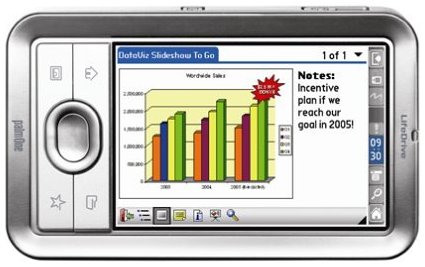
plamOne's new line of PDA's, the LifeDrive, it's basically a HardDrive in a Palm OS device. This is perhaps palmOne's take on the current hype of Portable Media Devices. Those thingamajigs that plays all the media formats one can think of. Honestly, I'm still too skeptical when it comes to these devices. wonder why some people buy them. Yes, you could watch your favorite episode of ALIAS or Smallville, but that's just up to that point, an episode. You see, these devices are worthless, if you can't watch or listen to at least half of the contents on the drive. Although, at least with the LifeDrive, palmOne is disguising it as a PDA that can store enormous amounts of data. But unless these it can give me power to view everything on the device, then I'm still up to the waiting game.

The New Gen Game Consoles?

Now that the Xbox 360 has been officially announced (but specs are still too sketchy), when will SONY announce the PS3 and Nintendo the Revolution?

Migration Completed
I have SUCCESSFULLY migrated all my personal Blogs to my Friendster Blog. The BloogerGAN Blogsite will now focus on tech issues. Thanks and do keep on enjoying reading the blogs!
Saturday, April 30, 2005
2 proposals to keep Filipino doctors from going abroad
This story was taken from www.inq7.net
2 proposals to keep Filipino doctors from going abroad
April 30, 2005
Updated 00:19am (Mla time)
Christian Esguerra
Inquirer News Service
HOW do you keep Filipino doctors from leaving for abroad?
A member of the Philippine College of Physicians is proposing that the government require all doctors trained in state-owned hospitals to work in the country for a specified period before being allowed to seek greener pastures elsewhere.
Dr. Antonio Dans, chief of the Philippine General Hospital's adult medicine section, said his proposal was also meant to encourage doctors to stay and plot their career as "generalists or internists."
He noted that there was a wide gap between the number of general practitioners and specialists like cardiologists and pulmonologists.
The discrepancy has made health care more costly, he said.
When patients have to deal with many specialists, they naturally have to shell out more money, he explained.
But many of these cases can very well be handled by an internist who has a "broad knowledge and approach," Dans said.
No problem with specialists
"We're not saying that there's a problem with specialists. The problem is with the proportion (between the number of internists and specialists), not with the people," the doctor explained.
In fact, specialists such as cardiologists can be of help to internists by coming up with guidelines in the handling of cases like hypertension, Dans said.
The Philippine College of Physicians will tackle the problems during its 350th annual convention on May 3 to 6 at the Edsa Shangri-La Hotel.
Clash of 2 rights
"It's really a clash of two rights," said Dans.
"While a doctor has the right to find his own destiny, the government also has the right to make sure that its investment becomes worthwhile," he said.
A logical requirement would be a year's service in government hospitals for every year of training, Dans has proposed.
This will mean that a doctor who has completed a regular three-year residency in a state institution like the PGH cannot leave for abroad until he serves for three more years in the country.
An estimated 30 percent of the country's 100,000 registered doctors have migrated to North America, according to Philippine Medical Association president Bu Castro.
Dans' proposal essentially seeks to expand an existing policy covering doctors sent by government hospitals for training abroad to cover all medical graduates of state institutions.
Dans, who was sent on a fellowship to train for two years on clinical epidemiology and cardiology at the McMaster University in Canada, said he had to work at the PGH for six years after completing the course.
Short-term solution
"It's a contract used by some government institutions. I think we can use this principle on more doctors to encourage them to stay," he said.
But this idea would provide only a short-term solution to the medical diaspora, he said.
"We really have to give them a reason to stay. And this involves a long-term solution that would entail an improved economy, among other things," said Dans.
©2005 www.inq7.net all rights reserved
2 proposals to keep Filipino doctors from going abroad
April 30, 2005
Updated 00:19am (Mla time)
Christian Esguerra
Inquirer News Service
HOW do you keep Filipino doctors from leaving for abroad?
A member of the Philippine College of Physicians is proposing that the government require all doctors trained in state-owned hospitals to work in the country for a specified period before being allowed to seek greener pastures elsewhere.
Dr. Antonio Dans, chief of the Philippine General Hospital's adult medicine section, said his proposal was also meant to encourage doctors to stay and plot their career as "generalists or internists."
He noted that there was a wide gap between the number of general practitioners and specialists like cardiologists and pulmonologists.
The discrepancy has made health care more costly, he said.
When patients have to deal with many specialists, they naturally have to shell out more money, he explained.
But many of these cases can very well be handled by an internist who has a "broad knowledge and approach," Dans said.
No problem with specialists
"We're not saying that there's a problem with specialists. The problem is with the proportion (between the number of internists and specialists), not with the people," the doctor explained.
In fact, specialists such as cardiologists can be of help to internists by coming up with guidelines in the handling of cases like hypertension, Dans said.
The Philippine College of Physicians will tackle the problems during its 350th annual convention on May 3 to 6 at the Edsa Shangri-La Hotel.
Clash of 2 rights
"It's really a clash of two rights," said Dans.
"While a doctor has the right to find his own destiny, the government also has the right to make sure that its investment becomes worthwhile," he said.
A logical requirement would be a year's service in government hospitals for every year of training, Dans has proposed.
This will mean that a doctor who has completed a regular three-year residency in a state institution like the PGH cannot leave for abroad until he serves for three more years in the country.
An estimated 30 percent of the country's 100,000 registered doctors have migrated to North America, according to Philippine Medical Association president Bu Castro.
Dans' proposal essentially seeks to expand an existing policy covering doctors sent by government hospitals for training abroad to cover all medical graduates of state institutions.
Dans, who was sent on a fellowship to train for two years on clinical epidemiology and cardiology at the McMaster University in Canada, said he had to work at the PGH for six years after completing the course.
Short-term solution
"It's a contract used by some government institutions. I think we can use this principle on more doctors to encourage them to stay," he said.
But this idea would provide only a short-term solution to the medical diaspora, he said.
"We really have to give them a reason to stay. And this involves a long-term solution that would entail an improved economy, among other things," said Dans.
©2005 www.inq7.net all rights reserved
Thursday, April 28, 2005
An Invitation to the May 28 Doctor’s Meeting:
Crisis and Hope for the Medical Profession
(Invitation to May 28 Meet)
By Willie T. Ong, MD
“Never in history have thousands of Filipino doctors given up their profession to become nurses in a foreign land, ” laments Dr. Tony Acosta, the 81 year old and eldest official of the Department of Health.
Never in the history of the medical profession has there been a crisis of this proportion. “It’s a medical apocalypse,” says Dr. Bu Castro, president of the Philippine Medical Association. “It’s not brain drain anymore, it’s brain hemorrhage,” says UP Vice Chancellor for Research, Dr. Jaime Galvez Tan.
The facts are undeniable. PMA estimates that 12,000 doctors have and are taking up nursing. Many hospitals are on the brink of closure from lack of resident doctors. “Half of our class are deferring medical practice and going into other more lucrative businesses,” says Dr. Gan Montenegro, the president of FEU Class 2003.
If you want to assure yourselves that more doctors are coming in, think again. Fact: Dr. Fernando Sanchez, executive director of the Association of Phil. Medical Colleges, says that those taking the NMAT to enter medicine are down 50%, as compared to 3 years ago. The youth do not aspire to become doctors anymore. The issue is not just brain drain. But the issue of the lost glory, the fall from grace, and the end of the golden age for Philippine medicine.
The conclusions are frightening. Doctors are giving up on the profession in droves. New applicants are not coming in through the medical schools. Who will care for Juan De La Cruz?
And need we even mention, “medical malpractice bill.” A crisis in its own right. As Senator Richard Gordon comments, “The solution to the medical crisis must come from doctors themselves.” These bills have arisen from public perception of doctors, which can partly be blamed on the profession itself. Apathy, lack of concern, and inner squabbling can destroy any profession.
Moreover, there is a third looming crisis: the conflict of interests between the senior doctors and young doctors. Young doctors, a silent majority, are beset with obstacles to practice imposed by senior doctors. For example, before one can practice in a hospital, there is the prerequisite of expensive stocks. If you have the money, you must still pass stringent requirements that may border on the bosses’ whims. And there’s this turf-war to get control over patient referrals and admissions. Is it any wonder that young doctors, helpless and frustrated, quickly leave the country?
These crises have hit the profession at its heart, now bleeding, and near collapse. Who is to blame? And can doctors find their way back? It’s easy to blame the government and the medical societies, but we too share the blame. In reality, doctors can either be part of the problem or part of the solution.
Our group wants to be part of the solution. We cannot stand idly by as the profession goes down the drain. And thus we formed MIND: an advocacy and support group for doctors. Our goal is to help other doctors to the best of our abilities. For in keeping doctors here, we believe we are helping care for patients as well.
On May 28, 2005, we are asking you to come to an informal meeting where you will find other like-minded colleagues, doctors who have not given up on the profession. Let me introduce you to a number of our supporters.
Dr. Philip Cruz helped start the Give-a-life foundation when he was a pediatric resident. Philip has one single-minded goal: not to let a Filipino child die if he can help it. Give-a-life foundation has since given away tens of millions worth of medicines and equipments to 12 hospitals all over the country.
Dr. Amiel De La Cruz has devoted several years seeing charity patients at Our Lady of Peace Hospital, a hospital founded by Fr. James Reuter and Ramon Magsaysay Awardee Sr. Eva Maamo. Amiel started as a volunteer, and has become the Assistant Medical Director of this “Hospital for the Poor.”
Dr. Mike Muin and Jojo Ferrer, both based abroad, have started Pinoy MD in 2003, a website for Filipino doctors. This website has since connected 750 Filipino doctors from across the globe in the spirit of helping and camaraderie.
Dr. Robert Gan, a young and accomplished Filipino neurologist, is a supporter and part of the group’s think-tank. Dr. Gan’s research accomplishments (all published internationally) are truly phenomenal.
For my part, I have always wanted to help doctors ever since I wrote the first edition of the Medicine Blue Book in 1995 during my residency. I have also been the medical director of the Pasay Filipino Chinese Charity Health Center for 8 years, a center which has benefited thousands of indigent patients. I write these things not to boast, but only to inform you, our dear colleague, that we are serious in helping our fellow doctors and patients.
In our first meeting last March 2005, 40 doctors came. One doctor confided that she initially had plans of going abroad but “changed her mind” after hearing my talk. Since then, more than 20 core group of doctors have given their support.
I sincerely thank all those who have pledged their time and resources for our cause. I also thank the 120 doctors (and counting) who have trusted me with their cell phones and e-mail addresses to be updated on our cause. And finally, I thank God almighty, for giving the strength and the time to fulfill His mission for me.
We believe there is hope for the medical profession. There is a solution. And it must start from each one of us. Join us for our grand meeting on May 28, 2005. It’s free.
Why You Should Come:
1. This is just an informal dinner meeting. No commitments.
2. Catch up with old friends and meet new ones. You can network.
3. Air-conditioned venue doubles as medical museum with rare picture archives.
4. Two talks will be given by Dr. Willie T. Ong on (1) testmanship and (2) doctors’ issues and problems.
5. Free, signed 2005 edition of the Medicine Blue Book.
6. Dinner to be served by Verleo Catering.
7. No registration fees.
What: Informal meeting of doctors to talk about Philippine healthcare issues.
Where: 4th Floor, Sonlie Building, 2652 Taft Avenue, Pasay City (between LRT Libertad and EDSA station). Parking is available.
When: May 28, 2005, Saturday, 5 - 8 p.m.
How: If you or your friends would like to come, please text us your names. List of names will be given to building guard.
Who: Drs. Willie and Liza Ong (Cell: 0917-387-6750 & e-mail: willietong@netasia.net)
(Invitation to May 28 Meet)
By Willie T. Ong, MD
“Never in history have thousands of Filipino doctors given up their profession to become nurses in a foreign land, ” laments Dr. Tony Acosta, the 81 year old and eldest official of the Department of Health.
Never in the history of the medical profession has there been a crisis of this proportion. “It’s a medical apocalypse,” says Dr. Bu Castro, president of the Philippine Medical Association. “It’s not brain drain anymore, it’s brain hemorrhage,” says UP Vice Chancellor for Research, Dr. Jaime Galvez Tan.
The facts are undeniable. PMA estimates that 12,000 doctors have and are taking up nursing. Many hospitals are on the brink of closure from lack of resident doctors. “Half of our class are deferring medical practice and going into other more lucrative businesses,” says Dr. Gan Montenegro, the president of FEU Class 2003.
If you want to assure yourselves that more doctors are coming in, think again. Fact: Dr. Fernando Sanchez, executive director of the Association of Phil. Medical Colleges, says that those taking the NMAT to enter medicine are down 50%, as compared to 3 years ago. The youth do not aspire to become doctors anymore. The issue is not just brain drain. But the issue of the lost glory, the fall from grace, and the end of the golden age for Philippine medicine.
The conclusions are frightening. Doctors are giving up on the profession in droves. New applicants are not coming in through the medical schools. Who will care for Juan De La Cruz?
And need we even mention, “medical malpractice bill.” A crisis in its own right. As Senator Richard Gordon comments, “The solution to the medical crisis must come from doctors themselves.” These bills have arisen from public perception of doctors, which can partly be blamed on the profession itself. Apathy, lack of concern, and inner squabbling can destroy any profession.
Moreover, there is a third looming crisis: the conflict of interests between the senior doctors and young doctors. Young doctors, a silent majority, are beset with obstacles to practice imposed by senior doctors. For example, before one can practice in a hospital, there is the prerequisite of expensive stocks. If you have the money, you must still pass stringent requirements that may border on the bosses’ whims. And there’s this turf-war to get control over patient referrals and admissions. Is it any wonder that young doctors, helpless and frustrated, quickly leave the country?
These crises have hit the profession at its heart, now bleeding, and near collapse. Who is to blame? And can doctors find their way back? It’s easy to blame the government and the medical societies, but we too share the blame. In reality, doctors can either be part of the problem or part of the solution.
Our group wants to be part of the solution. We cannot stand idly by as the profession goes down the drain. And thus we formed MIND: an advocacy and support group for doctors. Our goal is to help other doctors to the best of our abilities. For in keeping doctors here, we believe we are helping care for patients as well.
On May 28, 2005, we are asking you to come to an informal meeting where you will find other like-minded colleagues, doctors who have not given up on the profession. Let me introduce you to a number of our supporters.
Dr. Philip Cruz helped start the Give-a-life foundation when he was a pediatric resident. Philip has one single-minded goal: not to let a Filipino child die if he can help it. Give-a-life foundation has since given away tens of millions worth of medicines and equipments to 12 hospitals all over the country.
Dr. Amiel De La Cruz has devoted several years seeing charity patients at Our Lady of Peace Hospital, a hospital founded by Fr. James Reuter and Ramon Magsaysay Awardee Sr. Eva Maamo. Amiel started as a volunteer, and has become the Assistant Medical Director of this “Hospital for the Poor.”
Dr. Mike Muin and Jojo Ferrer, both based abroad, have started Pinoy MD in 2003, a website for Filipino doctors. This website has since connected 750 Filipino doctors from across the globe in the spirit of helping and camaraderie.
Dr. Robert Gan, a young and accomplished Filipino neurologist, is a supporter and part of the group’s think-tank. Dr. Gan’s research accomplishments (all published internationally) are truly phenomenal.
For my part, I have always wanted to help doctors ever since I wrote the first edition of the Medicine Blue Book in 1995 during my residency. I have also been the medical director of the Pasay Filipino Chinese Charity Health Center for 8 years, a center which has benefited thousands of indigent patients. I write these things not to boast, but only to inform you, our dear colleague, that we are serious in helping our fellow doctors and patients.
In our first meeting last March 2005, 40 doctors came. One doctor confided that she initially had plans of going abroad but “changed her mind” after hearing my talk. Since then, more than 20 core group of doctors have given their support.
I sincerely thank all those who have pledged their time and resources for our cause. I also thank the 120 doctors (and counting) who have trusted me with their cell phones and e-mail addresses to be updated on our cause. And finally, I thank God almighty, for giving the strength and the time to fulfill His mission for me.
We believe there is hope for the medical profession. There is a solution. And it must start from each one of us. Join us for our grand meeting on May 28, 2005. It’s free.
Why You Should Come:
1. This is just an informal dinner meeting. No commitments.
2. Catch up with old friends and meet new ones. You can network.
3. Air-conditioned venue doubles as medical museum with rare picture archives.
4. Two talks will be given by Dr. Willie T. Ong on (1) testmanship and (2) doctors’ issues and problems.
5. Free, signed 2005 edition of the Medicine Blue Book.
6. Dinner to be served by Verleo Catering.
7. No registration fees.
What: Informal meeting of doctors to talk about Philippine healthcare issues.
Where: 4th Floor, Sonlie Building, 2652 Taft Avenue, Pasay City (between LRT Libertad and EDSA station). Parking is available.
When: May 28, 2005, Saturday, 5 - 8 p.m.
How: If you or your friends would like to come, please text us your names. List of names will be given to building guard.
Who: Drs. Willie and Liza Ong (Cell: 0917-387-6750 & e-mail: willietong@netasia.net)
Sunday, April 17, 2005
The "New" Tungsten E2
 The Tungsten E2 uses the same design as the Tungsten E and Tungsten T5. The silver plastic tablet sits well in the hand at 114 x 78 x 15 mm, only a hair larger than the TE, and is a comfortable 133 grams. A square 320 x 320 16-bit color TFT offers slightly improved visual quality from palmOne's already excellent screen design, although still incorporates only a fixed handwriting area.
 The first noticeable improvement of the E2 is the inclusion of palmOne's new Multi-Connector serial port to replace the mini-USB port of its predecessor, a change the company claims was requested by many users in order to support the optional cradle. Other than that, and the barely-noticeable increase in thickness, the E2 is almost indistinguishable from the TE.
The next notable improvement over the TE is the inclusion of Bluetooth 1.1. Other connectivity options are standard, including the SDIO slot, IR, and Multi-Connector port. Although Wi-Fi is not included, palmOne does claim that, unlike the Treo 650 communicator, the E2 works with their SDIO Wi-Fi card.
The E2 sports a few improvements under the hood as well, including a new 200 MHz, and the same non-volatile memory system palmOne has started using on all of their models to avoid data loss in case the battery runs down. Although containing only 32 MB (26 MB user-available), the chunk size is smaller than on the Treo 650, which - without delving into a lengthy technical explanation - means lost slack space is far less. 26 MB is still a fairly small amount of RAM for a modern handheld, however
The E2 includes the current state-of-the-art of palmOne's software suite. That includes palmOne's upgraded PIM suite, media suite (photo/video viewer and RealOne audio player), and web browser in ROM, with VersaMail and Documents To Go available on the included CD. The built-in Launcher also includes the "Favorites" tool debuted on the Tungsten T5 as well. All of that runs on Palm OS "Garnet" 5.4 with the usual Graffiti 2 handwriting software.
The software package for the Tungsten E2 is complete, but unsurprising. Nearly identical offerings are included in the Tungsten T5 and Treo 650, and the media suite hasn't changed much since the Zire 72 a year ago. That's to palmOne's credit, actually. The same suite found on their high-end models is now standard on the low-end, too, making for a solid business device as well as a good media performer.
Wireless Harrison's Priciples of Internal Medicine
Wireless version of Harrison's Manual of Medicine
McGraw-Hill Professional has announced the launch of Harrison's Manual
of Medicine, 16th edition for personal digital assistants (PDAs), the
Web and wireless devices. The 16th edition of Harrison's Manual of
Medicine, published by McGraw- Hill, is derived from the world's most
authoritative internal medicine reference, Harrison's Principles of
Internal Medicine. The Manual is designed to provide on-the-spot
answers to daily patient management questions. The new edition adds
coverage of admitting orders, essential medical procedures, critical
care medicine and bioterrorism. Over 300 tables and 100 figures
augment the text, and more than 13,000 index terms aid information
retrieval.
McGraw-Hill Professional has announced the launch of Harrison's Manual
of Medicine, 16th edition for personal digital assistants (PDAs), the
Web and wireless devices. The 16th edition of Harrison's Manual of
Medicine, published by McGraw- Hill, is derived from the world's most
authoritative internal medicine reference, Harrison's Principles of
Internal Medicine. The Manual is designed to provide on-the-spot
answers to daily patient management questions. The new edition adds
coverage of admitting orders, essential medical procedures, critical
care medicine and bioterrorism. Over 300 tables and 100 figures
augment the text, and more than 13,000 index terms aid information
retrieval.
Friday, April 08, 2005
And Then There was One -- BEXTRA Pulled Out
The painkiller Bextra was taken off the market Thursday, and the
government wants similar prescription drugs to carry the strongest
possible warnings about increased risk of heart attack and stroke
among millions of people who rely on them.
Pfizer Inc. suspended sales of Bextra in the United States and the
European Union on Thursday at the request of the Food and Drug
Administration and European regulators. The company said the FDA, in
seeking Bextra's withdrawal, cited risk of serious, sometimes fatal,
skin reactions to Bextra on top of risks shared by other similar
drugs.
At issue are a broad class of painkillers known as nonsteroidal
anti-inflammatory drugs. Bextra is a particular type of
anti-inflammatory known as a Cox-2 inhibitor, a class of blockbuster
sellers particularly popular among arthritis sufferers until a
competitor — Vioxx from Merck & Co. — was pulled off the market last
fall. That sparked questions about the safety of all similar drugs.
Pfizer's Celebrex still can be sold, the FDA announced Thursday. But
it, and all other prescription nonsteroidal anti-inflammatories carry
a black-box warning on its label that users may face an increased risk
of cardiovascular side effects.
Scientists don't have enough information yet to tell if one of the
remaining prescription painkillers is safer than another, FDA
officials said. But the agency decided Bextra was more dangerous than
its competitors because of the added skin side effect.
In addition to the prescription drugs, the FDA asked manufacturers of
over-the-counter NSAID painkillers to revise their labels to clarify
information about the risks of cardiovascular incidents,
gastrointestinal bleeding and rare but serious skin reactions.
That doesn't mean nonprescription drugs are dangerous, FDA officials
said — but the strengthened wording will make clear patients should
take those drugs only at the labeled dosage for short periods of time.
Wednesday, April 06, 2005
5 Reasons Sex is Good For You
5 Reasons Sex is Good For You!
Print this out and share it with your lover!
By Laura Snyder
Better sleep. A sexier physique. Stronger immunity. Sound like the effects of the latest wonder drug? Nope, it's just the many physical benefits of having a satisfying sexual relationship.
And all this time you were just making love because it was fun! If you're looking for more reasons to get romantic, consider the following:
1. You're getting a good workout. Would you rather run 75 miles or have sex three times a week for one year? While both burn the same number of calories (about 7,500), one is decidedly more pleasurable than the other. Regular sex - which burns approximately 150 calories in a half-hour -- is regular exercise. You'll have all the same benefits of spending that time in the gym, including improved circulation, lower cholesterol and the release of feel-good endorphins.
2. You won't get sick. According to research by Dr. Carl Charnetski, professor of psychology at Wilkes University in Wilkes-Barre, Pa and co-author of Feeling Good is Good For You, people who reported one or two sexual episodes per week enjoyed higher levels of Immunoglobin A, the antibody that helps fend of illness.
3. You'll feel happier. In addition to the obvious boost in satisfaction, feeling secure in your relationship leads to a greater sense of well-being. Women in particular may see even more benefits. Researchers at the State University of New York at Albany found that women who regularly came into contact with semen were significantly less depressed than those who didn't get a dose of those potent sex hormones and naturally occurring opiates.
4. You'll reduce stress. People who get it on regularly report that they handle stress better. The release of climax will get even the most anxious lover totally relaxed, and you know you'll sleep better.
5. You'll live longer (and look younger!). A British study of 1,000 men found that those who had at least two orgasms per week had half the death rate of those who indulged less than once a month. Sex can make you look younger, too, according to neuropsychologist David Weeks, who found that men and women who reported having sex an average of four times per week looked approximately 10 years younger than they really were.
Print this out and share it with your lover!
By Laura Snyder
Better sleep. A sexier physique. Stronger immunity. Sound like the effects of the latest wonder drug? Nope, it's just the many physical benefits of having a satisfying sexual relationship.
And all this time you were just making love because it was fun! If you're looking for more reasons to get romantic, consider the following:
1. You're getting a good workout. Would you rather run 75 miles or have sex three times a week for one year? While both burn the same number of calories (about 7,500), one is decidedly more pleasurable than the other. Regular sex - which burns approximately 150 calories in a half-hour -- is regular exercise. You'll have all the same benefits of spending that time in the gym, including improved circulation, lower cholesterol and the release of feel-good endorphins.
2. You won't get sick. According to research by Dr. Carl Charnetski, professor of psychology at Wilkes University in Wilkes-Barre, Pa and co-author of Feeling Good is Good For You, people who reported one or two sexual episodes per week enjoyed higher levels of Immunoglobin A, the antibody that helps fend of illness.
3. You'll feel happier. In addition to the obvious boost in satisfaction, feeling secure in your relationship leads to a greater sense of well-being. Women in particular may see even more benefits. Researchers at the State University of New York at Albany found that women who regularly came into contact with semen were significantly less depressed than those who didn't get a dose of those potent sex hormones and naturally occurring opiates.
4. You'll reduce stress. People who get it on regularly report that they handle stress better. The release of climax will get even the most anxious lover totally relaxed, and you know you'll sleep better.
5. You'll live longer (and look younger!). A British study of 1,000 men found that those who had at least two orgasms per week had half the death rate of those who indulged less than once a month. Sex can make you look younger, too, according to neuropsychologist David Weeks, who found that men and women who reported having sex an average of four times per week looked approximately 10 years younger than they really were.
Sunday, April 03, 2005
I join the world in mourning for the POPE's Death
I join the world in mourning the death of the most POWERFUL PONTIFF that had ever Lived!
I had the opportunity to see his Holiness twice in my lifetime. Though the first one in 1981 when he first visited the Philippines, as a kid was less memorable, I can still hear the crowd cheering "VIVA LA PAPA" as he passed us from the airport in Buendia cor Roxas Blvd. The next one was in 1995, with my then girlfriend and now my wife. When he visited again, the Philippines for the World Youth Day Celebration. Though it was not up close, we were able to see him from his Pope Mobile when he passed us on his way to the Quirino Grandstand. Up 'til today, I can still see his pink face waving his hands to us when his car drove by. That time we were chanting "WE LOVE YOU, JOHN PAUL II!"
I had the opportunity to see his Holiness twice in my lifetime. Though the first one in 1981 when he first visited the Philippines, as a kid was less memorable, I can still hear the crowd cheering "VIVA LA PAPA" as he passed us from the airport in Buendia cor Roxas Blvd. The next one was in 1995, with my then girlfriend and now my wife. When he visited again, the Philippines for the World Youth Day Celebration. Though it was not up close, we were able to see him from his Pope Mobile when he passed us on his way to the Quirino Grandstand. Up 'til today, I can still see his pink face waving his hands to us when his car drove by. That time we were chanting "WE LOVE YOU, JOHN PAUL II!"
Friday, April 01, 2005
Gmail to go 2GB
Gmail is not just going to let Yahoo! gram the limelight, Google recently said that they are increasing the Gmail storage to 2GB as a response to Yahoo!'s announcement that it will be increasing it's free web mail storage to 1GB. And so the competition leaves the consumers as the overall winner!
Tuesday, March 29, 2005
Grey's Anatomy the TV Series
Remember the Anatomy Atlas most of us used during our Med School days? Well, now there's a TV series named after it.
Grey's Anatomy focuses on young people struggling to be doctors and doctors struggling to stay human. It's the drama and intensity of medical training mixed with the funny, sexy, painful lives of interns who are about to discover that neither medicine nor relationships can be defined in black and white. Real life only comes in shades of grey.
I wonder when will this come out here in our side of the world.
Grey's Anatomy focuses on young people struggling to be doctors and doctors struggling to stay human. It's the drama and intensity of medical training mixed with the funny, sexy, painful lives of interns who are about to discover that neither medicine nor relationships can be defined in black and white. Real life only comes in shades of grey.
I wonder when will this come out here in our side of the world.
Monday, March 28, 2005
Yahoo! Groups Facelift
Yahoo! Groups has changed it's user interface and in my opinion it's more user friendly and has more eye candy to it. Though needs more colors.
Friday, March 25, 2005
Death of Doctors
The DEATH OF PHILIPPINE DOCTORS
When I was a kid, my parents saturated me with the medical environment to perhaps influence into becoming a doctor someday. Well, I guess they've succeeded and I fell into their "hypnosis". But as I turn into a physician, my ideals turned into frustration as different "challenges" went my way. Although it's fun to work in an environment where most people turn to you whenever they are sick, it sometimes make me sick as well. Yeah, there's no perfect thing in this world, but as I move forward, I see the different ugliness of this profession has. Perhaps this is the reason why I liked being a Medical Technologist much than being a doctor.
One of the worst things I saw, was when I was a Medical Clerck. I was in Jose Reyes Memeorial Medical Center for my Pediatrics rotation. There was this 6 year old male kid, who's in for a sever case of Pneumonia which was complicated with Sepsis. The kid has mental retardation and is from a lower than average family. From my point of view, being done with my Pediatrics rotation inside FEU-NRMF Medical Center (which I consider still one of the best training institutions there is), I knew that the kid has this big chance of making it this crisis of his. I was the kid's "manual" respirator that time, forcing myself to be as constant and as regular with every pump I do with the Ambu-bag, I made sure that even the slightest change in his vital signs I immediately inform the Pediatric Resident on duty that time. Then came the kid's relatives with his Mom, I heard them talking about what to do with the kid. I assumed that the Resident had talked to them about the kid's condition, then they decided to just bring him home, so I, being the one in charge with the "ventilator", I walked them out the hospital door, just to find out, in the most horrible experience I could ever experience, there the kid, grasping for his breath, and me still pushing myself to help him take air, saw that what picked them up from the door was a Funeral Hearse. Oh my God! They've killed a kids who's chance of survival for me was more than 80%. How can parents do this to their child. Then I just told myself that there's nothing I could do but to accept what had happened.
Fast forward to the present time, a new challenge is in front of me, and not only me but to all the physicians in the Philippines, the Malpractice Bill. Little that most of us know, it's slowly crawling itself into becoming a full-pledge law, and when that day comes, hell will break loose. Thanks to Dr. Willie T. Ong, he helped "some" of us realize the problem at hand. The usual thing to think is, well, we have our own organization who will find a way to squeeze the doctors out of this situation, it has always been and should always be, that's why we have an organization, to make us one, so we could move as one. Unfortunately, the Philippine Medical Association (PMA) seem not too keen or not too active in pursuing the movement against the said law. Only a handful of physicians are moving heavens and earth just to block the passage of the said Bill. Why? well, firstly, the organization that we were depending on to fight for out rights CANNOT move freely due to financial constraints, though there is a huge amount in the coffers of the PMA, the President dare not touch it, 'coz if he does, he will suffer the fury of the "pillars" of Philippine Medicine. And to top it off, not all doctors are supportive of the move. There are some who simply accepts it as a fact and that the Malpractice bill is inevitable, then there are some who are for the bill. When I went around, I got 2 distinct response from my fellow doctors, one is for and the other against. Thus, I concluded, everybody will be affected by this, and we, the doctors, are not showing any signs of UNITY. And wihtout it, we will all perish in the hands of the OPPORTUNISTIC wrathc of our CARE-LESS ATTITUDE!
When I was a kid, my parents saturated me with the medical environment to perhaps influence into becoming a doctor someday. Well, I guess they've succeeded and I fell into their "hypnosis". But as I turn into a physician, my ideals turned into frustration as different "challenges" went my way. Although it's fun to work in an environment where most people turn to you whenever they are sick, it sometimes make me sick as well. Yeah, there's no perfect thing in this world, but as I move forward, I see the different ugliness of this profession has. Perhaps this is the reason why I liked being a Medical Technologist much than being a doctor.
One of the worst things I saw, was when I was a Medical Clerck. I was in Jose Reyes Memeorial Medical Center for my Pediatrics rotation. There was this 6 year old male kid, who's in for a sever case of Pneumonia which was complicated with Sepsis. The kid has mental retardation and is from a lower than average family. From my point of view, being done with my Pediatrics rotation inside FEU-NRMF Medical Center (which I consider still one of the best training institutions there is), I knew that the kid has this big chance of making it this crisis of his. I was the kid's "manual" respirator that time, forcing myself to be as constant and as regular with every pump I do with the Ambu-bag, I made sure that even the slightest change in his vital signs I immediately inform the Pediatric Resident on duty that time. Then came the kid's relatives with his Mom, I heard them talking about what to do with the kid. I assumed that the Resident had talked to them about the kid's condition, then they decided to just bring him home, so I, being the one in charge with the "ventilator", I walked them out the hospital door, just to find out, in the most horrible experience I could ever experience, there the kid, grasping for his breath, and me still pushing myself to help him take air, saw that what picked them up from the door was a Funeral Hearse. Oh my God! They've killed a kids who's chance of survival for me was more than 80%. How can parents do this to their child. Then I just told myself that there's nothing I could do but to accept what had happened.
Fast forward to the present time, a new challenge is in front of me, and not only me but to all the physicians in the Philippines, the Malpractice Bill. Little that most of us know, it's slowly crawling itself into becoming a full-pledge law, and when that day comes, hell will break loose. Thanks to Dr. Willie T. Ong, he helped "some" of us realize the problem at hand. The usual thing to think is, well, we have our own organization who will find a way to squeeze the doctors out of this situation, it has always been and should always be, that's why we have an organization, to make us one, so we could move as one. Unfortunately, the Philippine Medical Association (PMA) seem not too keen or not too active in pursuing the movement against the said law. Only a handful of physicians are moving heavens and earth just to block the passage of the said Bill. Why? well, firstly, the organization that we were depending on to fight for out rights CANNOT move freely due to financial constraints, though there is a huge amount in the coffers of the PMA, the President dare not touch it, 'coz if he does, he will suffer the fury of the "pillars" of Philippine Medicine. And to top it off, not all doctors are supportive of the move. There are some who simply accepts it as a fact and that the Malpractice bill is inevitable, then there are some who are for the bill. When I went around, I got 2 distinct response from my fellow doctors, one is for and the other against. Thus, I concluded, everybody will be affected by this, and we, the doctors, are not showing any signs of UNITY. And wihtout it, we will all perish in the hands of the OPPORTUNISTIC wrathc of our CARE-LESS ATTITUDE!
Wednesday, March 23, 2005
Yahoo! to offer 1GB Free space

Yahoo! who was shun to the sidelines by Gmail (Google's FREE email service) by the 1GB offer, will soon offer the same disc space to it's Yahoo!Mail users. Apparently, all the FREE emails on the web was shook when Gmail came in, so far Yahoo! aheads Gmail in subscriber base since Gmail is an invitation-only subscription.
Holiday Rush Everything
I don't know if it's just us Filipinos or other people from other country are like this as well, I'm talking about doing things at the nth hour. Today is the last day of work for this week, before a very long weekend for the Holy Week. I'm at the grocery at the moment and the lines at the check out counters are longer than usual, geez and thinking about it, I'm one of there people Hahaha
Globe Blinks

In the price war that's upon the Philippine telecommunications arena, the one that everybody thought won't join the fuss blinked and is now part of the game although in silent mode. Globe Telecom silently launched the Globe All-You-Can Unlimited Call & Text promo. Everybody thought Globe will join the game thru their budget brand Touch Mobile, but we were proven wrong. Just like the TM rules with a slight difference when it comes to registering for the promo. One only has to load P300.oo (registration fee) and send 300 to 2870 and wait for the activation SMS, this is valid for 30 days. Unfortunately though to Plan subscribers since this "promo" is available only for Prepaid SIMs only. So there, it means I bought 2 prepaid SIMs right away. Isn't it nice to have a friendly competition around?
Yahoo Buys Flicker

OMG! The war is getting bigger, Yahoo! buys Flickr. This perhaps was
done to match Google's move when it acquired Picasa. Again,
competition is very much beneficial to the customers or end users
--
http://bloogergan.blogspot.com
htt
p://bloogerphotos.blogspot.com
Wednesday, March 09, 2005
Mobile phone Virus thru MMS
A new cellphone virus The CommWarrioe is out in the open. We've seen mobile phone virus spread thru Bluetooth and attaching itself to files like pictures and tones, now this new one sends itself thru Bluetooth and MMS. Once infected the virus will randomly select a contact in the phone's phonebook and will send itself using MMS. Since the receipient will assume that the MMS came from a trusted source, they will open the file and the process is repeated again. This virus/trojan will travel slow since it cannot distinguish landline numbers from cellphone numbers and it only (again) infects Symbian OS phones. It will not damage your phone but can lead to it hanging and your bills shoot up because of the MMS.
Thursday, March 03, 2005
SplashMoney 4 - with Wireless Technology
Remember the famous SplashData software you've got in your Palm and now in your PPC, well the SplashMoney part has been updated and is now capable of wireless downloading of your data.

SplashMoney is a complete personal financial manager for Palm OS handhelds and desktop computers that allows users to record transactions, track account balances, generate reports and budgets, and manage finances while on the go. Beyond the new wireless online banking capabilities and two-way synchronization with the included desktop software, SplashMoney 4.0 features a streamlined user-interface, charting of financial data, the ability to assign icons to transactions, transaction filtering, and bank account reconciliation. SplashMoney may be used as a stand-alone application on a Palm OS handheld or desktop computer, and is optimized for two-way synchronization between the two.
“SplashMoney has always been a favorite of handheld enthusiasts that want to manage their finances while on the go,” said John Chaffee, president of SplashData. “The new wireless banking support is sure to be a boon for anyone using a Treo smartphone or wireless-enabled PDA. By including both handheld and desktop software with seamless synchronization between the two, we are able to provide a complete end-to-end financial management solution of unparalleled integration, simplicity and value.”
SplashMoney is a complete personal financial manager for Palm OS handhelds and desktop computers that allows users to record transactions, track account balances, generate reports and budgets, and manage finances while on the go. Beyond the new wireless online banking capabilities and two-way synchronization with the included desktop software, SplashMoney 4.0 features a streamlined user-interface, charting of financial data, the ability to assign icons to transactions, transaction filtering, and bank account reconciliation. SplashMoney may be used as a stand-alone application on a Palm OS handheld or desktop computer, and is optimized for two-way synchronization between the two.
“SplashMoney has always been a favorite of handheld enthusiasts that want to manage their finances while on the go,” said John Chaffee, president of SplashData. “The new wireless banking support is sure to be a boon for anyone using a Treo smartphone or wireless-enabled PDA. By including both handheld and desktop software with seamless synchronization between the two, we are able to provide a complete end-to-end financial management solution of unparalleled integration, simplicity and value.”
Tuesday, March 01, 2005
NOKIA won't be left behind
Just like Sony Ericsson (but not as exciting), NOKIA released their own set of new phones. The 6230i, basically is just the 6230 with an upgraded camera to 1.3 MP, then the 6021 is a basic phone with Bluetooth but has no camera and the 6030, the low-end phone.

NEW Sony Ericsson Phones
Sony Ericsson released a new set of phones today. The Twins K750 (Clara) & W800 (SE Walkman cellphone) and the entry-level J300. The K750 is basically the W800, it differs only in color and the market where they are focusing it to. The K750 is focused on Imaging, thus they are marketing it on the 2.0 megapixel camera, which explains the dedicated camera button on top of the joystick.


While the W800 is being marketed as a Cellphone Walkman which explains the Walkman logo and, as with the K750, the dedicated button on top of the joystick.


But if you're going to look at it very closely, the specs are the same. What's exciting about these phones are the expansion capabilities. Looks like my K700 days are numbered hehehe
Here's a picture of the "twins" together

While the W800 is being marketed as a Cellphone Walkman which explains the Walkman logo and, as with the K750, the dedicated button on top of the joystick.
But if you're going to look at it very closely, the specs are the same. What's exciting about these phones are the expansion capabilities. Looks like my K700 days are numbered hehehe
Here's a picture of the "twins" together
Sunday, February 27, 2005
Medical News Website
MedPageToday.com is a website that contains medical related news. News that your patients read are now available for medical practitioners on-line. These news are also available for PDA owners (Palm OS or PPC) through ePocrates DocAlert feature. Articles are specialty separated or there is more for general medicine.
Saturday, February 26, 2005
Palminfocenter - DELAYED!

Recently, Palminfocenter has been late in delivering news. In a week's time, they've just churned out around 2-3 articles average. Is their something wrong with the editors? The writers? 'Coz definitely there are lots of news out there worth posting.
palmSource is Dumping Hotsync for SyncML
For all time now, ever since there was a Palm, when we hear Hotsync, we associate it with Palm. Now, after the 3GSM World congress, palmSource has announced that they are "dumping" the Hotsync technology for SyncML. Just in case you still don't know what SyncML is, well, if you own a mobile phone that can synchronize with your PC, chances are it uses SyncML technology to sync your phone's data to the computer. With this change, it will allow for much broader support of many backend and corporate deployed mobile server systems. It also allows for users to access over the air (OTA) synchronization servers already in place.

SyncML aims is to deliver an open, industry-wide specification for the universal synchronization of remote data and personal information across multiple networks, platforms, and devices. PalmSource was a founding member of the SyncML Initiative, an open standards group that drives data mobility.
SyncML aims is to deliver an open, industry-wide specification for the universal synchronization of remote data and personal information across multiple networks, platforms, and devices. PalmSource was a founding member of the SyncML Initiative, an open standards group that drives data mobility.
"Read All About It"
What to read news from all over the world but doesn't know where to start. Goodnews for you, go to Google News, a new feature from Google Labs. It searches the web of news content and delivers it to you wherever you want it. One nice thing about it is, it tells you how long that news article has been posted. So you know if you're getting the fresh ones. Have a Nice Day!
Friday, February 25, 2005
FREE Cancer Diagnosis Program for the Palm OS & Windows Mobile
I'm BACK! As promised before, I'm going to mix medicine with technology and here's another shot at it. From the American Cancer Society is a FREE software application that makes it easy for health practitioners to diagnose cancers/malignancies at the tip of their stylus. The ACS C-Tolls 2.0 is "a timesaving PDA tool that will provide you with instant access to the most recent cancer information, and it’s available free of charge to anyone in the health care field". Click here to download the app. ENJOY!
Saturday, February 19, 2005
IMPORTANT: Malpractice Issue: A Tough Fight Ahead
This is the Article By Dr. Willie T. Ong
Get ready for war.
On the red corner, insurance groups and legislators have made a head start in pushing for several malpractice bills in the Senate. A reliable source has confirmed the hiring of a top lobby group to have these bills approved as soon as possible.
On the blue corner, the Philippine Medical Association, led by its president Dr. Bu Castro, has initiated the “Total Recall” project, which asks for the withdrawal of all these bills. The PMA has met with its component associations in charting the battle plan.
If you expect an even fight, think again. The multi-million funding of the insurance groups crushes the cash-strapped medical profession in the first round. Estimates show that the insurance groups stand to gain three billion pesos every year. This is from the 60,000 practicing doctors who will have to pay Php 50,000 yearly for malpractice insurance. Thus, it will not come as a surprise if they invest millions in lobby money to pass these bills.
For those unaware, not one but five malpractice-related bills are pending in the Senate. Any one of which could spell doom for doctors and healthcare alike. Senator Serge Osmena’s Senate Bill (SB)1720 is self-explanatory: “An Act to protect against medical malpractice, punishing the malpractice of any medical practitioner and requiring them to secure malpractice insurance.” Other controversial bills are Senator Osmena’s SB-337, Senator Manuel Villar’s SB-588 and SB-743, and Senator Juan Flavier’s SB-03.
The odds are stacked up against the doctors as prominent media personalities continue with their anti-doctor campaign. And for the defense, can the Philippine Medical Association put up a decent fight?
Dr. Bu Castro: The Right Person At The Right Time
Dr. Bu Castro, incumbent president of the PMA, has accepted this difficult and uphill battle. As head the “Total Recall” project, he is the medical profession’s last line of defense against the malpractice bill and other related bills.
When his presidency ends in May 2005, Dr. Castro has chosen not to go for a re-election, but instead focus all his energies to saving the medical profession. “I am gearing for a long and difficult battle. I do hope other doctors and health workers will rally to our cause.”
As both doctor and lawyer, he is uniquely capable of handling the case. The young and idealistic president may still find the answer to the crisis in the profession.
With the able support of Dr. Jose Sabili, the amiable and energetic vice-president of the PMA, Dr. Castro has mapped out several plans. “For one, we have our version of the Patients Rights’ Bill.” Other strategies are still in the works.
Still, the doctors’ problems are the lack of funds and the heterogenous groups of doctors, sometimes with differing opinions and outlooks. “We need to gain the support of all doctors, nurses and health workers, for us to stand a chance against these big companies.”
Implications of Malpractice Bills To The Patient
According to the PMA president, the ill effects of malpractice bills are already well documented. “First, the cost of healthcare will rise dramatically as doctors practice ‘defensive medicine.’ More and more expensive laboratory test will be requested not for patient’s benefit but to protect the doctor from lawsuits.
“Second, surgeons will refuse to operate on high-risk cases. No one will operate on serious but potentially curable cases for fear of lawsuits.
“Third, all doctors will be forced to obtain malpractice insurance. This will force many doctors to find another profession or leave for abroad. Eighty-nine percent of doctors cannot afford malpractice insurance.
“Fourth, there will be less and less medical missions, because doctors can be sued for treating charity cases.
“In short, these Malpractice Bills are anti-poor and anti-patient. The poor can no longer get free health care from medical and surgical missions all over the country. As more and more doctors leave the country or retire early, our health care system will collapse. Thousands of poor people will die.”
Dr. Bu Castro has many plans, all of which sound good but without adequate money and other doctor’s support, it may be impossible to accomplish. If for nothing else, the malpractice issue should awaken slumbering doctors from their apathy and rally around their cause.
Get ready for war.
On the red corner, insurance groups and legislators have made a head start in pushing for several malpractice bills in the Senate. A reliable source has confirmed the hiring of a top lobby group to have these bills approved as soon as possible.
On the blue corner, the Philippine Medical Association, led by its president Dr. Bu Castro, has initiated the “Total Recall” project, which asks for the withdrawal of all these bills. The PMA has met with its component associations in charting the battle plan.
If you expect an even fight, think again. The multi-million funding of the insurance groups crushes the cash-strapped medical profession in the first round. Estimates show that the insurance groups stand to gain three billion pesos every year. This is from the 60,000 practicing doctors who will have to pay Php 50,000 yearly for malpractice insurance. Thus, it will not come as a surprise if they invest millions in lobby money to pass these bills.
For those unaware, not one but five malpractice-related bills are pending in the Senate. Any one of which could spell doom for doctors and healthcare alike. Senator Serge Osmena’s Senate Bill (SB)1720 is self-explanatory: “An Act to protect against medical malpractice, punishing the malpractice of any medical practitioner and requiring them to secure malpractice insurance.” Other controversial bills are Senator Osmena’s SB-337, Senator Manuel Villar’s SB-588 and SB-743, and Senator Juan Flavier’s SB-03.
The odds are stacked up against the doctors as prominent media personalities continue with their anti-doctor campaign. And for the defense, can the Philippine Medical Association put up a decent fight?
Dr. Bu Castro: The Right Person At The Right Time
Dr. Bu Castro, incumbent president of the PMA, has accepted this difficult and uphill battle. As head the “Total Recall” project, he is the medical profession’s last line of defense against the malpractice bill and other related bills.
When his presidency ends in May 2005, Dr. Castro has chosen not to go for a re-election, but instead focus all his energies to saving the medical profession. “I am gearing for a long and difficult battle. I do hope other doctors and health workers will rally to our cause.”
As both doctor and lawyer, he is uniquely capable of handling the case. The young and idealistic president may still find the answer to the crisis in the profession.
With the able support of Dr. Jose Sabili, the amiable and energetic vice-president of the PMA, Dr. Castro has mapped out several plans. “For one, we have our version of the Patients Rights’ Bill.” Other strategies are still in the works.
Still, the doctors’ problems are the lack of funds and the heterogenous groups of doctors, sometimes with differing opinions and outlooks. “We need to gain the support of all doctors, nurses and health workers, for us to stand a chance against these big companies.”
Implications of Malpractice Bills To The Patient
According to the PMA president, the ill effects of malpractice bills are already well documented. “First, the cost of healthcare will rise dramatically as doctors practice ‘defensive medicine.’ More and more expensive laboratory test will be requested not for patient’s benefit but to protect the doctor from lawsuits.
“Second, surgeons will refuse to operate on high-risk cases. No one will operate on serious but potentially curable cases for fear of lawsuits.
“Third, all doctors will be forced to obtain malpractice insurance. This will force many doctors to find another profession or leave for abroad. Eighty-nine percent of doctors cannot afford malpractice insurance.
“Fourth, there will be less and less medical missions, because doctors can be sued for treating charity cases.
“In short, these Malpractice Bills are anti-poor and anti-patient. The poor can no longer get free health care from medical and surgical missions all over the country. As more and more doctors leave the country or retire early, our health care system will collapse. Thousands of poor people will die.”
Dr. Bu Castro has many plans, all of which sound good but without adequate money and other doctor’s support, it may be impossible to accomplish. If for nothing else, the malpractice issue should awaken slumbering doctors from their apathy and rally around their cause.
Tuesday, February 15, 2005
Sony Ericsson K600i

Oh what a pretty site. Another blockbuster from Sony Ericsson, the K600i. Just take a look and stare at it for a minute. Isn't it lovely?! It's a 3G phone, with two (2) cameras. One is for Video Conferencing, but then again, looks like Sony Ericsson is at it again and chose not to include a Memory Card slot but instead heaped up the internal Memory.
GSPDA Xplore M28

At last the Group Sense Xplore M28 is out, and looks more of a phone than a PDA. Heck, it resembles more a Sony Ericsson design than any other. Now, this is a true Treo 650 competitor, the feature-set is at par with palmOne's smartphone. Now, if only Group Sense has the sense to price this onle a tad lower than the Treo 650. Their previous hadsets flopped, primarily because the features were a bit old and pricier than the newer competitors with better features.
Samsung D720
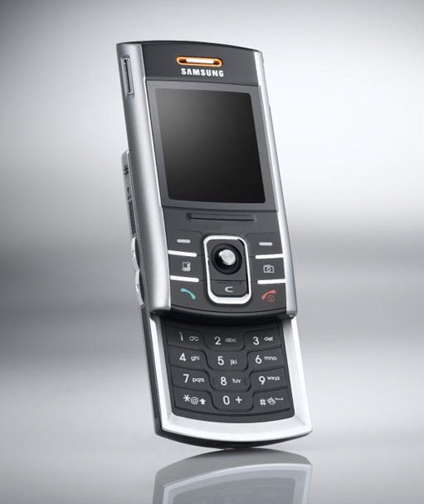
After Panasonic, Samsung jumped into the bandwagon and released this Series 60 smartphone. Looks familiar again? Well, it's most basically a Nokia 7610 but with a more lean and futuristic design. Beat you heart out Nokia! Now check out the keypads...The Motorola RAZR!
Familiar?

This is the new LG phone presented at the 3GSM Congress, looks familiar? Hehehe just remove that keypad and replace it with a touch screen and you've got yourself a Nintendo Gameboy DS.
The Motorola SLVR V8

I wonder why they called it the SLVR V8, it's not silver! Perhaps, just like the RAZR, they'll be coming out with a Silver version. Pretty impressive feature set, just like the RAZR only it's not a flip-phone. Still, the only thing that's preventing me from getting it is the UI. It's still not as friendly as Nokias & as geeky as the Sony Ericssons.
The BLACK Edition RAZR
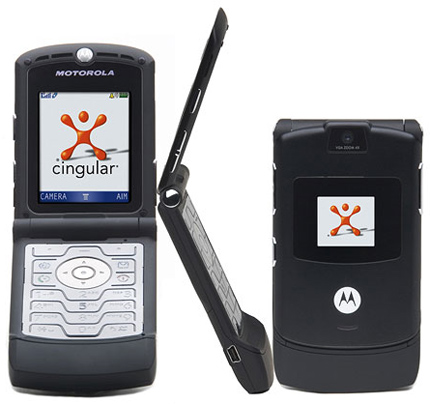
You know I think I like the silver better. Though I might change my mind if I get to see this thing in person. The thing that I'm worried is the black paint/finish. What if this is just like the palmOne's Zire72's paintjob. Just a few bumps and the real thing will show. let's wait and see.
Push-To-Talk
So, what's up with all these handset makers (e.g. Sony Ericsson, Nokia, Motorola) bragging about Push-To-Talk technology in their handsets when consumers CANNOT use these features anyway. It's just like the Wireless Village initiative. Not everyone knows about it, yeah I know about this thing and so as a handful of my techie friends, but the important thing is, the mass market knows about these features. Yeah, it's exciting to know that these features exist, and they exist in todays market, but without the networks supporting them, these features are of no use to anyone. Good thing for Wireless Village, a company called Yamigo opened servers for Wireless Village capable phone owners to use. The funny thing is, not everyone knows about it. Ideally, it will be a lot advantageous for the subscribers to use these services since it'll be cheaper than the usual airtime charges. But then again, maybe this is the same reason the networks are not pushing for it hehehe. To cap this, let me tell you, check your phone's manual, if it says it's capable of the said features, then USE IT!
Friday, February 11, 2005
Firefox is Blazing Hot
I've been using Firefox for sometime now, and has ignored how big it has begun 'til now. While browsing thru Yahoo!, I saw that they are now offering for download a beta version of Yahoo! Toolbar for Firefox. I guess Microsoft is starting to get the signal huh?!

Tuesday, February 08, 2005
No Outlook Express Hotmail
A strange thing happened today. After installing Windows SP2 on my sister's VAIO, I configured her Outlook Express to download her Hotmail messages so she could read and reply off-line. Then all of a sudden, a note appeared telling me that Hotmail is NOT anymore "accessible" thru Outlook or Outlook Express, and to continue with the "old" feature, a subscription is needed already. The other funny thing about it is that, the error message brought me to a Windows website which was dated November 2004. And the site did not offer any solution to my problem except for the subscription thing. This confused me very much because I have configured the Outlook Express in my Desktop and a few hours ago, it still was checking for mails from my Hotmail account.
The Sony Ericsson "Clara" K750i
Pictures and sketchy details of the next Sony Ericsson Phone has come out. It's going to be the next in line from the K700i. It will have a 2.0 Megapixel camera and to couple with this feature is a place to store the pictures you've taken, thus a Memory Stick Duo slot.

Sunday, February 06, 2005
New Bloogerphotos
I've made a link to my Photoblog (Bloogerphotos) using Blogger since my other photoblog sites are inadequate (that's to my standards) in meeting my requirements. Just click on the LINK at the left side of the monitor. Enjoy!
Saturday, February 05, 2005
The PRICE (of the palmOne Treo 650)
P39,900.00 according the the palmOne website for the unlocked version while the local telcos has not officially announced their price yet. Although according to a very reliable source, the Treo 650 has been in our midst for some time now, it's been with the telcos for testing with their network.
Well, I'm not here to talk about the Treo 650, since we all already know how great a smartphone it is. It's about the price. Not to gripe or anything, it's just that, when I compared the price to the SE P9x0, the Treo 650 is almost P10T cheaper. Well, IMHO, the Treo 650 is waaaay ahead of the Symbian UIQ P9x0 in terms of features and capabilities, yet the P9x0 is much more expensive.
So, I'm thinking, if a buyer would really weigh his/her options, for a better buck for the money, I'd go for the Treo 650. The camera, the colors, the screen, the connectivity, etc. I can go on and on and still go down to my original conclusion.
Well, I'm not here to talk about the Treo 650, since we all already know how great a smartphone it is. It's about the price. Not to gripe or anything, it's just that, when I compared the price to the SE P9x0, the Treo 650 is almost P10T cheaper. Well, IMHO, the Treo 650 is waaaay ahead of the Symbian UIQ P9x0 in terms of features and capabilities, yet the P9x0 is much more expensive.
So, I'm thinking, if a buyer would really weigh his/her options, for a better buck for the money, I'd go for the Treo 650. The camera, the colors, the screen, the connectivity, etc. I can go on and on and still go down to my original conclusion.
Wednesday, January 26, 2005
Microsoft Techfest Day1
I got here lunch time. Saw familiar faces like Carlo Ma. Guererro & Norbert Adangue (typical, since they're both from Pinoy PocketPC).
Good thing they served lunch. I tried getting my MSDN card but the lady there told me that it's not available yet, even though I confirmed it from Microsoft & I was told to get the card here at the Techfest.
Good thing they served lunch. I tried getting my MSDN card but the lady there told me that it's not available yet, even though I confirmed it from Microsoft & I was told to get the card here at the Techfest.
Tuesday, January 25, 2005
Latest SERIOUS Cellphone Virus
Beware, the latest cellphone virus, the Gavno, which installs intself as patch.sis or patch_v2.sis to Symbian OS mobiles is the most seious and destructive ever.
Once intalled, the virus disables the most important function of the phone, to make calls. Unlike the Skull virus, which only disables one key, this one totally make your phone useless. Symbian OS anti-virus specialist say that not only can the virus render the phone useless, it cannot be repaired.
So, once again, DO NOT ACCEPT files from unknown sources. Or if you do know the sender, make sure their phones are not infected.
Sunday, January 23, 2005
The "Other Side"
Ever since I got my first Palm OS device, a Palm m100, I had never ceased to be fascinated by the Palm OS device. This is why most of the times, I seemed to be bias against the Pocket PC or Windows Mobile platform.
Perhaps this is because I was introduced first and got acquianted or used to the simpleness of the PalmOS, but with persistence (up to now) I still am trying to convince myself to like Windows Mobile. During my m100 days, I would agree that PPC devices are more advance in features and hardware-wise than the Palm devices we had then. the only thing that's holding the Palm OS devices in their place was the brand and the extremely large number or applications available for it (and considering the fact that PPC devices then were far more expensive than their Palm counterparts and way bigger and heavier too).
But when the advent of Palm OS 5, everything changed. The architecture and features were now balanced between the PPC and the Palm devices. But lately, looks like Palm is lagging behind it's rival, not because of hardware differences, but because, now, Palm has less hardware manufacturers and if so, the features are a step behind what the competition is shelling out. The only industry manufacturer that was giving PPC devices a run for their money was SONY, but last year, SONY decided to stop their Clie line in the West. So what does this mean to Palm? Definitely shivering sensation all over.
While HP and other PPC/Window Mobile device manufacturer are making more "convergence" devices, the same features are lacking in the Palm OS devices. Again, the only thing that holds Palm it's market share is the extensive line of application. Which Windows Mobile is following suit very fast.
Now back to me, on why I still am convincing myself to shift to the other side. With everything that I have said, perhaps, I'll get myself a Windows Mobile device, perhaps it's going to be a smartphone, but for sure, I am going to keep my Palm PDA's. because, not unless Windows Mobile developers can match the huge number of Palm OS softwares out there, "perhaps" no switch will happen....yet!
Oh, and did I mention I am an acitve member of the Philippine Palm Users Group?
Busy
Hi, I don't know if you've noticed, but the site has been less updated lately. That is because I have been very busy with somethings that might (and hopefully) will change my life in the coming days/weeks/months. Oh and pretty soon (as these things are all intertwined to one another), I may be wearing a different hat (although presently I am wearing that hat) on top of my current hat. So hope to see you guys soon!
Friday, January 14, 2005
Another Cellphone Virus!
There's a new guy in town and his name is Lasco.a This is the name of the new cellphone virus that attacks any mobile phone that uses the Symbian OS (i.e. Nokia 7610, 6600, 6260, communicator line 9210, 9300, 9500, UIQ phones such as the SE P800/900/910).
Like the previous "worms" (Cabir & Skull), this one propagates to other Symbian Phones using Bluetooth. But unlike Cabir & Skull, it adds a new way of spreading, by attaching itself to files. Thus, if can be spread 2 ways and will therefore be a bit dangerous that the usual suspects.
So again, turning the Bluetooth function of your phone not only will save your phone's power, it will also save it's operating system.
Wednesday, January 12, 2005
Nintendo Gameboy DS
I've seen this upfront already, selling at around P14++T. Nope, there's not a bit of WOW factor in there! Plus the fact that it's expensive and it's got a BIG foot print when opened. Also, the touchscreen doesn't excite me, I'd rather wish for the BIG screen PSP. Now, I'll wait for the "competition" and see!
Saturday, January 08, 2005
Best Viewed with Internet Explorer
I was wondering why they put it in their website, but when I compared it with Mozilla Firefox, pages "optimized" for IE loads slower and refreshes slower too (logically).
Now the only advantage I see with IE, is that less computer/internet savy peeps won't have trouble looking for a FREE web browser since IE is bundled with Windows.
Friday, January 07, 2005
At last the FOSSIL PDA WATCH!
At last, FOSSIL released (for the nth time) their PDA watch available under the ABACUS and FOSSIL brands.
The FOSSIL and ABACUS branded Wrist PDA features:
- Palm OS version 4.1
- 8 MB of memory (approx. 7.7 MB available to the user)
- 160 x 160 pixel LCD with backlight
- Touch screen input
- 3-way Rocker and Back button for one-handed navigation
- Customizable watch faces
- USB interface supports Windows and Mac
- IRDA infrared communication port
- Lithium-ion rechargeable battery (lasts approximately three to four days between charges)
The new Wrist PDA is available in two different brands, FOSSIL and ABACUS, and will hit store shelves on January 6th. The Fossil branded product (FX2008) can be found at Fossil stores nationwide or at Fossil. The FOSSIL Wrist PDA is priced at a MSRP of $249.00 USD.
The ABACUS brand Wrist PDA product (AU5005) will be available exclusively through a direct sales and marketing partner, Tiger Direct. Product information is available at AbacusWatches.com and the product can be purchased at TigerDirect.com. The ABACUS Wrist PDA is priced at a MSRP of $199.00 USD
Friday, December 31, 2004
Wednesday, December 29, 2004
Virus for Symbian OS NOKIA Series 60 (AGAIN?!)
If you own a Nokia 6600, 36xx, 7650, N-Gage then you're at risk of getting this new virus for the cellphone. It's a variant of the dreaded Cabir worm, now on it's "G" species, it install (as usual) thru Bluetooth (you will definitely get it if you're the type who leaves his BT always ON). It disguises itself as a Metal Gear file (so gamers beware), or Sexxy.sis file (just beware). A note to you Symbian users, DON'T ACCEPT FILES FROM ANYONE YOU DON'T KNOW!
The PORSCHE Cayenne
I have seen this SUV a lot of times here already, but I haven't seen it in "action". The other day was in a different situation, I was on the South Louzon Expressway, and from my rear view mirror I say this car coming, just by the front panel I was able to recognize it. But even with a favorable condition, I did not see it in "action". Maybe it was the driver, since the road was not that congested, and I was able to cruise at 120kph on my REVO, I think the Cayenne was doing the same, OMG! I pity the PORSCHE, it must have been crying to the driver ... "cmon, hit it!"
Sunday, December 26, 2004
eBay Philippines
I was surfing the internet looking for something interesting to read, then I suddenly thought of going to the eBay Philippines website, just for a curious look. I am never fond of Internet purchases, still haven't convinced myself to dive into the frenzy, and also, I have been very curious, with all the articles coming out, regarding how the some things being sold on eBay are down right WEIRD. But then, with this local eBay site, it just proves how people could be so "entrepreneurial". There was one thing that caught my attention, it was a Gmail invite being sold thru eBay. OMG!
Friday, December 24, 2004
SEASON'S GREETINGS
May you ENJOY the CHRISTMAS Holiday! Spend it with all your love ones as this is what the BABY JESUS wants us to do...MERRY CHRISTMAS!
Saturday, December 18, 2004
iSilo (Med Apps)
This is one application you should have in your PDA (especially if you're in the Medical/Paramedical Profession). It's a document reader that is supported by lots of "free" e-books designed especially for the Medical/Para-medical professionals. If you are not too fond of the expensive Skyscape version of your books, then iSilo is the application to have. Besides ebooks for this application is extensive.
Friday, December 10, 2004
Bejeweled 2.0

Astraware released the latest version of their world-famous gam-puzzle game, Bejeweled 2.0. I tried the Palm OS version and was amazed at the new graphics and the new backgroud not previously seen in the old version. Although the game is basically the same, it now has 4 game options to choose from. The interesting part of this is the PUZZLE game, wherein one has to complete the 4 puzzles before going on to the next level. With the new generation Palm OS handhelds now capable of redering high resolution graphics with the new fast processors, games like Bejeweled has gone a long way from the simple yet addicting game from Astraware before.
Thursday, December 09, 2004
Motorola RAZR
This afternoon was the first time I got my hands on a Motorola RAZR. I would agree that it's pretty slim, and the Chrome and Alloy effect is awesome. Although one thing I seem not to like about it's physical attributes is the size, it's a bit on the big side (since I'm used to the Sony Ericsson K700i, which is a small phone). Also, it's on the expensive side, at P38T++. Although the package includes the USB cable, the softwares, the chargers, the handsfree headset and it also comes with a Bluetooth Headset. An impressive pack but still expensive.


Sunday, November 28, 2004
MaPalad (Philippine Palm Users Group) Anniversary & Christmas Bash
The MaPalad 5th Anniversary & Christmas Bash was a success. It was held last night November 27, 2004 at the roofdeck of Gilligan's in Glorietta Makati City. The food and place was excellent and was complimented by the 20 minute fireworks courtesy of Ayala Malls. Lots of prices were given away and member attendance was outstanding. Sponsors were at all times acoomodating and gave away lots of goodies. Overall the party was at usual one of the best for a user's group. Kepp it up!
Friday, November 26, 2004
palmOne has ears!
Due to concerns regarding the new file system implemented in Tungsten T5 and Treo 650, the NVFS, palmOne did not take long to issue a statement on the matter and committed to resolve the problem in the soonest possible time. The statement comes swiftly in direct response to the recent controversy regarding memory space and how the NVFS RAM system takes up more room than standard memory. Although it hasn't been long (not even a month since palmOne has released the Tungsten T5 and the Treo 650), some early birds have discovered a problem with the new file system. Click on the link for more details.
Thursday, November 25, 2004
Plant Tycoon
ADDICTING! This is how I would describe this game from LDW Software. It's a PalmOS Game that is about raising plants and mixing their species to get the 4 magic/rare plants. Of course the catch is, you have to balance your scientific mind with it's entrepreneurial side. Who says money is nothing?! Enjoy!

Wednesday, November 24, 2004
MedCalc
I am recommending this application to all Physicians and would-be Physicians out there using a PalmOS-base PDA. It's the most extensive Medical Calculator I have ever seen for a PDA (be it a Palm handheld or a PocketPC). Almost all of the calculations used in Medical Practice can be found in one application, one does not have to toggle between applications to compute for the likes of EDC (Estimated Date of Confinement), the AOG, the corrected Creatinine Clearance etc.
Tuesday, November 23, 2004
GSL Xplore M28 is OUT!

The much anticipated Group Sense Limited Xplore M28 is already out in Asia, specifically in Malasia and pretty soon in other parts of the region. Now running Palm OS Garnet, it's a big jump from it's 2 predecessors the Zircon Z3 and the Xplore G88 which both uses Palm OS 4. Still exhibiting the "tiny" form-factor, and used the same sliding-keypad of the G88 but with it's tiny screen abeit it's high-color resolution capacity. Also, it now has it's built-in expansion slot for SD/MMC cards.
Billionton Bluetooth on SP2...FINALLY!
Thanks to the technical support of Billionton, my USB Bluetooth dongle now FINALLY works with Windows XP Service Pack 2. Now, Windows XP can recognize my device hardware and will not use it's own Bluetooth drivers, which SUCKS! I wonder why a GIANT software company does such a lame job with a driver of a widely used connectivity option. But since it's Microsoft, I'm not surprised at all.
Sunday, November 21, 2004
Gmail is now POP!
Gmail can now be accessed using any email client that supports POP. Now, with the current technologies, people with Gmail accounts can now Send & Recieve emails thru a variety of gadgets such as Desktop PC's, Notebooks, PDA's & mobile phones. This is a big step against Yahoo! who shifted to web-based only FREE email & gave POP access only to Premium customers. Now, Gmail users can read their emails offline & send all the replies & new emails all at the same time.
Saturday, November 20, 2004
Globe's GPRS Connection
Maybe it's just frustration, but when it's time to use Globe's GPRS connection, it's not working properly! Maybe it's just Murphy's Law at work, but for a big telco like Globe it's more of disappointment for me, a subscriber.
Tuesday, November 16, 2004
Off with the Blue Paint! The Zire 72s

Looks like palmOne realized that the chipping blue paint was better off out of the Zire 72's body. So now, with the same price and same specs, they've rolled out a "new" model, just without the blue paint. Talk about special editions. This one has been thought about by Zire 72 users a long time ago, only thing is they don't have the palmOne logo anymore. Hey palmOne how about releasing a scratch-on palmOne logo for the previous Zire72 owners!
Friday, November 12, 2004

Wednesday, November 10, 2004
ePocrates
Today, I begin to combine medical and technology with my Blogsite. To
begin this new venture I will talk about ePocrates.
ePocrates is a Physician's guide to the universe of Medications thru
the PalmOS (and lately the PPC). To us Filipinos, it's the
digital-mobile version of PIMS. It's got all the FDA-approved drugs and
is updated weekly on a regular basis (this is done using Hotsync and
while connected to the internet). It has all the same literature that
you'll find in the inserts of medicines. It gives you both adult and
pediatric dosing, adverse reactions, mechanism of actions etc. with
ePocrates Rx PRO, as with others, you get more, like ePocrates ID, a
database of infectious agents; ePocrates Lab; database of different laboratory procedures. And all these are interconnected so diagnosis is just a few taps away.
begin this new venture I will talk about ePocrates.
ePocrates is a Physician's guide to the universe of Medications thru
the PalmOS (and lately the PPC). To us Filipinos, it's the
digital-mobile version of PIMS. It's got all the FDA-approved drugs and
is updated weekly on a regular basis (this is done using Hotsync and
while connected to the internet). It has all the same literature that
you'll find in the inserts of medicines. It gives you both adult and
pediatric dosing, adverse reactions, mechanism of actions etc. with
ePocrates Rx PRO, as with others, you get more, like ePocrates ID, a
database of infectious agents; ePocrates Lab; database of different laboratory procedures. And all these are interconnected so diagnosis is just a few taps away.
Windows XP SP2 & Billionton Bluetooth -- NOT COMPATIBLE!
As with any other Windows XP user (or any Windows version for that
matter), I was very eager to get SP2, just to get disappointed. As a
techie, I rely most of my synchronization for my peripheral devices
(i.e. mobile phone & pda) to Bluetooth connection. Gone are the days of
having webs of cables coming from the back of my PC, each with it's own
purpose as a tether to another device.
But after installing SP2, my BT dongle now is just a "generic" BT
device (as recognized by XP). Now the services that was offered by
Billionton were gone and was replaced by the limited services of SP2 BT
support.So I guess I will just rely on 'ol SP1 and my Anti-virus
software to protect my PC from malicious attacks.
matter), I was very eager to get SP2, just to get disappointed. As a
techie, I rely most of my synchronization for my peripheral devices
(i.e. mobile phone & pda) to Bluetooth connection. Gone are the days of
having webs of cables coming from the back of my PC, each with it's own
purpose as a tether to another device.
But after installing SP2, my BT dongle now is just a "generic" BT
device (as recognized by XP). Now the services that was offered by
Billionton were gone and was replaced by the limited services of SP2 BT
support.So I guess I will just rely on 'ol SP1 and my Anti-virus
software to protect my PC from malicious attacks.
Thursday, November 04, 2004
MOBLOGS
It's getting on my nerves! I've tried G-blogs and now Cubeblog but I can't post on both servers either thru text or thru MMS! This is getting very frustrating!I thought Cubeblog would do better than G-blogs with it's JAVA client, but it doesn't seen to connect properly with it's servers. Oh well!
Got my MSND Kit today
.1.jpg)
Got it today from Microsoft Philippines. A lot was inside the Welcome Kit, I tried to browse thru the different CDs & DVDs that came with the kit and found it interesting. Although the ID was not included and they said they will just notify me whenever it's already available.
Wednesday, November 03, 2004
Monday, November 01, 2004
So many! What Blog site to use?
Although I'm satisfied with Blogger, I'm still looking for a blog site that will host pictures that I've taken with my phone. Right now, I can post pictures in Blogger using Hello, but with it, I still have to get home and use Hello. I also have an account with myGlobe's G-Blogs, but uploading pictures on the fly and posting blogs has been unreliable lately. I have an account with www.20six.com, but I find it hard to use. Now I'm contemplating of using cubeBlog, I have already downloaded the JAVA application that will help me upload pictures on the blog site, but I haven't created an account with them yet.
Saturday, October 30, 2004
The iPod Photo

I don't know why Apple has to call their new iPod the iPod Photo. They could have released it as the 5th Gen iPod (although it's just weeks since they released the 4th Gen). Yeah you can store and view pictures in it with it's new color-crisp screen, but hey, it's basically the same iPod with just a different screen. Heck they even released an HP and a special U2 iPod, so I guess, iPod Photo is a long shot when it comes to the name if you'll ask me.
The Treo 650

palmOne has officially introduced the new Treo 650 smartphone, the latest member of the Treo smartphone family. The Treo 650 combines a compact, full-featured mobile phone with a thumb keyboard with email, a Palm OS organizer, messaging and web access. It adds many requested features such as a high resolution screen, Bluetooth wireless and an improved camera.
The Treo 650 will be available as either a digital dual-band CDMA/1xRTT or a GSM/GPRS/EDGE quad-band world phone. General carrier availability is expected to begin later this year in the United States, with worldwide rollout to follow in 2005.
The Treo 650 improves upon the successful design of the Treo 600. The screen is a sharper 320x320 pixel high resolution 65,000 color TFT touch-screen display that offers improved visibility in sunlight. It also adds an improved camera, integrated Bluetooth wireless, a removable battery and non-volatile memory.
The keyboard features larger and flatter buttons arranged in a smile pattern. The keys also have an improved backlight for use in dark situations. The launcher and menu keys have been moved around the 5-way to create a central navigation region. More phone like green and red "send/end" buttons have also been added.
The VGA camera has been improved to take better pictures, especially in low light situations. It now features video capture and playback, 2x digital zoom and a small fixed mirror for self-portraits.
The Treo 650 runs Palm OS Garnet v5.4 on a 312 MHz Intel PXA270 processor. It includes 32MB of non-volatile Flash RAM (of which ~23 MB is user accessible), that will stay preserved even when not charged or the battery is removed.
The built in expansion slot can accommodate MMC, SD and SDIO cards. However, it will not support the palmOne WiFi SD card at launch. palmOne claims to be evaluating the situation, so there is only a slight potential the card will eventually be supported.
It comes with a 1900 mAH Li-ion rechargeable battery that can be removed. Battery life for GSM models is rated at 6 hours talk and 300 hours standby. The 650 includes the new Multi-Connector for recharging and hotsyncing the Treo via a cable.
The Treo 650 now comes with much of the same software as the Tungsten line. This includes palmOne enhanced PIM suite, the Blazer web browser v3.0, VersaMail v3.0, the Real Player for mp3 audio, and Dataviz Documents to Go v7 for Word, Excel and PowerPoint Microsoft office files and email attachments.
With VersaMail's support for POP and IMAP email servers, users can download mail wirelessly or by synchronizing with their desktops. For Enterprise users whose organizations run Microsoft Exchange Server 2003, the Treo 650 has built in Exchange Server ActiveSync that will directly import and enable corporate email and calendar synchronization.
The Treo 650 lets users send and receive sms/mms text messages, photos or video clips right away from one application with a single inbox. And with text messages threaded in a IM chat-style view, users can see the entire conversation.
With Calendar, Contacts, Tasks, Memos and more, the Treo 650 lets users organize and simplify their business and personal lives all in one place. Users can dial contacts by name from their contacts list or enter a name or number on the QWERTY keyboard or on-screen dial pad. Speakerphone, speed dial, conference calling, call history, and caller ID are there for managing calls.
Tuesday, October 26, 2004
The DOCK on a WINBOX
INVADERS! Looks like more and more people are trying to make Windows look more like a Mac. See, if there is a Windows emulator for the Mac -- the Virtual PC, then there are tweaks for windows that will make it look more like a Mac (although it may not function as one).
If you're a die-hard Windows user and there's nothing in you that can compel yourself to get yourself a Mac, but you obviously drool over the BEAUTIFUL Icons and transitions that the Mac has then salivate no more. A company named Stardock has created some programs for Windows that make it look more like a Mac. One of these programs is the OBJECT DOCK. If you're a Mac Fanatic then you'll know by now that what I'm talking about is the DOCK from OS X, if you're a Windows user and knows nothing about the Mac, then read on.
The DOCK is like the Task Bar in Windows. There you can find and place your Frequently Used Icons/Shortcuts for your (of Course) Frequently Used programs. The difference? THE WOW EFFECT that the Animation of the DOCK shows. With Windows Task Bar, yeah it's there. But that's it. With the DOCK, well it's there, you can see it's presence, but try running your mouse over the icons and....you should try to install it and be the judge.
OBJECT DOCK is just one of the wonderful and fun programs you can download from Stardock and is just one of the programs that will give you the feel of a Mac on Windows. Now who says that only Mac users can enjoy THE DOCK. The best thing about it is it's free!
If you're a die-hard Windows user and there's nothing in you that can compel yourself to get yourself a Mac, but you obviously drool over the BEAUTIFUL Icons and transitions that the Mac has then salivate no more. A company named Stardock has created some programs for Windows that make it look more like a Mac. One of these programs is the OBJECT DOCK. If you're a Mac Fanatic then you'll know by now that what I'm talking about is the DOCK from OS X, if you're a Windows user and knows nothing about the Mac, then read on.
The DOCK is like the Task Bar in Windows. There you can find and place your Frequently Used Icons/Shortcuts for your (of Course) Frequently Used programs. The difference? THE WOW EFFECT that the Animation of the DOCK shows. With Windows Task Bar, yeah it's there. But that's it. With the DOCK, well it's there, you can see it's presence, but try running your mouse over the icons and....you should try to install it and be the judge.
OBJECT DOCK is just one of the wonderful and fun programs you can download from Stardock and is just one of the programs that will give you the feel of a Mac on Windows. Now who says that only Mac users can enjoy THE DOCK. The best thing about it is it's free!
Thursday, October 21, 2004
Clie VZ90 for US Importation
Looks like Clie Enthusiasts won't take it sitting down. A company called Dynamism is now accepting orders for the Japan-only clie VZ90. The company will import the PDA's and if you're going to ask..."how about the Jap OS?". Well the company is still thinking about how to translate the OS to English. The price? US$1099.
Subscribe to:
Posts (Atom)