A new mobile phone virus has been found in the wild that can spread from cellphones to PC. The virus infects (as usual) a Symbian OS phone either thru Bluetooth or after being download and then infects a Windows computer when the memory card from the phone is used on the PC. This will then propagate to the internet and vice versa.
The new mobile phone virus, dubbed SYMBOS_CARDTRP.A, propagates on Symbian Series 60 devices. Once the mobile phone virus infects a PC, it will eventually launch WORM_WUKILL.B, a worm that attempts to spread the infection to other PCs.
Friday, September 23, 2005


Wednesday, September 21, 2005
SPEED UP!
After being thrown into circles yesterday, I finally got some tangible results. Now my DSL speed is 768 kbps! When I jumped into the DSL bandwagon last year and subscribed to Globelines Broadband, I got 386 kbps for my P1995.00 monthly subscription. Fair enough for me since it's waaaay fast compared to dial-up. Even when rival PLDT myDSL bumped up their speeds last May 2005, I was confident then that my DSL provider would not let me down. So, on September 20, 2005, I checked out <a href="http://www.globelines.com.ph">Globelines'</a> website to see for any promos or to that extent, anything that would interest me. Then I saw that they've updated the broadband packages that they're offering, this time, the P1995 has 768 kbps! So, I immediately called Globelines' customer service and ask if I could have my speed bumped up, and they said all I have to do is to go to the nearest Business Center and fill out a Service Modification form and wait for my speed to increase, pretty easy huh?! NOT!!! The next day, before going home, I went straight to the Business Center here at Habay Road, Bacoor, Cavite. To my surprise, the customer service representative told me that I have to pay 2 months of my current monthly fee as to preterminate my DSL subscription so I could avail of the new speeds. Even when I told her that I already called their HOTLINE she still insist that it's going to be a termination of service and that there might have been a MISCOMMUNICATION between me and the girl on the phone I talked to the night before. So, I just told her never mind and I'll just come back after two months to have my service upgraded. When I got home, I called the Globelines Customer Service Hotline right away and asked for clarification. Still, what the guy told me was the same thing the girl the night before told me, that it's just a SERVICE MODIFICATION! He told me that he'll call me back to clear things up with that girl in the Business Center. True enough, after 30 minutes, the guy told me that everything has been settled and all I have to do is to go to the Business Center and just fill up the necessary forms. Then after 2 minutes from the guys call, the girl from the Business Center called up and told me to drop by anytime (pretty long huh?). So, I went, but when I got there, she told me that I don't have to pay the pretermination fee anymore but I still have to have my line disconnected to avail of the new speeds (man this is getting irritating!). So I told her the guy on the phone told me otherwise. So, she told me that she'll clear things up first with their head office and she'll just call me the next day (which is today). Fine! When I got home, again, I called up the HOTLINE and reported the Business Center girls incompetence, even them at the HOTLINE could not believe it happened. Today, I got a call from the Business Center girl and told me that everything's all right and that my speed has now been updated. Whew dude, it's that simple, she just doesn't know what she's supposed to know. Just imagine how unproductive it would be to a very big company to send someone to remove the hardware from my house and eventually install it back again! What do you think?
PLDT will Acquire DREAM Satellite
Philippine Long Distance Telephone Company is buying DREAM Satellite. This is to augment the telecommunications firm's plan to go into the Direct-To-Home (DTH) service. Acquisition of Dream Satellite would enable a joint venture between PLDT and America's largest direct-TV provider, Echostar Communications Inc., to finally take off.
PLDT and Echostar are planning to invest $85 million in pay TV operations in the Philippines through satellite receivers, not the traditional cable system that is prone to piracy and signal theft.
Philippine Multi-Media System uses PLDT's Mabuhay Satellite to broadcast content to more than 100,000 subscribers nationwide. Dream Satellite is considered more expensive than the traditional cable providers.
Sources said that if talks with Dream failed, PLDT would open negotiations with other direct-to-home providers such as Pacific Cable Inc. and GV Broadcasting.
Under the plan, the joint venture between PLDT and Echostar will provide clients with home antennas. It will also supply more than 2,000 video and audio channels.
PLDT and Echostar are planning to invest $85 million in pay TV operations in the Philippines through satellite receivers, not the traditional cable system that is prone to piracy and signal theft.
Philippine Multi-Media System uses PLDT's Mabuhay Satellite to broadcast content to more than 100,000 subscribers nationwide. Dream Satellite is considered more expensive than the traditional cable providers.
Sources said that if talks with Dream failed, PLDT would open negotiations with other direct-to-home providers such as Pacific Cable Inc. and GV Broadcasting.
Under the plan, the joint venture between PLDT and Echostar will provide clients with home antennas. It will also supply more than 2,000 video and audio channels.
Tuesday, September 20, 2005
Free OPERA Anyone?
OPERA browser is now FREE! The ads at the top is now gone and is now part of the competition between Firefox & Internet Explorer. Try it now!
The WiFi Hotspot
NOTE: This blog was supposed to be posted last September 17, 2005 Saturday -- This is the first time I've accessed the internet thru a Hotspot and man am I bored. If you are wondering what a Hotspot is, well, it's a wireless access to the internet using a broadband connection outside your home e.g. cafe's & malls. I was sooooo excited to use it, since I also know that I have universal access to WIZ hotspots (Globe's Wireless Internet Zone) because I am a Globelines subscriber and they have this WorldPass thing where in I can use the same userid and password that I use in my Globelines DSL account. Ok, I plugged my notebook pc into the only power socket I've seen in Starbucks ABS-CBN. Found a 91% WiFi signal and figured out (which is the most common form of learning for me) how to log in and access the internet. But when I entered the userid and password of my WordPass account, I was denied! OMG! Now, how do you think will I be able to surf the net and let time pass by, while my wife enjoys herself with the company of her highschool friend? Good thing I am also a subscriber of Globe's Mobile Phone service (it only shows how a die-hard Globe subscriber I am huh?), and with it, with just a few taps from my phone's keypad, I was able to acquire a userid and password. Whew, that was some "universal Access" huh?!
Thursday, September 15, 2005
5 cents IDD from Globelines!

TOLD YOU! After the Philippine government approved the implementing rules of VoIP it wouldn't take long before the telcos will release their own versions of VoIP. It was Bayantel that released it first, then followed PLDT and now Globelines has released their own version. Globelines has three different types and pricing schemes for the subscribers and public. They have reduced the 40 cents charge for their landline subscreiber to 20 cents per minute, 10 cents/min for those who'going to use their all-in-one prepaid card Globe1 and 5 cents for Globelines Broadband subscribers through the softphone that will be available for download starting September 20, 2005. So why the heck subscribe to those VoIP services, when I can get the same price advantage with my own phoneline.
Thursday, September 08, 2005
The New iPod Nano -- the iPod mini killer

Apple has recently launched the iPod Nano, the iPod mini Killer! Yup, the iPod mini is now obsolete and will be replaced by this new spanky iPod Nano. Very small and thin, with colored screen and click wheel. Although the click wheel center button is bigger than the usual. It will use the same connector for the dock but the headset jack will be at the bottom of the unit. I will come with 2GB & 4GB sizes. And comes in two colors as well, Traditional White and the new Black. Enjoy!
Monday, September 05, 2005
Updated my Speedtouch 580(i) Firmware
I've just updated the firmware of my ADSL modem/wireless router from 4.2.7 to 4.3.2.6 It's got a new UI to start with. At first I thought I did something wrong, and praying nothing bad will happen (like going to have a big useless paperweight) and luck was on my side. No I guess I can't call Globelines Broadband customer support since they don't even know I have a Speedtouch 580 with me hehehe.
Sunday, September 04, 2005
And so, it has begun ... VoIP in RP
PLDT just announced a new service for subscribers of both their DSL service and landline service. It's VoIP in the flesh. Cheaper rates to the US and other selected destinations. As low as 8 cents/minute. Either use the soft-phone thru the PLDT DSL website or use the ordinary PLDT landline phone using a pre-defined prefix num. And so, it has begun....
Saturday, September 03, 2005
Finally, a Disney Channel
From here to there and back again. I went back to my old Home Cable provider after learning that they have Disney channel back in their line-up. It's what really made me move to SKY cable in the first place. Now, I'll be giving SKY cable a call to have thier services for me discontinued.
Tuesday, August 30, 2005
WiFi at Home
Last night, I've officially tested my Wireless Network at home, and the signal is impressive. Due to wiring constraints, my Wireless Router/Modem, Speedtouch 580, is in my room. I then went to the recieving, the basement and the car port to check for the signal strength and the results where very impressive. The signal loss in the basement was just around 20% considering that the house has mostly concrete walls. The signal in the carport though was a little weak, but still the link between the notebook and the router was still strong. I guess an access point near the main door would give me a better signal than what I have right now.
Monday, August 29, 2005
VoIP
Ever since I asked my DSL provider to change my DSL modem from a USB type to an Ethernet type, my adrelin to put up a wireless network at home never went down. I planned to get myself a wireless router, it was supposed to be a Linksys, but the Speedtouch 580 is very much welcome. After which I began searching for the right Access Point to provide wireless signal all over the house. Then I began looking at VoIP after I tried Yahoo! Messenger's Voice call. Damn! Potential with Broadband is way too many. I was glad though that the Philippine goverernment has released the guidelines for the launching of VoIP in the country. Now, it's just a matter of months before major companies start selling VoIp services and bet you, it's going to be a call frenzy to every country in the world.
Thursday, August 25, 2005
WiFi Network: ON!
 Today, I've officially turned on my Wireless Network at home. Supposedly, I was to turn it on next week, as I haven't bought my Linksys wireless Router yet. But, with some miracle, the wireless router just landed in my hand (although not a Linksys). Now what are the odds of that?
Yahoo! Messenger Voice call

After having my DSL modem changed from USB to Ethernet capable one, I started exploring the different possibilities that I can do with my PC. I even explored VoIP. Thus leading me to the BETA version of Yahoo! Messenger. It is capable of calling another YM user! And bet you, the voice reception is pretty good (just make sure the other person has broadband as well)! At first I tried the Voice Chat function, yeah it was good, but not good enough, choppy voice and irritating most of the times. Then I tried the Call function and got hooked to it from then on. How about you try it?!
Gmail Talk
 Everyday, I make sure I go to http://news.google.com to check on what's new in the Tech world. Just the other day, I read that Google will be launching an IM client in a couple of days. And lo and behold, when I opened my Google News today, there is was, Gmail Talk. It's basically and IM client based on Jabber technology. One disadvantage of it is, you can only call and chat with Gmail account holders. But still the possibilities are there.
Sunday, August 14, 2005
Something's Cooking?
I don't know if it's my sister's untechnologically savy thing and she was able to unearth something in Outlook Express that is somewhat helpful, or it's part of Microsoft's updates. Nonetheless, I liked it.
It's pretty much like Gmail's feature of stacking up emails as a conversation type of filing system. Again, I like it!
It's pretty much like Gmail's feature of stacking up emails as a conversation type of filing system. Again, I like it!
Singing Plants
This blog has been long overdue. I was supposed to write this way back June when I started passing the Manila City Hall route. No, I'm not in anyway related to any transport group or anything, I started passing that place because of the location of mu current job.
Anyways, since I don't a car to work, I am a regular passenger of FX/AUV colorum vehicles. I'm from Bacoor, Cavite and it's the fastest and most convenient way to work for me. So, now back to the blog. I always go down at Manila City Hall to get another ride to Morayta and it's there while waiting for the next ride that I noticed something peculiar.
Every morning, the Manila City Hall staff plays some music from the PA system, but when I look around, I don't see any speakers at all. I spent sometime (the consequence of which was I was late for my morning class) looking for any evidence of the speakers in the area, which proved to be a futile attempt. And everytime I get closer to a pot of plant, the music gets louder. Then, it took me sometime to realize what an ingenious way that they have hidden the speakers. They've placed it under the flower pots! And there were a number of flower pots scattered in the said area.
I know this is also done in other countries, but this is the first time I've experienced/seen this kind of innovation. And I was really amazed!
Anyways, since I don't a car to work, I am a regular passenger of FX/AUV colorum vehicles. I'm from Bacoor, Cavite and it's the fastest and most convenient way to work for me. So, now back to the blog. I always go down at Manila City Hall to get another ride to Morayta and it's there while waiting for the next ride that I noticed something peculiar.
Every morning, the Manila City Hall staff plays some music from the PA system, but when I look around, I don't see any speakers at all. I spent sometime (the consequence of which was I was late for my morning class) looking for any evidence of the speakers in the area, which proved to be a futile attempt. And everytime I get closer to a pot of plant, the music gets louder. Then, it took me sometime to realize what an ingenious way that they have hidden the speakers. They've placed it under the flower pots! And there were a number of flower pots scattered in the said area.
I know this is also done in other countries, but this is the first time I've experienced/seen this kind of innovation. And I was really amazed!
Saturday, August 13, 2005
From USB to Ethernet Modem -- FINALLY!


The other day, my DSL Provider, Globelines, finally replaced my SPEEDTOUCH 330 USB ADSL
modem after 2.5 weeks of waiting. But the good news is, they did not charge me a single
cent. They replaced it with a SPEEDTOUCH-Alcatel 511e Ethernet ADSL modem. Though the
Globelines CSR told me that the modem change will just take a week and it took more than
what they promised, the personnel that replaced the modems were very professional and
arrived on the set time that I asked them to come over. Nonetheless, I am presently
impressed on how the new ethernet modem is working so far.
The differences between the USB from the Ethernet modem are: No more setting up DUN (dial-up
networking) with the ethernet, no software driver to install and sort of runs faster and
better than the USB thing. Although when I tried to search the internet for information
about my "new" ethernet modem, it turned out that the modem model itself is 2 years old. As
per the box which still says it's from Speedtouch-Alcatel while the new ones are already
from Speedtouch Thomson.
Well, the reason why I asked my modem replaced is because I'm planning to set up a wireless
network at home. See YAH!
Sunday, August 07, 2005
To buy or NOT to buy!
I have two printers at home, one is a very old HP Deskjet 420C (my very first printer) and a somewhat old Epson C20 double-cartidge inkjet printer. Both has served me well, right now I' using the HP solely for black printing while the Epson for colored printing. I haven't gone into printing digital hard copies of the pictures I have in my hard drive yet. Still not worth it in my opinion.
It's that time of the year to replace the inks in both of my printers, the problem is, as with the HP inks, they're expensive, so expensive that there are printers out there that is at the same price level just for the ink itself. I am not a fan of ink cartridge refills, as I think they're not of the best qualities. With the Epson, well, I've been using replacement inks with it for sometime now, but with the last two cartridges I've used, well, I was disappointed. And then again, though cheaper than HP inks, it's still a tad cheaper than a whole printer set. So now, I'm in a dilemma, to buy just the ink or buy a whole new printer for that matter? What to do?!
It's that time of the year to replace the inks in both of my printers, the problem is, as with the HP inks, they're expensive, so expensive that there are printers out there that is at the same price level just for the ink itself. I am not a fan of ink cartridge refills, as I think they're not of the best qualities. With the Epson, well, I've been using replacement inks with it for sometime now, but with the last two cartridges I've used, well, I was disappointed. And then again, though cheaper than HP inks, it's still a tad cheaper than a whole printer set. So now, I'm in a dilemma, to buy just the ink or buy a whole new printer for that matter? What to do?!
Sony Ericsson BT PC remote Control (HID)
I consider this generation pretty much hi-tech. These kids grew up without knowing that before one has to go up to the TV and change the channel with a clicking knob. What they grew up with is the ever powerful remote control. Most of them has not seen those red payphones and those black, heavy, rotating analog home landline phones.
But, this week, I started using my cellphone, a Sony Ericsson K700i, to control my Powerpoint Presentations. Everyone of them was awe-struck at the marvel of the thought. They were used to professors, staying beside their notebook computers and pressing either the spacebar or the arrow buttons to move to the next slide and vice versa.
With the current technology, and it's free if I may add, I can move around and still change the slides at will, without asking any of my students...."next slide please!"
But, this week, I started using my cellphone, a Sony Ericsson K700i, to control my Powerpoint Presentations. Everyone of them was awe-struck at the marvel of the thought. They were used to professors, staying beside their notebook computers and pressing either the spacebar or the arrow buttons to move to the next slide and vice versa.
With the current technology, and it's free if I may add, I can move around and still change the slides at will, without asking any of my students...."next slide please!"
Sunday, July 24, 2005
I'm sure glad I'm using a SonyEricsson!

I sure am glad that I'm using a Sony Ericsson phone, although almost everything about it is better than Nokia and other mobile phones out there, but also because it's not using Symbian. I'm not against Symbian as well, in fact, I like Symbian very much because of it's versatility, but then again, it stops there.
A week ago, while I was in class, I forgot to turn the Bluetooth radio of my phone, an SE K700i. Then all of a sudden, I kept on getting a file sent from a BT device. Curious as I am, I keep on accepting the damn file but to no avail. Nothing was accepted nor recieved. When I asked around, I found out that one of my student's phone is infected with the CommWarrior mobile phone virus. Whew! What a relief!
"Windows Longhorn is changing name...Windows Longhorn is now Windows Vista!"

Codename Windows Longhorn is now defunct, Microsoft has officially launched the real name of the next Windows operating system. It's Windows Vista! So from this day onwards, Windows Longhorn will be called Windows Vista!
Tuesday, July 19, 2005
Evolution of Public Busses (on my perspective)!
> No Aircon
> No Aircon with blasting FM radios
> Only provincial busses have airconditioning
> City busses have airconditioning
> Provincial busses have aircon with FM radios (and casette players that play those everlasting medley with that same tempo and beat) & TV
> City busses have airconditioning with FM radios & TV
> Provincial busses have airconditioning with FM radios (and casette players that play those everlasting medley with that same tempo and beat), TV & Betamax
> City busses have airconditioning with FM radios, TV & Betamax
> Provincial busses have airconditioning with FM radios (and casette players that play those everlasting medley with that same tempo and beat), TV & VHS
> City busses have airconditioning with FM radios, TV & VHS
> Both provincial and city busses have airconditioning, FM radios, TV & VCD players
> Both provincial and city busses have airconditioning, FM radios, TV & DVD players
> No Aircon with blasting FM radios
> Only provincial busses have airconditioning
> City busses have airconditioning
> Provincial busses have aircon with FM radios (and casette players that play those everlasting medley with that same tempo and beat) & TV
> City busses have airconditioning with FM radios & TV
> Provincial busses have airconditioning with FM radios (and casette players that play those everlasting medley with that same tempo and beat), TV & Betamax
> City busses have airconditioning with FM radios, TV & Betamax
> Provincial busses have airconditioning with FM radios (and casette players that play those everlasting medley with that same tempo and beat), TV & VHS
> City busses have airconditioning with FM radios, TV & VHS
> Both provincial and city busses have airconditioning, FM radios, TV & VCD players
> Both provincial and city busses have airconditioning, FM radios, TV & DVD players
Monday, July 18, 2005
The Motorola RAZR V3x


When I saw the RAZR V3 a year ago on the web, I was awe-struck by the beauty the phone possess, but when I got to hold it in person, I was somewhat disappointed by the lack of feature-set and the somewhat wide appearance, and yet, I still consider it uber-sexy!
Now, behold! The evolution of am uber-sexy phone to an uber-beauty & brains! Featuring the Motorola RAZR V3x!
After sometime of speculation, and being called the Motorola V1150, Motorola officially made an announcement about this new phone and it's features. Other than the sexy looks & Bluetooths (which it shares with it's sister), it now has, 2.0 MP camera, a VGA camera for 3G cameraphone capabilities, an expansion card, enhanced graphics processor for high performance 3D graphics and J2ME™ for the ultimate in 3D gaming choices, Motorola's SCREEN3 technology solution featuring zero-click access to news, sports, entertainment, and other premium content, Progressive downloading to view media files on demand, support of AAC+, MPEG4, WMV, WMA, MP3 and Real Video/Audio files, advanced speaker-independent voice recognition: state a number/name and be connected without pre-recording, over the air synchronization with the PC via SyncML, & WAP 2.0 browser. Now who wouldn't be in-love with this baby?!
Saturday, July 16, 2005
Ready for UPGRADE...but with what?

It's the time of year for cellphone upgrades. I'm ready to upgrade my phone, a SonyEricsson K700i . But the woes of deciding to what phone is very difficult.
I have looked around and have limited my choices to the Sony Ericsson K750i/W800; Nokia 3230; Treo 650; Motorola RAZR V3 or the Sony Ericsson S700. So there's really not much to choose from.
I have loved my K700i so much that it has become some sort of benchmark for my future phones. Here are some of the considerations for my upgrade:
Sony Ericsson K750i/W800:
- Unmatched screen quality and resolution
- expansion card
- 2.0 MP camera
- camera image quality
- Bluetooth connection (pairs seamlessly with my PC & Palm)
- multimedia capabilities
- user interface
- somewhat bland design, lacks the wow factor
Nokia 3230:
- design
- 1.3 MP camera
- camera image quality
- multimedia capabilities
- it's slow and not so direct interface
- Bluetooth connection (although I haven't used a Nokia and I don't know how it's going to be with data transfer and synchronization with my PC & Palm)
Treo 650:
- design
- only a VGA camera
- wonderful big screen
- thumbpad
- applications & softwares (I don't have to carry 2 devices at one time)
- bigger than my other phones
- multimedia capabilities
- seamless synchronization with my PC
Sony Ericsson S700:
- has the biggest WOW factor of them all
- superb screen size and resolution
- 1.3 MP camera (but hey, I only use 1.3 MP setting with my Cybershot digital camera anyways)
- expansion card
- bulky
- multimedia capabilities
- Bluetooth connection (pairs seamlessly with my PC & Palm)
Motorola RAZR V3:
- has that WOW factor
- very slim (though wider than the rest)
- nice screen resolution (but is not at par with the SonyEricssons)
- only VGA camera
- limited internal memory
- no expansion slot
- Bluetooth connection (though I don't know how it will go with synchronization with my PC & Palm)
- did I mention that it's very slim?
- oh and with it's current price, it's got a free Bluetooth headset that comes with the package
So now what?!
Saturday, July 02, 2005
Google Earth?

Google just recently launched their Google Earth Service. It's basically like the Google Maps with satellite imaging but this time the coverage has expanded to outside the US & Canada and in certain areas, the user can even tilt the image to get the 3D images of the landscaped and buildings. Although their are paid services which offer more detailed searches and images, the free portion give me some delightful experiences. But unlike Google Maps which is web-based, Google Earth will be need a downloadable program to run.
I was so amazed that when I searched locations in the Philippines, that not very many places has been photographed. Fortunately though, Cavite was one of those with extensive pictures and I was able to see our house from a "bird's eye-view".
Wednesday, June 29, 2005
I saw The SEGWAY...in RECTO!

I was on my way to the bank lunchtime today to check on my payroll account, and as I was walking out the university gate, I saw a familiar thing, looking at it closely, I was really dumb-struck to realize that it was a SEGWAY. You know, that "revolutionizing" thing. That thing that looks like a platform with wheels and moves mimicking the human movement and balance. Anyways, what really was unbelievable for me was seeing it here in the Philippines, much more in RECTO. They were being used by non other than promotion people from Unilever Philippines distributing Cream Silk sachets samples. There were 4 of these amazing things being used only for promotional gimik. Man, UNILEVER sure has the bucks to spare for these things huh?!
Monday, June 20, 2005
A Surplus Notebook
Just yesterday, I was able to get hold of an "old" laptop/notebook. The brand is unknown to many, even me, and I doubt that if I go to any computer shops, they would know this brand. It's called PURPOSE, hehehe heck, I even tried to GOOGLE it and found not match. I said it's old because it runs on PENTIUM II 400 MHz, has 128 MB RAM, 3 GB of HDD and a 16-bit LCD screen. It was running Windows 98 and by the forces of the dark side, it was terriby slow.
My brother-in-law, gave this notebook to my wife, well, if you'll just look at it, well, it's small, as compared to the VAIO that I am currently using. But when I started tinkering with it, I saw the flaws, and tell you there were a lot. The whole body case creeks, and bends everytime I exert pressure on the thing, the battery is just running perhaps on the small juice it's got left (it won't survive if you try to unplug it from the mains), the whole keyboard marking's a mess (good thing I memorized most of the keyboard markings), and the space where one could rest his left hand while typing heats up like a furnace.
I tried updating the software, so I could use it to surf the internet, I installed the USB Moden driver for our DSL line and updated IE and installed MAXTHON browser (why not FIREFOX you might ask? Well, the disc space is a very big factor). MS OFFICE installed is OFFICE 2000 and I won't dare to upgrade it anymore. I tried installing the DRIVER for my USB Flash Drive to no avail.
I thought of using it for my daily lectures instead of bringing the very big VAIO everyday, but decided not to, this thing might die on me and I might get into prison for it hehehe. I'd be playing with this baby for sometime and well, to the shelf it'll go.
My brother-in-law, gave this notebook to my wife, well, if you'll just look at it, well, it's small, as compared to the VAIO that I am currently using. But when I started tinkering with it, I saw the flaws, and tell you there were a lot. The whole body case creeks, and bends everytime I exert pressure on the thing, the battery is just running perhaps on the small juice it's got left (it won't survive if you try to unplug it from the mains), the whole keyboard marking's a mess (good thing I memorized most of the keyboard markings), and the space where one could rest his left hand while typing heats up like a furnace.
I tried updating the software, so I could use it to surf the internet, I installed the USB Moden driver for our DSL line and updated IE and installed MAXTHON browser (why not FIREFOX you might ask? Well, the disc space is a very big factor). MS OFFICE installed is OFFICE 2000 and I won't dare to upgrade it anymore. I tried installing the DRIVER for my USB Flash Drive to no avail.
I thought of using it for my daily lectures instead of bringing the very big VAIO everyday, but decided not to, this thing might die on me and I might get into prison for it hehehe. I'd be playing with this baby for sometime and well, to the shelf it'll go.
Saturday, June 18, 2005
Hope for the Blind!

A retinal implant is being developed by a company which might restore limited eyesight to patients with hereditary vision loss. It works with a microcomputer worn by the patient either as a spectacles or on the waist. The eyeglasses have a built-in camera and transmits the images to the implant.
NOKIA 770 v2?
There is this strange image of a NOKIA device, no names yet, but has some resemblance to the NOKIA 770 Internet device. Perhaps a v2.0? Pretty sleek though, wouldn't you think?

Tuesday, June 14, 2005
The W800 cousin? SE W600
This is the cousin for the K750 twin, the W800. It's a Walkman branded Sony Ericsson phone. Has the characteristics of the S700. Nice, but not impressive, but still nice. And what's with the orange color theme?

It doesn't sport an external media by way of the MemoryStick Duo slot, but it does have 256MB integrated memory, MP3 and AAC support, a standard 1/8th-inch stereo headphone jack (at last!), FM tuner, 1.8-inch 220 x 176 pixel 262k color display, 1.3-megapixel camera, stereo speakers, Bluetooth, and tri-band EDGE support.
It doesn't sport an external media by way of the MemoryStick Duo slot, but it does have 256MB integrated memory, MP3 and AAC support, a standard 1/8th-inch stereo headphone jack (at last!), FM tuner, 1.8-inch 220 x 176 pixel 262k color display, 1.3-megapixel camera, stereo speakers, Bluetooth, and tri-band EDGE support.
The Sony Ericsson Z520
I don't know with you guys, but I have this fetish with SE phones. Just take a look at this newly-announced SE Z520. Isn't it lovely (sorry for the pun)?

It's got a 65k color 1.8-inch 160 x 128 pixel display, VGA camera, Bluetooth, and quad-band radio without EDGE at this time.
It's got a 65k color 1.8-inch 160 x 128 pixel display, VGA camera, Bluetooth, and quad-band radio without EDGE at this time.
Monday, June 13, 2005
The Motorola V6 PEBL
Well, if you're going to ask me, the new Moto-Phones have very nice designs, although I'm a bit taken back by their User Interface, it's a bit bland. But then again, it's only my opinion.

New Nokias
Nokia never fails to amaze me, here are some of their new releases for this quarter. Damn! I've lost count on what Nokias are there in the market.

Now the phones! There is the 6111 a slider tri-band GSM phone (900/1800/1900) with EDGE, with a 1 megapixel camera, Bluetooth and an FM radio. The 6060 is an entry-level dual-band GSM flip phone with an external LED for call/message notifcation and MP3 ringtones.

And for the Series 40, here are some of them. The 6280 (above, left) a tri-band 900/1800/1900 EDGE phone with a 2 megapixel camera, second VGA camera for video calling, miniSD slot, Bluetooth, FM and visual radio support. The other one is the 6270 (above, right) no second video camera but adds stereo speakers. It’s a quad-band EDGE phone.
Now the phones! There is the 6111 a slider tri-band GSM phone (900/1800/1900) with EDGE, with a 1 megapixel camera, Bluetooth and an FM radio. The 6060 is an entry-level dual-band GSM flip phone with an external LED for call/message notifcation and MP3 ringtones.
And for the Series 40, here are some of them. The 6280 (above, left) a tri-band 900/1800/1900 EDGE phone with a 2 megapixel camera, second VGA camera for video calling, miniSD slot, Bluetooth, FM and visual radio support. The other one is the 6270 (above, right) no second video camera but adds stereo speakers. It’s a quad-band EDGE phone.
The Sony Ericsson 4!
Sony Ericsson is about to officially launch a new set of phones, using the Japan plus S700 concept. Stay tuned for more updates.

Sunday, June 12, 2005
The Mozilla Browser Address Bar
Ever since I've upgraded my PC, I have been using most of the Web Browsers available with IE being used the least. And just a few minutes ago, while using the Mozilla Browser, I found a very simple yet interesting fact about it's address bar, well, it can serve as a search bar as well. It may sound stupid, since most of youprobably knew this for some time now, but it gave a smile on my face finally being able to know this small feature of the browser.
Although most new browsers have this function, most of the search boxes integrated in a browser are totally separated from the address bar, some even doesn't have it on installation but is an add-on. The reason I liked it so much is that, I don't have to point my cursor to the other search box and click on the search button, with this one, I only have to deal with one box, the address box, and simply click on the right button to tell the browser what to do. Another good thing this feature shares with the other search boxes is that it is configurable.
Although most new browsers have this function, most of the search boxes integrated in a browser are totally separated from the address bar, some even doesn't have it on installation but is an add-on. The reason I liked it so much is that, I don't have to point my cursor to the other search box and click on the search button, with this one, I only have to deal with one box, the address box, and simply click on the right button to tell the browser what to do. Another good thing this feature shares with the other search boxes is that it is configurable.
Tuesday, June 07, 2005
Apple: Intel Inside?
It's true, Steve Jobs just announced that Macs will now shift from IBM PowerPC processors to Intel. Before, it was the PowerPC processors that set Macs apart from the Windows PC (aside from the wonderful design of course), but now, it has been revealed that the Mac OS has been running on Intel processors for some time now in the Apple labs. I wonder what will prevent Windows users from booting up their PCs with Mac OS now that they are using the same processors?
The Slim PS2 in White

I like the Slim PS2, it's so petit yet so powerful. The size may not be intimidating but play with it and you'll learn to appreciate the magnificent power it hides inside. The respect is there and even with the impending rise of it's next generation kin, it'll still command the respect for sometime.
Monday, May 30, 2005
The CASIO Outdoor Rugged Phone

Water- and shock-proof, the G’zOne is a hiker’s dream. This phone includes an electronic compass, clock, stop watch, and an external screen. Available in three delightful colors.
The Next Gen Sony Ericsson Phones
Sony Ericsson - News Services Entertainment, which actually isn’t affiliated with Sony Ericsson, dug up some images of two new Sony Ericsson handsets, codenamed Zoe and Ellen. The Zoe (pictured below) is on the budget tip and sports a VGA quality camera, a 65,000 color, 128 x 160 pixel LCD screen, and possible support for both push-to-talk and EDGE. The Ellen (pictured above), which looks like a mix between the Sony Ericsson S710a and one of their Japanese Premini phones, is supposedly going to be more gaming-centric phone and feature a rotating, 1.8-inch, 262,000, 176 x 220 pixel LCD screen, 32MB of memory, Bluetooth, swappable faceplates, a 1.3 megapixel camera, and like the Zoe, possible support for both push-to-talk and EDGE. No clue when either phone might be released.

MRI Diagnosis via the Web offered to Rural Communities
DUTCH electronics company Philips will soon be offering an online diagnosis project aimed at offering free specialist diagnosis to rural communities in the Philippines.
The project would allow medical practitioners to send via the Web the MRI (magnetic resonance imaging) scans of patients from rural areas to available medical specialists in other cities.
Philips Group of Companies Philippines President Med Mateo said in an interview that the project is aimed at providing expert diagnosis for MRI scans in areas where there are no specialists available.
“There is an obvious lack of medical specialists in the country and those that are here are mostly concentrated in bigger cities. The availability of MRI scans does not solve the problem of correct diagnosis and this is what the web-based diagnosis will try to address,” Mateo said.
Philips will partner with the Department of Health to provide the specialists who would offer free diagnosis to medical practitioners in rural areas.
Philips will invest 300,000 euros for the project, which is expected to span three years. It is expected to start in August this year.
The web-based diagnosis project is a follow-up to a previous community health project called ORET, jointly conducted by Philips Electronics and the Dutch Government.
ORET is a loan 22-million-euro loan from the Dutch government to hospitals in the Philippines.
The loan will be used to acquire new equipment such as MRIs, ultrasound and CT scans to 11 beneficiary hospitals.
According to Mateo, five hospitals in Quezon City, Bicol, Davao and Iloilo will be the first beneficiaries of the ORET project.
He said the web-based project would start once three ORET beneficiary hospitals have completed the acquisition of their equipment.
Philips is a manufacturer of various electronics products, among which includes audio-video home appliances, lighting devices and medical equipment.
(1 euro = 68.13 pesos)
The project would allow medical practitioners to send via the Web the MRI (magnetic resonance imaging) scans of patients from rural areas to available medical specialists in other cities.
Philips Group of Companies Philippines President Med Mateo said in an interview that the project is aimed at providing expert diagnosis for MRI scans in areas where there are no specialists available.
“There is an obvious lack of medical specialists in the country and those that are here are mostly concentrated in bigger cities. The availability of MRI scans does not solve the problem of correct diagnosis and this is what the web-based diagnosis will try to address,” Mateo said.
Philips will partner with the Department of Health to provide the specialists who would offer free diagnosis to medical practitioners in rural areas.
Philips will invest 300,000 euros for the project, which is expected to span three years. It is expected to start in August this year.
The web-based diagnosis project is a follow-up to a previous community health project called ORET, jointly conducted by Philips Electronics and the Dutch Government.
ORET is a loan 22-million-euro loan from the Dutch government to hospitals in the Philippines.
The loan will be used to acquire new equipment such as MRIs, ultrasound and CT scans to 11 beneficiary hospitals.
According to Mateo, five hospitals in Quezon City, Bicol, Davao and Iloilo will be the first beneficiaries of the ORET project.
He said the web-based project would start once three ORET beneficiary hospitals have completed the acquisition of their equipment.
Philips is a manufacturer of various electronics products, among which includes audio-video home appliances, lighting devices and medical equipment.
(1 euro = 68.13 pesos)
Sunday, May 29, 2005
NOKIA in the Non-phone Area

Nokia just released the 770, but what's wierd about it is, it's not a phone. The Nokia 770 is an internet tablet. It’s an internet appliance aimed squarely at your living room, designed to replace that “extra” PC you might be tempted to pick up for basic web surfing/news reading/emailing. At an expected price of $350. It connects to your home network via Bluetooth and WiFi and sports a nice, large screen at 4.13-inches and 800x480 pixels. It’ll ship in Q3 2005 with the Opera browser and apps for RSS reading, internet radio, media players, PDF reader, and Flash plug-in, with software updates planned in Q1 2006 for VoIP calling and IM. The whole thing is based on Debian Linux v2.6 and the Gnome UI they’re calling the platform “maemo” and are making it completely open, and will provide an SDK for developers. ARM based processor, the TI 1710 OMAP, and will come with 64MB DDR RAM and 128MB internal flash memory, expandable via RS-MMC card (a 64MB card will be included stock). The 3 hour battery/7 hour standby life is perhaps sub-optimal.
The Oswin Palm-Cobalt Phone
Here is a "picture" of the latest Palm OS-Cobalt phone to be released by Oswin, which is basically a GSPDA phone re-branded.

Saturday, May 28, 2005
Blooger-Tag Board
I've added a new feature to my Blog, those of you who are having trouble posting comments can now do so in the Tag Board. Thanks
Tuesday, May 24, 2005
Palm-palmOne-Palm
From Palm to palmOne and now back to Palm again. Palm will be getting a new logo and design treatment, and all products launched from this fall onward will be branded under the monikor Palm. They’ve also renewed the Palm OS license from PalmSource until 2009, so will continue to develop and market mobile devices based on the Palm OS.
Sunday, May 22, 2005
More than the simple Google
Google gave it's patrons another option than the very simple Google interface it had for years now.
Users now have an option to "personalize" their Google pages with previous of their Gmails, News and Weather. Personally, I like Google's simple interface since this is very handheld and cost-friendly. The file size of Google's page is very small it gives the GPRS users savings on their charges.
The last several months have been marked by the addition of several new features as the search-engine leader attempts to realize its widening ambitions. The latest, introduced Thursday, is a feature that lets people set up personalized home pages--a direct answer to Yahoo's My Yahoo portal. But in doing so, Google's online face to the world increasingly resembles those of its Web portal rivals.
Google has some catching up to do in the "personalization" front, analysts said. The company's home page tool, which is in beta release, lacks many of the richer features of My Yahoo and other portals, analysts said. For instance, it doesn't offer as many news feeds or the same level of detail on the stock market as rivals do.
Why FCC is targeting VoIP 911 calls
Google executives dismiss the comparisons. In fact, Google Vice President Marissa Mayer, who worked closely with the team that developed the home page, said she hasn't visited My Yahoo in years. She also denies that Google is building a portal.
Users now have an option to "personalize" their Google pages with previous of their Gmails, News and Weather. Personally, I like Google's simple interface since this is very handheld and cost-friendly. The file size of Google's page is very small it gives the GPRS users savings on their charges.
The last several months have been marked by the addition of several new features as the search-engine leader attempts to realize its widening ambitions. The latest, introduced Thursday, is a feature that lets people set up personalized home pages--a direct answer to Yahoo's My Yahoo portal. But in doing so, Google's online face to the world increasingly resembles those of its Web portal rivals.
Google has some catching up to do in the "personalization" front, analysts said. The company's home page tool, which is in beta release, lacks many of the richer features of My Yahoo and other portals, analysts said. For instance, it doesn't offer as many news feeds or the same level of detail on the stock market as rivals do.
Why FCC is targeting VoIP 911 calls
Google executives dismiss the comparisons. In fact, Google Vice President Marissa Mayer, who worked closely with the team that developed the home page, said she hasn't visited My Yahoo in years. She also denies that Google is building a portal.
Apple Recalls Batteries of it's Notebooks
Apple recalls batteries of it's famouse line of notebooks due to a firehazard caused by the overheating of these batteries.
In exchange, Apple is offering free replacement batteries for certain units of the 12-inch iBook G4, and 12-inch and 15-inch PowerBook G4s, sold between October 2004 and May 2005.
The affected batteries, manufactured by South Korean company LG Chem, have model numbers including A1061, A1078, and A1079 and serial numbers that start with HQ441 through HQ507 or 3X446 through 3X510. So far, six consumer complaints of the batteries overheating have been received by Apple.
In exchange, Apple is offering free replacement batteries for certain units of the 12-inch iBook G4, and 12-inch and 15-inch PowerBook G4s, sold between October 2004 and May 2005.
The affected batteries, manufactured by South Korean company LG Chem, have model numbers including A1061, A1078, and A1079 and serial numbers that start with HQ441 through HQ507 or 3X446 through 3X510. So far, six consumer complaints of the batteries overheating have been received by Apple.
Netscape Update just a day after the official Release
Netscape released an update just a day after the official release of it's latest browser version 8.0
America Online's new Netscape 8 went from 0 to 3 bugs in less than 12 hours Thursday as it posted an update, tagged as 8.0.1, late the same day that saw it debut the hybrid browser.
Netscape 8.0 was built using the code from Firefox 1.0.3, but Mozilla recently upgraded its browser to fix several vulnerabilities. With the update released Thursday, Netscape is now a clone, security-wise, with the current Firefox 1.0.4.
One of Netscape's most intriguing features is that it includes both the Gecko (used in Firefox) and Microsoft Internet Explorer rendering engines, and automatically switches from one to the other, depending on user preference or the perceived security of the site.
Without the update, users visiting sites rendered with the Gecko engine could be at risk. Attackers could use the now-patched vulnerabilities to take control of a PC simply by getting a user to visit a malicious Web site.
Details on the fixes in Netscape 8.0.1 have been posted on Netscape's support section, and the new version can be downloaded from the home page of AOL's Netscape site.
Unlike Microsoft's IE, Firefox and now Netscape 8 don't patch bugs by installing a small update file, but instead require users to download and run the entire installation file.
Firefox is working on an improved patch and update mechanism that may appear as early as version 1.1, which is expected this summer.
America Online's new Netscape 8 went from 0 to 3 bugs in less than 12 hours Thursday as it posted an update, tagged as 8.0.1, late the same day that saw it debut the hybrid browser.
Netscape 8.0 was built using the code from Firefox 1.0.3, but Mozilla recently upgraded its browser to fix several vulnerabilities. With the update released Thursday, Netscape is now a clone, security-wise, with the current Firefox 1.0.4.
One of Netscape's most intriguing features is that it includes both the Gecko (used in Firefox) and Microsoft Internet Explorer rendering engines, and automatically switches from one to the other, depending on user preference or the perceived security of the site.
Without the update, users visiting sites rendered with the Gecko engine could be at risk. Attackers could use the now-patched vulnerabilities to take control of a PC simply by getting a user to visit a malicious Web site.
Details on the fixes in Netscape 8.0.1 have been posted on Netscape's support section, and the new version can be downloaded from the home page of AOL's Netscape site.
Unlike Microsoft's IE, Firefox and now Netscape 8 don't patch bugs by installing a small update file, but instead require users to download and run the entire installation file.
Firefox is working on an improved patch and update mechanism that may appear as early as version 1.1, which is expected this summer.
Monday, May 16, 2005
The Doctors Are Out
The doctors are out
BIZLINKS By Rey Gamboa
The Philippine Star 05/16/2005
At last, a reasonable voice in the cacophony of grumbling about the brain drain of qualified Filipino doctors and nurses that the country is currently experiencing. I’m referring to Dr. Jaime Galvez Tan, a former secretary of the Department of Health who is actively campaigning for strategic solutions to this issue. Let’s just hope that someone in government hears it – and has the guts and balls to do something about it.
For so long, the Philippines has been a leading source of health professionals for many countries. Our physicians, nurses, midwives, and even physical therapists are well liked not only because they can speak and understand English, but because they are also compassionate and caring.
Even in the 70s, almost 70 percent of our doctors were working abroad. Today, the Philippines is the second biggest exporter of physicians in the world, next only to India. As for our nurses, we continue to lord it as the world’s coveted source, so much so that an increasing number of our doctors desperate to go abroad are willing to do whatever is required to be qualified and work in other countries as nurses.
Push And Pull
It is not difficult to comprehend why this is happening. Many western countries are experiencing longer life expectancies, so much so that their elderly are living longer. On the other hand, their local schools are graduating less and less health care professionals who have become averse to the rigors demanded of chronic and degenerative disease treatment.
In the Philippines, by contrast, the abundance of nursing schools (approximately 370, as of the last official count) produces more nurses than the country needs. In recent years, unofficial data indicates a migration of more than 10,000 nurses a year, with the US now as the biggest recruiter.
The US and the UK are the top employment choices of our nurses and doctors-turned-nurses. In fact, in the UK and Ireland, Filipinos are a major ethno-linguistic component of the countries’ migrant nursing work force.
US hospitals are very aggressive in directly recruiting Filipino nurses. Those who pass the required tests are immediately given migrant visa status, including their spouse and children, plus a work contract guaranteeing at least $4,000 a month. Compared with the monthly starting salary in the Philippines of $180, no wonder our doctors have started to enroll in specialty nursing courses tailor-fitted for Filipino physicians who have either newly graduated or have put in some years of actual practice.
While this exodus of Filipino health workers is welcomed by our government, mainly because of the marked increase in dollar inflow contributed by this overseas manpower sector, nothing else is being done to address the looming health care manpower shortage especially in provincial hospitals and clinics.
The oft-repeated solution proffered by our health bureaucrats is to increase the salaries of doctors and nurses, and to allocate more public funds to the health care system. But given the sad state of government finances, we all know that these solutions are not doable.
Pragmatic Approach
That is why it is refreshing to hear from Tan. He says that the objective is not to stop doctors and nurses from leaving the country, but to take steps to ensure that – while Filipino health workers are being utilized to deliver services to citizens of other countries – our own people are not left dying because there are no doctors or nurses to attend to them. Some of the steps would cover the need to provide funding for the education and training of our students who aspire to be doctors, nurses or dentists. One possible source of this funding is to convince the top five Filipino health worker importing countries like the US, UK, Saudi Arabia, Ireland and Singapore to channel part of their official development assistance (ODA) to the Philippines for human resource development. Funds can be set aside that will be used to expand and upgrade the education and training programs for medical practitioners and to improve the working conditions of doctors and nurses who continue to work in the Philippines.
Another out-of-the-box idea to augment these funds is to negotiate with countries for certain amount of fees to be paid to the Philippines for every Filipino health professional that leaves for jobs abroad.
Unified Health Policy
But what I think is urgent before any of Dr. Tan’s proposed approach to the issue may be developed is for the various government units involved in health, the hundreds of medical and nursing schools, hospitals both private and public, and the health professionals, to get their act together and agree on a unified policy on what to do with our health human resources. There are currently two distinct but conflicting messages from government: the labor and employment department says "Go abroad!" while the health department says "Stay and serve the country." The former is motivated by the promise of dollar remittances, while the latter is desperate to save our dying poor.
The country is now experiencing lower ratios of nurses and doctors to patients; even the quality of professional health workers is deteriorating. The prestigious state-owned Philippine General Hospital is so desperate that it is presently accepting nurses who barely make the passing grade.
If there are people who will move to get everyone’s consensus on what to do to stave off an impending national health crisis, we will be able to agree on a win-win solution that will keep all major stakeholders in the industry happy. I guess the parting words here, to borrow and paraphrase from Sen. Juan Flavier’s cache of catchy slogans, is "Let’s do it!"
BIZLINKS By Rey Gamboa
The Philippine Star 05/16/2005
At last, a reasonable voice in the cacophony of grumbling about the brain drain of qualified Filipino doctors and nurses that the country is currently experiencing. I’m referring to Dr. Jaime Galvez Tan, a former secretary of the Department of Health who is actively campaigning for strategic solutions to this issue. Let’s just hope that someone in government hears it – and has the guts and balls to do something about it.
For so long, the Philippines has been a leading source of health professionals for many countries. Our physicians, nurses, midwives, and even physical therapists are well liked not only because they can speak and understand English, but because they are also compassionate and caring.
Even in the 70s, almost 70 percent of our doctors were working abroad. Today, the Philippines is the second biggest exporter of physicians in the world, next only to India. As for our nurses, we continue to lord it as the world’s coveted source, so much so that an increasing number of our doctors desperate to go abroad are willing to do whatever is required to be qualified and work in other countries as nurses.
Push And Pull
It is not difficult to comprehend why this is happening. Many western countries are experiencing longer life expectancies, so much so that their elderly are living longer. On the other hand, their local schools are graduating less and less health care professionals who have become averse to the rigors demanded of chronic and degenerative disease treatment.
In the Philippines, by contrast, the abundance of nursing schools (approximately 370, as of the last official count) produces more nurses than the country needs. In recent years, unofficial data indicates a migration of more than 10,000 nurses a year, with the US now as the biggest recruiter.
The US and the UK are the top employment choices of our nurses and doctors-turned-nurses. In fact, in the UK and Ireland, Filipinos are a major ethno-linguistic component of the countries’ migrant nursing work force.
US hospitals are very aggressive in directly recruiting Filipino nurses. Those who pass the required tests are immediately given migrant visa status, including their spouse and children, plus a work contract guaranteeing at least $4,000 a month. Compared with the monthly starting salary in the Philippines of $180, no wonder our doctors have started to enroll in specialty nursing courses tailor-fitted for Filipino physicians who have either newly graduated or have put in some years of actual practice.
While this exodus of Filipino health workers is welcomed by our government, mainly because of the marked increase in dollar inflow contributed by this overseas manpower sector, nothing else is being done to address the looming health care manpower shortage especially in provincial hospitals and clinics.
The oft-repeated solution proffered by our health bureaucrats is to increase the salaries of doctors and nurses, and to allocate more public funds to the health care system. But given the sad state of government finances, we all know that these solutions are not doable.
Pragmatic Approach
That is why it is refreshing to hear from Tan. He says that the objective is not to stop doctors and nurses from leaving the country, but to take steps to ensure that – while Filipino health workers are being utilized to deliver services to citizens of other countries – our own people are not left dying because there are no doctors or nurses to attend to them. Some of the steps would cover the need to provide funding for the education and training of our students who aspire to be doctors, nurses or dentists. One possible source of this funding is to convince the top five Filipino health worker importing countries like the US, UK, Saudi Arabia, Ireland and Singapore to channel part of their official development assistance (ODA) to the Philippines for human resource development. Funds can be set aside that will be used to expand and upgrade the education and training programs for medical practitioners and to improve the working conditions of doctors and nurses who continue to work in the Philippines.
Another out-of-the-box idea to augment these funds is to negotiate with countries for certain amount of fees to be paid to the Philippines for every Filipino health professional that leaves for jobs abroad.
Unified Health Policy
But what I think is urgent before any of Dr. Tan’s proposed approach to the issue may be developed is for the various government units involved in health, the hundreds of medical and nursing schools, hospitals both private and public, and the health professionals, to get their act together and agree on a unified policy on what to do with our health human resources. There are currently two distinct but conflicting messages from government: the labor and employment department says "Go abroad!" while the health department says "Stay and serve the country." The former is motivated by the promise of dollar remittances, while the latter is desperate to save our dying poor.
The country is now experiencing lower ratios of nurses and doctors to patients; even the quality of professional health workers is deteriorating. The prestigious state-owned Philippine General Hospital is so desperate that it is presently accepting nurses who barely make the passing grade.
If there are people who will move to get everyone’s consensus on what to do to stave off an impending national health crisis, we will be able to agree on a win-win solution that will keep all major stakeholders in the industry happy. I guess the parting words here, to borrow and paraphrase from Sen. Juan Flavier’s cache of catchy slogans, is "Let’s do it!"
The "M.D.-R.N. phenomenon"
by: Jun R. Ruiz, M.D.
MEDICINE is now becoming a pre-nursing course, giving rise to a new hybrid of professionals—the "M.D.-R.N." However, this is old news, in the headlines for years.
What's new for Filipino doctors? Are the present circumstances in our country make it justifiable for some of our colleagues to switch to the nursing profession? The financial factor continues to be the primary reason for the so-called "M.D.-R.N." phenomenon. Data from the Bureau of Internal Revenue reveal that the average Filipino physician earns only an annual income of P230,347.75 (P19,195.65 monthly). This means that doctors are also going through hard times in these days of crisis. The government's own economic office estimates that a monthly income of P19,890 is needed to meet the daily basic needs for a family of six in Metro Manila.
Although society view doctors as a group that makes money easily, reality proves otherwise. Health card-dictated consultation fees, the one-year wait for paychecks, local hospital politics, professional jealousy, costly buy-in stocks in major hospitals, and the looming threat of a malpractice law perpetuate the disenchantment among Filipino doctors. It is frustrating to see that one needs to spend a fortune just to become an active consultant in major hospitals. A new young doctor cannot afford this unless he was born to wealthy parents or married to a rich spouse. And this is unfortunate because the youth is touted as the "nation's future."
The rapid decline in the number of medical school applicants and the shortage of training residents in hospitals are testaments to the youth's dwindling confidence in our profession. Malpractice bills filed in the Senate, if approved, would further erode the credibility of the profession with the potential for nuisane suits. SB 1720 (filed by Sen. Serge Osmeña III) and SB 743 (filed by Sen. Manuel Villar) aim to criminalize medical malpractice, including minor, unintentional injuries committed by physicians. Both bills intend to punish erring doctors with prision mayor (a prison term of six to 12 years), cancellation of the medical license, and excessive fines ranging from P100,000 to 1,000,000.
Surprisingly, the proposed penalties are harsher than those prescribed for criminals guilty of treason, rebellion, and direct assault. Moreover, the proposed prison term is equivalent to the punishment imposed on criminals guilty of frustrated homicide. The passage of the malpractice law would put doctors convicted of malpractice in the same league as criminals, terrorists and murderers.
If enacted into a law, doctors would resort to the practice of "defensive medicine," which could result in the skyrocketing of medical care costs. Physicians would be required to obtain medical malpractice insurance of no less than P50,000, which most likely would just be passed on to patients.
On the other hand, patients and their families would be encouraged to file suits against doctors for possible quick financial gains in case a complication arises, even though no wrongdoing has been committed by the physician. Furthermore, a pardon explicitly granted by the patient or his family would not be a legal impediment to the prosecution of the "crime." In the end, insurance companies would be the biggest beneficiaries of a malpractice law.
Even without the malpractice law, doctors already face another kind of threat in the form of lifestyle checks and tax evasion cases. The Bureau of Internal Revenue is under tremendous pressure to collect more taxes because of the government's fiscal problems. The BIR announced in February that it would conduct lifestyle checks on doctors because its study revealed a high level of tax delinquency among physicians. Former Health Secretary and Senate Pro Tempore Juan Flavier supports such a move and thinks it's long overdue. Ironically, he finds himself on the other side of the fence. In this BIR protocol, doctors would be investigated concerning their assets and net worth, in terms of vehicles, real estate, their trips abroad, memberships in sports clubs, and the schools where their children study.
But why are doctors singled out before lawyers, accountants, and most actors? With a few exceptions, doctors as a sector are known to be passive, non-confrontational, and even apathetic to national issues. This is the type of personality that thrives and survives in medical school and residency training. Unfortunately, it is this same attitude that makes doctors perfect targets for the BIR.
At a higher level, the financial situation of physicians is intricately associated with the political stability and economy of our nation. Is our country in better shape compared to two years ago? The recent elections did not achieve the stability and unity that we had hoped for. According to a SWS survey conducted last year, 56 percent of Filipinos believed that the rightful winner was not proclaimed. High unemployment rate, low salaries, and corruption in the government continue to plague Philippine society. The country is bankrupt and is in a fiscal crisis-as a result of excessive spending during the election campaign, many believe. In response to the fiscal crisis, the government passed a new VAT law, hoping to raise P80 billion in additional revenues.Though there is a looming shortage of health professionals due to outmigration, the government seems not to be worried about the resultant "brain drain"; after all, it has some beneficial returns. Health professionals to foreign lands are contributing to high dollar remittances. Outmigrating doctors would only be joining the ranks of overseas contract workers, our so-called "heroes of the economy." In fact, the Bangko Sentral ng Pilipinas has reported that overseas workers sent home $8.5 billion last year, the highest level of remittances recorded since 1970. Were it not for the overseas workers, our economy would be in much worse shape than it is now.
While the influx of dollars helps to prop up our economy, the depletion of our workforce, which is already severely affecting the quality of our health services may could very well jeopardize our economic development.
We should investigate whether opportunities for professional satisfaction have been thwarted by hierarchy, conservatism, and cronyism. Our nation's health programs and the professional atmosphere are dependent on the national policies and economy. The issue of exploring the job market overseas is ultimately rooted in our national economy. As long as the economy remains weak and the government fails to create jobs locally or guarantee just compensation, Filipino workers, doctors and nurses included, will continue to search for a better life overseas. This M.D.-R.N. phenomenon is a symptom of a societal disease. And it would not be easy to cure it.
MEDICINE is now becoming a pre-nursing course, giving rise to a new hybrid of professionals—the "M.D.-R.N." However, this is old news, in the headlines for years.
What's new for Filipino doctors? Are the present circumstances in our country make it justifiable for some of our colleagues to switch to the nursing profession? The financial factor continues to be the primary reason for the so-called "M.D.-R.N." phenomenon. Data from the Bureau of Internal Revenue reveal that the average Filipino physician earns only an annual income of P230,347.75 (P19,195.65 monthly). This means that doctors are also going through hard times in these days of crisis. The government's own economic office estimates that a monthly income of P19,890 is needed to meet the daily basic needs for a family of six in Metro Manila.
Although society view doctors as a group that makes money easily, reality proves otherwise. Health card-dictated consultation fees, the one-year wait for paychecks, local hospital politics, professional jealousy, costly buy-in stocks in major hospitals, and the looming threat of a malpractice law perpetuate the disenchantment among Filipino doctors. It is frustrating to see that one needs to spend a fortune just to become an active consultant in major hospitals. A new young doctor cannot afford this unless he was born to wealthy parents or married to a rich spouse. And this is unfortunate because the youth is touted as the "nation's future."
The rapid decline in the number of medical school applicants and the shortage of training residents in hospitals are testaments to the youth's dwindling confidence in our profession. Malpractice bills filed in the Senate, if approved, would further erode the credibility of the profession with the potential for nuisane suits. SB 1720 (filed by Sen. Serge Osmeña III) and SB 743 (filed by Sen. Manuel Villar) aim to criminalize medical malpractice, including minor, unintentional injuries committed by physicians. Both bills intend to punish erring doctors with prision mayor (a prison term of six to 12 years), cancellation of the medical license, and excessive fines ranging from P100,000 to 1,000,000.
Surprisingly, the proposed penalties are harsher than those prescribed for criminals guilty of treason, rebellion, and direct assault. Moreover, the proposed prison term is equivalent to the punishment imposed on criminals guilty of frustrated homicide. The passage of the malpractice law would put doctors convicted of malpractice in the same league as criminals, terrorists and murderers.
If enacted into a law, doctors would resort to the practice of "defensive medicine," which could result in the skyrocketing of medical care costs. Physicians would be required to obtain medical malpractice insurance of no less than P50,000, which most likely would just be passed on to patients.
On the other hand, patients and their families would be encouraged to file suits against doctors for possible quick financial gains in case a complication arises, even though no wrongdoing has been committed by the physician. Furthermore, a pardon explicitly granted by the patient or his family would not be a legal impediment to the prosecution of the "crime." In the end, insurance companies would be the biggest beneficiaries of a malpractice law.
Even without the malpractice law, doctors already face another kind of threat in the form of lifestyle checks and tax evasion cases. The Bureau of Internal Revenue is under tremendous pressure to collect more taxes because of the government's fiscal problems. The BIR announced in February that it would conduct lifestyle checks on doctors because its study revealed a high level of tax delinquency among physicians. Former Health Secretary and Senate Pro Tempore Juan Flavier supports such a move and thinks it's long overdue. Ironically, he finds himself on the other side of the fence. In this BIR protocol, doctors would be investigated concerning their assets and net worth, in terms of vehicles, real estate, their trips abroad, memberships in sports clubs, and the schools where their children study.
But why are doctors singled out before lawyers, accountants, and most actors? With a few exceptions, doctors as a sector are known to be passive, non-confrontational, and even apathetic to national issues. This is the type of personality that thrives and survives in medical school and residency training. Unfortunately, it is this same attitude that makes doctors perfect targets for the BIR.
At a higher level, the financial situation of physicians is intricately associated with the political stability and economy of our nation. Is our country in better shape compared to two years ago? The recent elections did not achieve the stability and unity that we had hoped for. According to a SWS survey conducted last year, 56 percent of Filipinos believed that the rightful winner was not proclaimed. High unemployment rate, low salaries, and corruption in the government continue to plague Philippine society. The country is bankrupt and is in a fiscal crisis-as a result of excessive spending during the election campaign, many believe. In response to the fiscal crisis, the government passed a new VAT law, hoping to raise P80 billion in additional revenues.Though there is a looming shortage of health professionals due to outmigration, the government seems not to be worried about the resultant "brain drain"; after all, it has some beneficial returns. Health professionals to foreign lands are contributing to high dollar remittances. Outmigrating doctors would only be joining the ranks of overseas contract workers, our so-called "heroes of the economy." In fact, the Bangko Sentral ng Pilipinas has reported that overseas workers sent home $8.5 billion last year, the highest level of remittances recorded since 1970. Were it not for the overseas workers, our economy would be in much worse shape than it is now.
While the influx of dollars helps to prop up our economy, the depletion of our workforce, which is already severely affecting the quality of our health services may could very well jeopardize our economic development.
We should investigate whether opportunities for professional satisfaction have been thwarted by hierarchy, conservatism, and cronyism. Our nation's health programs and the professional atmosphere are dependent on the national policies and economy. The issue of exploring the job market overseas is ultimately rooted in our national economy. As long as the economy remains weak and the government fails to create jobs locally or guarantee just compensation, Filipino workers, doctors and nurses included, will continue to search for a better life overseas. This M.D.-R.N. phenomenon is a symptom of a societal disease. And it would not be easy to cure it.
Up to 70% of Local Health Funds Lost to Corruption
by Yvonne T. Chua PCIJ.org
THE YOUNG mother was frantic. A seven-month-old baby was burning with fever in her arms, barely able to breathe. The doctor at the rural health unit quickly attended to the child, who was suffering from serious respiratory tract infection. But she had no medicine to give the baby: her supply of Ventolin or salbutamol, which would have given the infant instant relief, had run out.
The doctor, who ministers to the needs of residents of a poor municipality in Bulacan, could only wring her hands. It took two weeks before the poor mother could scrape together P50 to buy the drug. Fortunately, the baby survived, although it had to suffer the fever and cough longer than it should have.
The doctor sees 90 to 100 patients a week and the medicines the local government buys for her clinic always run out. Worse, she says, the drugs she is supplied with are overpriced by sometimes over 100 percent, with the difference lining the pockets of local officials.
Since the Local Government Code devolved public health centers and other health programs and facilities from the Department of Health (DOH) to local government units in 1993, local officials have had more discretion on how health budgets should be spent. While there are some bright spots, evidence suggests that a culture of waste, corruption and patronage pervades health care in many local governments.
Doctors, suppliers and local officials and employees interviewed for this report estimate that kickbacks from the purchase of drugs — also known as standard operating procedures (SOPs), rebates, internal arrangements and "love gifts" — given to mayors, governors and other local officials range from 10 to 70 percent of the contract price.
The result: a system that can barely answer the needs of the poorest one-third of the population that relies on local-government-funded health care centers.
"Before the devolution, all the corruption was happening in Manila," says Juan A. Perez III, who was a DOH official when Juan Flavier was still secretary. Transferring resources to local governments should have directly helped communities, he says, but in far too many instances, corruption has thrived instead. Devolution, says Perez, seems to have resulted only in "democratizing corruption."
"Increases in discretion enjoyed by local governments lead to increase in local-level corruption," says a 2000 study on decentralization in the Philippines by the U.S.-based Center for Institutional Reform and the Informal Sector (IRIS). "When officials enjoy more discretion, they have greater opportunities to demand bribes."
Decentralization was expected to reduce corruption, especially in drug procurement. Yet for the most part, such practices as overpricing, rigged biddings, short and ghost deliveries, and the purchase of substandard drugs remain pervasive.
These problems are demoralizing the ranks of doctors assigned to the more than 1,600 rural health units (RHUs) and urban health centers. Too often, these doctors find themselves battling with local officials who divert precious resources to corruption and patronage. "The doctors are leaving," says a municipal health officer from the Calabarzon region.
Problems have dogged the devolution of health services from the start. Unprepared local governments had trouble paying for the salaries and benefits of about 70,000 health workers and to run local health centers and hospitals now under their jurisdiction. The problem persists, but the national government and international agencies have come to their aid.
All these imperil the delivery of frontline health services. The 2003 National Demographic and Health Survey found more Filipino households visiting public health facilities than private clinics and hospitals. Barangay health stations, which are supervised by the RHUs and urban health centers, had the most clients, followed by the RHUs and urban health centers themselves.
A survey done by the Social Weather Stations for the World Bank in 2001 also shows the country's poorest 30 percent seeking help mostly from the local health units for their aches and pains.
These health centers are the poor's primary source of medicines as well. Yet many local governments are allotting less money for health services, choosing instead to spend tax money on fancy municipal buildings, basketball courts and waiting sheds.
Moreover, many local officials see health as another source of illicit income and demand hefty shares from suppliers of drugs and hospital equipment. Of the nearly P1 billion allotted in 2003 for the maintenance and other expenses of all rural health units, P100 million to P700 million could have been lost to graft.
Such amount could have been used to purchase at least 100 million pieces of 500-mg. tablets of paracetamol, which is prescribed for simple fevers and aches, or more than 62,000 tablets per health unit.
Today most RHUs and urban health centers have little or no medicine for their patients. Too often, the deliveries — if they were made at all — fall short of what had been promised, in both quality and quantity. A municipal health officer in Laguna recalls an instance when she issued a prescription, only to be told by her staff that their RHU had run out of the needed medicine. Yet the doctor knew that two weeks before, there had been a delivery of supplies.
"I went to the supply closet, and there was indeed no medicine," she says. "So I went to the police (and told them), 'Papuntahin mo 'yung ahente dito at ihatid ang gamot ko kung ayaw niyang maghalo ang balat sa tinalupan (Get that agent to deliver my medicine if he doesn't want the sh__ to hit the fan)!'"
The doctor who had no medicine to give to the feverish baby recalls that in the past, she would order 10 boxes of assorted medicines every two months. But there came a time when only four boxes arrived at her office. When the confused doctor was asked to sign the payment voucher, she noticed that the prices had been "adjusted."
The doctor says she had copied onto the requisition voucher the prices of the medicines based on the handwritten list given by the medical representative. Later, she saw a typewritten copy of that list with figures twice the actual price. This served as the basis of the payment voucher. Since then, the doctor has been leaving the price column blank, reasoning, "They'll just change it anyway."
Heidi Mendoza, auditor at the Commission on Audit (COA), says overpricing of supplies is the most common form of fraud. "One city mayor told an auditor casually that where price difference falls within the range of 50 percent to 100 percent, that is not overpricing," Mendoza says. Drugs can be overpriced by as much as 700 percent, COA records show.
A drug distributor admits having sold to a local government in northern Luzon the antibiotic amoxicillin for three times more than its actual price of P280 per box of 100 tablets. "Does it affect the health system?" she asks. "Yes, because I can sell it for P380 per box. I'm already okay with that P100 markup. Even P50 per box is fine. So that (should have been) 300 boxes instead of (just) 100."
According to the supplier, 30 percent of the contract went to bribes, or P256 per box. But she says the share of the contract price going to "love gifts" now starts from 50 percent up. Other suppliers and health officers, meanwhile, say that 30 percent of the contract amount goes to the mayor while 15 percent goes to accountants, budget officers, and to whoever else has to sign or approve the contract. Five percent, meanwhile, sometimes goes to the doctor at the health center.
Under Republic Act 9184 or the Government Procurement Reform Act, all government purchases must go through competitive bidding to ensure the best quality at the least cost. The Local Government Code, meanwhile, says that each town or city is supposed to have a Committee on Awards composed of the mayor, treasurer, accountant, budget officer, general services officer, and the department head, which in cases involving medical supplies is the RHU or urban health center doctor.
But Mendoza says the procuring official and the bidder always find "creative" ways to avoid public bidding. There are also instances where a winning contract is almost already decided even before the conduct of actual bidding.
Suppliers say members of the awards committee are the key people in "bagging" a contract. The amoxicillin supplier says the contract is practically guaranteed as a done deal once one has settled the "sharing" of the spoils. According to the supplier, the doctors are the starting point: "If you can make them your friends, then you can have (the contract)."
"When a doctor doesn't cooperate, there will be no medicines," another supplier explains. "The budget will be realigned. Bubuwisitin nila yung doctor (They will pester the doctor)."
The next people to talk to would be the mayors, treasurers or general services officers to negotiate the contract and settle the "love gifts."
Delivery of 20 to 50 percent of the negotiated amount is done early on as downpayment. The rest of the money comes after the collection to guarantee the processing of the papers. The amoxicillin supplier says mayors prefer cash, since checks leave a trail.
To make it appear as if a bidding had taken place, the amoxicillin supplier says she borrows her friends' company names and registration papers, promising them a five-percent share later on, and adds two other fictitious competitors for good measure.
The supplier says she sometimes has to "adjust" some more to meet the demands of increasingly greedy local officials while ensuring she still gets a profit. Such "adjustments" could mean substandard drugs, confesses the supplier. Sometimes, wracked with guilt, she tells officials that a higher kickback would mean medicine of lesser quality.
One doctor says she took one of the medicines available at her health center when she was having stomach trouble. The drug didn't work, she says, making her worry about her patients. She laments, "What can I do? That's the kind of drugs they deliver."
This doesn't happen only in the provinces. In 2000, the Quezon City government bought some P8 million worth of medicines in three batches. Of these, medicines totaling P1.8 million — including 6,028 bottles of multivitamins with lysine syrup and 740 boxes of amoxicillin capsules — failed Bureau of Food and Drugs (BFAD) tests conducted as part of a special audit. Despite the BFAD finding, the local government still paid the contractor, La Croesus Pharma Inc., in full. The supplier did pull out questionable medicines, but the replacements it delivered again failed BFAD tests.
When COA verified the prices of the medicines that passed the tests, it also found these to have been overpriced by P4.3 million. City officials, however, maintained that La Croesus Pharma's bid was the lowest competitive bid. COA argued that the city should not have limited its evaluation to the submitted bids, but could have compared them with prevailing market prices. Three hospitals in Quezon City, in fact, were able to purchase similar medicines at lower prices during the same year.
Some provinces have also shown that a systematic pooled procurement can drastically bring down costs. In Pangasinan, which is one of the pioneer provinces that have enforced the Health Sector Reform Agenda (HSRA) of the health department, bidded prices went down by 52 percent through bulk procurement.
State auditors say the absence of a procurement plan is a red flag. Take the case of Cainta, Rizal, which COA says circumvented rules six years ago because it had no annual procurement program for medicines. The Local Government Code, which then governed the system of procurement, requires that projects be in line with the procurement program of an office before any purchase is made, except in cases of emergency.
According to COA, Cainta avoided public bidding for medicines from January 1999 to October 2000 by purchasing in separate and smaller batches, each below P60,000. At one point, Cainta's local health office made up to 11 purchases in just a month's time.
Cainta's then municipal health officer said they did this because the local government didn't have funds to conduct public biddings. But COA noted that the frequency of the purchases indicated that Cainta did not suffer from any financial lack. The absence of specifics on the purchased medicines made the transactions even more questionable.
As a rule, before any procurement takes place, the doctor prepares a requisition voucher on which he or she lists the medicines, specifying the quantity and cost for each drug. In Cainta's case, the municipal health officer provided no such thing although she was obviously privy to the purchase.
In some instances, however, the health-center doctor could be clueless about the local government's procurement of medical supplies. A doctor in the Visayas says some local governments there just make the heads of health units sign the payment vouchers. Many of the doctors sign just so their RHUs can have supplies. But there are those who refuse-and later face the wrath of local officials.
One young doctor left his post at an RHU in Mindanao after the fuming mayor jabbed a finger at him at the town hall and berated him as the entire municipal workforce looked on. The doctor — the town's first in more than a decade — was almost reduced to tears, and all because he had refused to sign the delivery receipt of medicines bought by the mayor's office. The doctor said the medicines had been overpriced by more than 100 percent. He knew the real price because he had met the supplier just weeks before.
After his public humiliation, the doctor, then just 26, packed his bags and left the town. Corruption, he says, has mired that fifth-class municipality in poverty. The doctor has sworn never to be a community physician again.
THE YOUNG mother was frantic. A seven-month-old baby was burning with fever in her arms, barely able to breathe. The doctor at the rural health unit quickly attended to the child, who was suffering from serious respiratory tract infection. But she had no medicine to give the baby: her supply of Ventolin or salbutamol, which would have given the infant instant relief, had run out.
The doctor, who ministers to the needs of residents of a poor municipality in Bulacan, could only wring her hands. It took two weeks before the poor mother could scrape together P50 to buy the drug. Fortunately, the baby survived, although it had to suffer the fever and cough longer than it should have.
The doctor sees 90 to 100 patients a week and the medicines the local government buys for her clinic always run out. Worse, she says, the drugs she is supplied with are overpriced by sometimes over 100 percent, with the difference lining the pockets of local officials.
Since the Local Government Code devolved public health centers and other health programs and facilities from the Department of Health (DOH) to local government units in 1993, local officials have had more discretion on how health budgets should be spent. While there are some bright spots, evidence suggests that a culture of waste, corruption and patronage pervades health care in many local governments.
Doctors, suppliers and local officials and employees interviewed for this report estimate that kickbacks from the purchase of drugs — also known as standard operating procedures (SOPs), rebates, internal arrangements and "love gifts" — given to mayors, governors and other local officials range from 10 to 70 percent of the contract price.
The result: a system that can barely answer the needs of the poorest one-third of the population that relies on local-government-funded health care centers.
"Before the devolution, all the corruption was happening in Manila," says Juan A. Perez III, who was a DOH official when Juan Flavier was still secretary. Transferring resources to local governments should have directly helped communities, he says, but in far too many instances, corruption has thrived instead. Devolution, says Perez, seems to have resulted only in "democratizing corruption."
"Increases in discretion enjoyed by local governments lead to increase in local-level corruption," says a 2000 study on decentralization in the Philippines by the U.S.-based Center for Institutional Reform and the Informal Sector (IRIS). "When officials enjoy more discretion, they have greater opportunities to demand bribes."
Decentralization was expected to reduce corruption, especially in drug procurement. Yet for the most part, such practices as overpricing, rigged biddings, short and ghost deliveries, and the purchase of substandard drugs remain pervasive.
These problems are demoralizing the ranks of doctors assigned to the more than 1,600 rural health units (RHUs) and urban health centers. Too often, these doctors find themselves battling with local officials who divert precious resources to corruption and patronage. "The doctors are leaving," says a municipal health officer from the Calabarzon region.
Problems have dogged the devolution of health services from the start. Unprepared local governments had trouble paying for the salaries and benefits of about 70,000 health workers and to run local health centers and hospitals now under their jurisdiction. The problem persists, but the national government and international agencies have come to their aid.
All these imperil the delivery of frontline health services. The 2003 National Demographic and Health Survey found more Filipino households visiting public health facilities than private clinics and hospitals. Barangay health stations, which are supervised by the RHUs and urban health centers, had the most clients, followed by the RHUs and urban health centers themselves.
A survey done by the Social Weather Stations for the World Bank in 2001 also shows the country's poorest 30 percent seeking help mostly from the local health units for their aches and pains.
These health centers are the poor's primary source of medicines as well. Yet many local governments are allotting less money for health services, choosing instead to spend tax money on fancy municipal buildings, basketball courts and waiting sheds.
Moreover, many local officials see health as another source of illicit income and demand hefty shares from suppliers of drugs and hospital equipment. Of the nearly P1 billion allotted in 2003 for the maintenance and other expenses of all rural health units, P100 million to P700 million could have been lost to graft.
Such amount could have been used to purchase at least 100 million pieces of 500-mg. tablets of paracetamol, which is prescribed for simple fevers and aches, or more than 62,000 tablets per health unit.
Today most RHUs and urban health centers have little or no medicine for their patients. Too often, the deliveries — if they were made at all — fall short of what had been promised, in both quality and quantity. A municipal health officer in Laguna recalls an instance when she issued a prescription, only to be told by her staff that their RHU had run out of the needed medicine. Yet the doctor knew that two weeks before, there had been a delivery of supplies.
"I went to the supply closet, and there was indeed no medicine," she says. "So I went to the police (and told them), 'Papuntahin mo 'yung ahente dito at ihatid ang gamot ko kung ayaw niyang maghalo ang balat sa tinalupan (Get that agent to deliver my medicine if he doesn't want the sh__ to hit the fan)!'"
The doctor who had no medicine to give to the feverish baby recalls that in the past, she would order 10 boxes of assorted medicines every two months. But there came a time when only four boxes arrived at her office. When the confused doctor was asked to sign the payment voucher, she noticed that the prices had been "adjusted."
The doctor says she had copied onto the requisition voucher the prices of the medicines based on the handwritten list given by the medical representative. Later, she saw a typewritten copy of that list with figures twice the actual price. This served as the basis of the payment voucher. Since then, the doctor has been leaving the price column blank, reasoning, "They'll just change it anyway."
Heidi Mendoza, auditor at the Commission on Audit (COA), says overpricing of supplies is the most common form of fraud. "One city mayor told an auditor casually that where price difference falls within the range of 50 percent to 100 percent, that is not overpricing," Mendoza says. Drugs can be overpriced by as much as 700 percent, COA records show.
A drug distributor admits having sold to a local government in northern Luzon the antibiotic amoxicillin for three times more than its actual price of P280 per box of 100 tablets. "Does it affect the health system?" she asks. "Yes, because I can sell it for P380 per box. I'm already okay with that P100 markup. Even P50 per box is fine. So that (should have been) 300 boxes instead of (just) 100."
According to the supplier, 30 percent of the contract went to bribes, or P256 per box. But she says the share of the contract price going to "love gifts" now starts from 50 percent up. Other suppliers and health officers, meanwhile, say that 30 percent of the contract amount goes to the mayor while 15 percent goes to accountants, budget officers, and to whoever else has to sign or approve the contract. Five percent, meanwhile, sometimes goes to the doctor at the health center.
Under Republic Act 9184 or the Government Procurement Reform Act, all government purchases must go through competitive bidding to ensure the best quality at the least cost. The Local Government Code, meanwhile, says that each town or city is supposed to have a Committee on Awards composed of the mayor, treasurer, accountant, budget officer, general services officer, and the department head, which in cases involving medical supplies is the RHU or urban health center doctor.
But Mendoza says the procuring official and the bidder always find "creative" ways to avoid public bidding. There are also instances where a winning contract is almost already decided even before the conduct of actual bidding.
Suppliers say members of the awards committee are the key people in "bagging" a contract. The amoxicillin supplier says the contract is practically guaranteed as a done deal once one has settled the "sharing" of the spoils. According to the supplier, the doctors are the starting point: "If you can make them your friends, then you can have (the contract)."
"When a doctor doesn't cooperate, there will be no medicines," another supplier explains. "The budget will be realigned. Bubuwisitin nila yung doctor (They will pester the doctor)."
The next people to talk to would be the mayors, treasurers or general services officers to negotiate the contract and settle the "love gifts."
Delivery of 20 to 50 percent of the negotiated amount is done early on as downpayment. The rest of the money comes after the collection to guarantee the processing of the papers. The amoxicillin supplier says mayors prefer cash, since checks leave a trail.
To make it appear as if a bidding had taken place, the amoxicillin supplier says she borrows her friends' company names and registration papers, promising them a five-percent share later on, and adds two other fictitious competitors for good measure.
The supplier says she sometimes has to "adjust" some more to meet the demands of increasingly greedy local officials while ensuring she still gets a profit. Such "adjustments" could mean substandard drugs, confesses the supplier. Sometimes, wracked with guilt, she tells officials that a higher kickback would mean medicine of lesser quality.
One doctor says she took one of the medicines available at her health center when she was having stomach trouble. The drug didn't work, she says, making her worry about her patients. She laments, "What can I do? That's the kind of drugs they deliver."
This doesn't happen only in the provinces. In 2000, the Quezon City government bought some P8 million worth of medicines in three batches. Of these, medicines totaling P1.8 million — including 6,028 bottles of multivitamins with lysine syrup and 740 boxes of amoxicillin capsules — failed Bureau of Food and Drugs (BFAD) tests conducted as part of a special audit. Despite the BFAD finding, the local government still paid the contractor, La Croesus Pharma Inc., in full. The supplier did pull out questionable medicines, but the replacements it delivered again failed BFAD tests.
When COA verified the prices of the medicines that passed the tests, it also found these to have been overpriced by P4.3 million. City officials, however, maintained that La Croesus Pharma's bid was the lowest competitive bid. COA argued that the city should not have limited its evaluation to the submitted bids, but could have compared them with prevailing market prices. Three hospitals in Quezon City, in fact, were able to purchase similar medicines at lower prices during the same year.
Some provinces have also shown that a systematic pooled procurement can drastically bring down costs. In Pangasinan, which is one of the pioneer provinces that have enforced the Health Sector Reform Agenda (HSRA) of the health department, bidded prices went down by 52 percent through bulk procurement.
State auditors say the absence of a procurement plan is a red flag. Take the case of Cainta, Rizal, which COA says circumvented rules six years ago because it had no annual procurement program for medicines. The Local Government Code, which then governed the system of procurement, requires that projects be in line with the procurement program of an office before any purchase is made, except in cases of emergency.
According to COA, Cainta avoided public bidding for medicines from January 1999 to October 2000 by purchasing in separate and smaller batches, each below P60,000. At one point, Cainta's local health office made up to 11 purchases in just a month's time.
Cainta's then municipal health officer said they did this because the local government didn't have funds to conduct public biddings. But COA noted that the frequency of the purchases indicated that Cainta did not suffer from any financial lack. The absence of specifics on the purchased medicines made the transactions even more questionable.
As a rule, before any procurement takes place, the doctor prepares a requisition voucher on which he or she lists the medicines, specifying the quantity and cost for each drug. In Cainta's case, the municipal health officer provided no such thing although she was obviously privy to the purchase.
In some instances, however, the health-center doctor could be clueless about the local government's procurement of medical supplies. A doctor in the Visayas says some local governments there just make the heads of health units sign the payment vouchers. Many of the doctors sign just so their RHUs can have supplies. But there are those who refuse-and later face the wrath of local officials.
One young doctor left his post at an RHU in Mindanao after the fuming mayor jabbed a finger at him at the town hall and berated him as the entire municipal workforce looked on. The doctor — the town's first in more than a decade — was almost reduced to tears, and all because he had refused to sign the delivery receipt of medicines bought by the mayor's office. The doctor said the medicines had been overpriced by more than 100 percent. He knew the real price because he had met the supplier just weeks before.
After his public humiliation, the doctor, then just 26, packed his bags and left the town. Corruption, he says, has mired that fifth-class municipality in poverty. The doctor has sworn never to be a community physician again.
Local Officials Spend on Roads, Not Health
by Yvonne T. Chua PCIJ.org
ALLAN EVANGELISTA of Quezon City signed up with the Doctors to the Barrio program last year despite suffering from dilated cardiomyopathy, an incurable disease of the heart muscle that actor Aga Muhlach introduced to Filipinos through his 2004 movie "All My Life."
This "walking time bomb" has had four attacks since being assigned in September to Catigbian, Bohol, an interior town 34 kilometers from Tagbilaran City. He has also experienced working under a mango tree for two months while his rundown health center was being repaired.
But the young doctor still counts himself lucky, and not only because he finds his work fulfilling. Last November, he asked and got a whopping 230 percent increase in the budget of his rural health unit.
The local government had been determined to impose austerity measures, and what ensued was the longest budget hearing the town ever had. Evangelista, however, was able to convince the town officials just how badly Catigbian needed health programs, including the appropriate medicines, for its people. His RHU was the only unit in the local government that was granted an increase.
Many of Evangelista's colleagues in similar posts across the country have not been as fortunate. In fact, local governments often give low priority to health, and allot health services and programs sums so paltry that health centers practically have to beg for donations from patients, most of whom are indigent but still give anywhere from P1 to P10 each.
Combined with corruption and shameless politicking by local officials, the meager budgets for health have led to a frequent lack of medicines in health centers, among other things. Local health workers have also been denied many of the benefits they are entitled to under the law because of the lack of attention paid by local governments to health.
Mayors and governors have long given the more visible and more corruption-prone infrastructure projects top priority. To the dismay of public doctors and other health workers, the devolution of health services in 1993 hasn't altered that mindset. Nine surveys of 80 towns and 301 barangays done in 2000 by the U.S.-based Center for Institutional Reform and the Informal Sector (IRIS), show local officials still emphasizing infrastructure over health, new jobs and aid to the poor.
First- and fifth-class municipalities alike complain about the lack of funds for health, according to a 1998 study done for the World Health Organization. Note the authors of the study: "There seems to be a lack of political will to allocate additional funds for health since it is commonly perceived that additional expenditures for health are not capable of turning in the votes. People normally consider the infrastructure record of candidates as basis for solid achievement."
They further surmise, "Because of the old centralized setup where health is the responsibility of the Department of Health, people are not used to making health an issue during elections. Local political candidates who are re-electionists normally cite their public works record as measure of their performance. Even barangay officials use their local funds to construct waiting sheds, basketball courts instead of spending them for health."
Doctors also complain of what they describe as the "narrow perspective" of local officials toward health. "It must be curative rather than preventive," says a paper of the nonprofit Institute of Public Health Management, quoting doctors who have attended its health and governance conferences. "The notion that health is merely the absence of disease still prevails among the local chief executives and their constituents."
Almost always, a town's budget for the RHU is quickly eaten up by salaries of health personnel. In 2003, personal services accounted for nearly 80 percent of the towns' combined P4.68 billion appropriations for health centers. Maintenance and other operating expenses or MOOE, which fund health programs and the purchase of medicines and supplies, made up only a fifth of the budget.
The budget of an RHU, especially those that have been doctorless for some time, could be as small as P50,000 a year, says Maritona Labajo, assistant director for field operations of the Leaders for Health Program, which allows barrio doctors like Evangelista to earn a master's degree in community health management from the Ateneo de Manila University. Yet, points out Labajo, the same town may allot P500,000 to P1 million to buy medicines but put this not in the health budget but in the mayor's discretionary fund, over which the local physician has no control.
This has resulted in municipal and urban health doctors being forced to innovate because of lack of medicine. A doctor in Laguna, for example, has resorted to giving tablets in place of suspension fluids as an antibiotic for toddlers. "I tell the mothers to cut the tablet into half," says the doctor, "and mix it in glass of water with sugar."
Other physicians recommend the use of herbal plants like oregano, a substitute for cough syrup, or lagundi for treating boils because their RHUs do not have the manufactured medical treatments.
Pork-barrel allocations of congressmen sometimes enable RHUs to have the medicines they need. The Department of Health (DOH) also distributes drugs in line with national health programs, aside from the usual anti-tuberculosis drugs, vaccines and micronutrients. But local health units rely mainly on their internal revenue allotment and locally generated funds to purchase medicines and supplies.
Yet since many doctors are hardly involved in the local budgeting process, it is difficult for them to lobby even for just the basic things needed by their RHUs. A Central Visayas-based municipal health officer remembers getting this instruction from his mayor when he was preparing the budget: "Just make sure na maswelduhan kayo (you all get your salaries). Don't worry about the programs." And, indeed, hardly any money went to the health programs of the fourth-class town.
An RHU in Rizal province, meanwhile, was given a budget so tiny it couldn't even buy cotton. A Bicol RHU's budget had no money allotted for soap, disinfectant, even writing paper.
The physical condition of RHUs is sometimes a good indicator of how much — or little — importance the mayor attaches to health. Richard Lariosa, who signed up with the Doctors to the Barrio program in 2001, was assigned to Tagapul-an, Samar, where he found himself seeing patients in a tiny room in a building that had windows that were falling off and a leaking roof.
The first thing Lariosa had done shortly after he arrived in Tagapul-an was to ask the mayor to repair the RHU while awaiting a P3-million new health center the Japanese government had pledged to build. When Lariosa was pulled out of remote Visayan town late last year, the mayor had yet to act on his request, and Japan had not released the promised funds. "We tried to patch the roof, but Vulcaseal didn't work well," Lariosa says.
But that was not all Lariosa had to put up with. The solar-powered vaccine refrigerator at his RHU kept breaking down, causing the vaccines to spoil. Exasperated, Lariosa stored them in a canteen operator's fridge. "It wasn't ideal because you shouldn't be opening the ref as much as possible," he says. "But I didn't have a choice."
Lariosa also found he was entitled to only P5,000 a year for travel and RHU's midwives, P3,000 a year. As the RHU did not have its own boat, it had to rent one for P500 a day to visit the barangays. To stretch the budget, Lariosa and his staff pooled their travel allowances and conducted team visits so they could make regular rounds of Tagapul-an.
But it is the failure of many provinces, cities and towns to fully implement the Magna Carta for Public Health Workers that has convinced local doctors and health workers of the local governments' neglect of the health sector.
Passed in 1992, Republic Act 7305 mandates a host of benefits not only for government doctors, nurses, midwives, dentists, barangay health workers, and sanitation inspectors at both the national and local levels. The benefits include hazard pay, laundry allowance, subsistence allowance, holiday pay, and even remote allowance or medico-legal allowance.
Health personnel in the national government's payroll, including volunteers under the Doctors to the Barrio Program who are also known as rural health physicians, enjoy the full benefits provided by the Act. Majority of local health workers, however, do not.
For municipal health officers in poor towns, failure to fully implement the law has resulted in a bigger discrepancy between their pay and that of the DOH-hired rural health physicians. As things stand, many of them receive just more than half of the P20,824, basic monthly salary received by rural health physicians.
A number of barrio doctors fielded by the DOH have ended up fighting for the benefits of their RHU staff. Dorie Lynn Balanoba, who was in the first batch of 46 doctors sent to the countryside under the program in 1993 and now works at the DOH central office, led her staff in Jipapad, Eastern Samar in going on a two-week sick leave in 1996 to force the town treasurer to release the benefits due them.
In some towns, health personnel have filed administrative or court cases against their mayors. Alas, the courts have junked some of these cases, including the one initiated against the former mayor and treasurer of Catigbian by the municipal health officer who preceded Evangelista, the doctor with the heart disease. With the case under appeal, the new mayor has elected to observe the status quo. This leaves Evangelista in a bind whenever his RHU's nurse and midwives pressure him to work for the release of their benefits.
Most, if not all, of the towns in Bohol have yet to fully implement the law, observes Evangelista. This appears to be the case for most parts of the country, he says.
Last September, the Association of Provincial Health Officers of the Philippines (APHOP) issued a manifesto addressed to President Gloria Macapagal-Arroyo, complaining that the Magna Carta has yet to be fully implemented.
Health workers complain that mayors and governors often mouth the famous line "subject to availability of funds" to justify the Act's partial implementation. Yet they note that many local governments violate a Department of Budget and Management circular for mayors and governors to first appropriate the Magna Carta benefits in their budget before providing other nonmandatory salary items.
"The problem with devolution is that health personnel were not trained to deal with the (local governments)," says Nemecia Mejia, former provincial health officer of Pangasinan. Still, not everyone has had to just grin and bear the dire consequences of decentralization.
Municipal health workers in Pangasinan, for example, have had an easier time coping with the changes because some hospitals maintained an informal relationship with the rural health centers after devolution. Pangasinan was also among the pioneer provinces that enforced the DOH's Health Sector Reform Agenda (HSRA). Implemented in 1999, the HSRA sought to improve the financing and delivery of health services.
The HSRA, among others, encourages the creation of "inter-local health zones," or districts or catchment areas composed of neighboring municipalities with the aim of improving cooperation among themselves on health matters. In Pangasinan, a core hospital is in charge of one health zone. Mejia says the chief of hospital helps municipal doctors advocate for local programs and reforms to their mayors.
The HSRA, which has reforms in hospitals as one of its components, also allows for a systematic pooled procurement in provincial hospitals. Mejia says the bidded price in Pangasinan went down by more than half through bulk procurement.
The hospital and provincial therapeutics committees in the province oversee the procurement of drugs starting from the annual procurement plans of the 14 hospitals. This is to ensure quality of drugs and the procurement of drugs at lower costs. But Mejia explains they have yet to convince the municipalities to adopt a similar system. With money involved, she says, procurement has become a very sensitive issue.
The least the hospitals could do, says Mejia, is to refer the winning bidders to the municipalities and have them adopt the bidded price. "They don't have to undergo another bidding because it was already bidded out in the provincial level," she says. "We would like this to be implemented in the lower-class municipalities with very meager budgets." — with Avigail M. Olarte
ALLAN EVANGELISTA of Quezon City signed up with the Doctors to the Barrio program last year despite suffering from dilated cardiomyopathy, an incurable disease of the heart muscle that actor Aga Muhlach introduced to Filipinos through his 2004 movie "All My Life."
This "walking time bomb" has had four attacks since being assigned in September to Catigbian, Bohol, an interior town 34 kilometers from Tagbilaran City. He has also experienced working under a mango tree for two months while his rundown health center was being repaired.
But the young doctor still counts himself lucky, and not only because he finds his work fulfilling. Last November, he asked and got a whopping 230 percent increase in the budget of his rural health unit.
The local government had been determined to impose austerity measures, and what ensued was the longest budget hearing the town ever had. Evangelista, however, was able to convince the town officials just how badly Catigbian needed health programs, including the appropriate medicines, for its people. His RHU was the only unit in the local government that was granted an increase.
Many of Evangelista's colleagues in similar posts across the country have not been as fortunate. In fact, local governments often give low priority to health, and allot health services and programs sums so paltry that health centers practically have to beg for donations from patients, most of whom are indigent but still give anywhere from P1 to P10 each.
Combined with corruption and shameless politicking by local officials, the meager budgets for health have led to a frequent lack of medicines in health centers, among other things. Local health workers have also been denied many of the benefits they are entitled to under the law because of the lack of attention paid by local governments to health.
Mayors and governors have long given the more visible and more corruption-prone infrastructure projects top priority. To the dismay of public doctors and other health workers, the devolution of health services in 1993 hasn't altered that mindset. Nine surveys of 80 towns and 301 barangays done in 2000 by the U.S.-based Center for Institutional Reform and the Informal Sector (IRIS), show local officials still emphasizing infrastructure over health, new jobs and aid to the poor.
First- and fifth-class municipalities alike complain about the lack of funds for health, according to a 1998 study done for the World Health Organization. Note the authors of the study: "There seems to be a lack of political will to allocate additional funds for health since it is commonly perceived that additional expenditures for health are not capable of turning in the votes. People normally consider the infrastructure record of candidates as basis for solid achievement."
They further surmise, "Because of the old centralized setup where health is the responsibility of the Department of Health, people are not used to making health an issue during elections. Local political candidates who are re-electionists normally cite their public works record as measure of their performance. Even barangay officials use their local funds to construct waiting sheds, basketball courts instead of spending them for health."
Doctors also complain of what they describe as the "narrow perspective" of local officials toward health. "It must be curative rather than preventive," says a paper of the nonprofit Institute of Public Health Management, quoting doctors who have attended its health and governance conferences. "The notion that health is merely the absence of disease still prevails among the local chief executives and their constituents."
Almost always, a town's budget for the RHU is quickly eaten up by salaries of health personnel. In 2003, personal services accounted for nearly 80 percent of the towns' combined P4.68 billion appropriations for health centers. Maintenance and other operating expenses or MOOE, which fund health programs and the purchase of medicines and supplies, made up only a fifth of the budget.
The budget of an RHU, especially those that have been doctorless for some time, could be as small as P50,000 a year, says Maritona Labajo, assistant director for field operations of the Leaders for Health Program, which allows barrio doctors like Evangelista to earn a master's degree in community health management from the Ateneo de Manila University. Yet, points out Labajo, the same town may allot P500,000 to P1 million to buy medicines but put this not in the health budget but in the mayor's discretionary fund, over which the local physician has no control.
This has resulted in municipal and urban health doctors being forced to innovate because of lack of medicine. A doctor in Laguna, for example, has resorted to giving tablets in place of suspension fluids as an antibiotic for toddlers. "I tell the mothers to cut the tablet into half," says the doctor, "and mix it in glass of water with sugar."
Other physicians recommend the use of herbal plants like oregano, a substitute for cough syrup, or lagundi for treating boils because their RHUs do not have the manufactured medical treatments.
Pork-barrel allocations of congressmen sometimes enable RHUs to have the medicines they need. The Department of Health (DOH) also distributes drugs in line with national health programs, aside from the usual anti-tuberculosis drugs, vaccines and micronutrients. But local health units rely mainly on their internal revenue allotment and locally generated funds to purchase medicines and supplies.
Yet since many doctors are hardly involved in the local budgeting process, it is difficult for them to lobby even for just the basic things needed by their RHUs. A Central Visayas-based municipal health officer remembers getting this instruction from his mayor when he was preparing the budget: "Just make sure na maswelduhan kayo (you all get your salaries). Don't worry about the programs." And, indeed, hardly any money went to the health programs of the fourth-class town.
An RHU in Rizal province, meanwhile, was given a budget so tiny it couldn't even buy cotton. A Bicol RHU's budget had no money allotted for soap, disinfectant, even writing paper.
The physical condition of RHUs is sometimes a good indicator of how much — or little — importance the mayor attaches to health. Richard Lariosa, who signed up with the Doctors to the Barrio program in 2001, was assigned to Tagapul-an, Samar, where he found himself seeing patients in a tiny room in a building that had windows that were falling off and a leaking roof.
The first thing Lariosa had done shortly after he arrived in Tagapul-an was to ask the mayor to repair the RHU while awaiting a P3-million new health center the Japanese government had pledged to build. When Lariosa was pulled out of remote Visayan town late last year, the mayor had yet to act on his request, and Japan had not released the promised funds. "We tried to patch the roof, but Vulcaseal didn't work well," Lariosa says.
But that was not all Lariosa had to put up with. The solar-powered vaccine refrigerator at his RHU kept breaking down, causing the vaccines to spoil. Exasperated, Lariosa stored them in a canteen operator's fridge. "It wasn't ideal because you shouldn't be opening the ref as much as possible," he says. "But I didn't have a choice."
Lariosa also found he was entitled to only P5,000 a year for travel and RHU's midwives, P3,000 a year. As the RHU did not have its own boat, it had to rent one for P500 a day to visit the barangays. To stretch the budget, Lariosa and his staff pooled their travel allowances and conducted team visits so they could make regular rounds of Tagapul-an.
But it is the failure of many provinces, cities and towns to fully implement the Magna Carta for Public Health Workers that has convinced local doctors and health workers of the local governments' neglect of the health sector.
Passed in 1992, Republic Act 7305 mandates a host of benefits not only for government doctors, nurses, midwives, dentists, barangay health workers, and sanitation inspectors at both the national and local levels. The benefits include hazard pay, laundry allowance, subsistence allowance, holiday pay, and even remote allowance or medico-legal allowance.
Health personnel in the national government's payroll, including volunteers under the Doctors to the Barrio Program who are also known as rural health physicians, enjoy the full benefits provided by the Act. Majority of local health workers, however, do not.
For municipal health officers in poor towns, failure to fully implement the law has resulted in a bigger discrepancy between their pay and that of the DOH-hired rural health physicians. As things stand, many of them receive just more than half of the P20,824, basic monthly salary received by rural health physicians.
A number of barrio doctors fielded by the DOH have ended up fighting for the benefits of their RHU staff. Dorie Lynn Balanoba, who was in the first batch of 46 doctors sent to the countryside under the program in 1993 and now works at the DOH central office, led her staff in Jipapad, Eastern Samar in going on a two-week sick leave in 1996 to force the town treasurer to release the benefits due them.
In some towns, health personnel have filed administrative or court cases against their mayors. Alas, the courts have junked some of these cases, including the one initiated against the former mayor and treasurer of Catigbian by the municipal health officer who preceded Evangelista, the doctor with the heart disease. With the case under appeal, the new mayor has elected to observe the status quo. This leaves Evangelista in a bind whenever his RHU's nurse and midwives pressure him to work for the release of their benefits.
Most, if not all, of the towns in Bohol have yet to fully implement the law, observes Evangelista. This appears to be the case for most parts of the country, he says.
Last September, the Association of Provincial Health Officers of the Philippines (APHOP) issued a manifesto addressed to President Gloria Macapagal-Arroyo, complaining that the Magna Carta has yet to be fully implemented.
Health workers complain that mayors and governors often mouth the famous line "subject to availability of funds" to justify the Act's partial implementation. Yet they note that many local governments violate a Department of Budget and Management circular for mayors and governors to first appropriate the Magna Carta benefits in their budget before providing other nonmandatory salary items.
"The problem with devolution is that health personnel were not trained to deal with the (local governments)," says Nemecia Mejia, former provincial health officer of Pangasinan. Still, not everyone has had to just grin and bear the dire consequences of decentralization.
Municipal health workers in Pangasinan, for example, have had an easier time coping with the changes because some hospitals maintained an informal relationship with the rural health centers after devolution. Pangasinan was also among the pioneer provinces that enforced the DOH's Health Sector Reform Agenda (HSRA). Implemented in 1999, the HSRA sought to improve the financing and delivery of health services.
The HSRA, among others, encourages the creation of "inter-local health zones," or districts or catchment areas composed of neighboring municipalities with the aim of improving cooperation among themselves on health matters. In Pangasinan, a core hospital is in charge of one health zone. Mejia says the chief of hospital helps municipal doctors advocate for local programs and reforms to their mayors.
The HSRA, which has reforms in hospitals as one of its components, also allows for a systematic pooled procurement in provincial hospitals. Mejia says the bidded price in Pangasinan went down by more than half through bulk procurement.
The hospital and provincial therapeutics committees in the province oversee the procurement of drugs starting from the annual procurement plans of the 14 hospitals. This is to ensure quality of drugs and the procurement of drugs at lower costs. But Mejia explains they have yet to convince the municipalities to adopt a similar system. With money involved, she says, procurement has become a very sensitive issue.
The least the hospitals could do, says Mejia, is to refer the winning bidders to the municipalities and have them adopt the bidded price. "They don't have to undergo another bidding because it was already bidded out in the provincial level," she says. "We would like this to be implemented in the lower-class municipalities with very meager budgets." — with Avigail M. Olarte
Health Politics Demoralizes Doctors
By: Yvonne T. Chua, PCIJ.org
WHEN BARRIO doctor Richard Lariosa arrived in Tagapul-an, Samar in 2002, he was surprised to learn that medicines for the town were being kept at the mayor's office. "When you gave a prescription to a patient not of the same political color as the mayor, he'd be told by the people at the mayor's office there was no medicine even when they were still a lot," the doctor says. "Color coding."
The mayor was later persuaded to turn over all the stocks to the rural health unit, after being assured the people would know the medicines came from him. But months before the May 2004 elections, newly delivered medicines again wound up with the mayor. He agreed to let go of half the medicines only after Lariosa paid him a visit.
The young doctor's relationship with the mayor, however, was already quite strained. At one point, Lariosa had objected to the removal of trained health workers and their replacement by untrained supporters of the mayor and the barangay captains. The mayor was in turn displeased when Lariosa changed caterers for a health-training course because the food served by the first caterer caused the trainees to have diarrhea. Apparently, the former caterer was the mayor's ally.
Last December, Lariosa was pulled out of Tagapul-an after the Doctors to the Barrio-Leaders for Health program, which had sent him there, concluded that the mayor was not very concerned about health. Now assigned to Uyugan, Batanes, Lariosa hopes local politics would not again become a hindrance to his work.
Corruption and official neglect are not the only problems plaguing the health system in local government units. Traditional politics is also compromising the delivery of health services to the people who need it most, and discouraging health workers who would otherwise not even mind the low pay and long hours their jobs entail.
"Confidently, we can say that partisan politics is the number one problem at the RHU," says Maritona Labajo, assistant director for field operations of the Leaders for Health program that allows barrio doctors to earn a master's degree in community health management. She also concedes, "Politicians….are really difficult to work with. The (health) program can be sabotaged by the mere fact that the mayor does not cooperate."
This has led to disillusionment even among the most idealistic of doctors, some of whom had volunteered for the much-vaunted Doctors to the Barrio program begun more than a decade ago by then health secretary Juan Flavier. The program has already sent more than 400 physicians to about 300 doctorless fifth- and sixth-class towns, but medical practitioners are still badly needed in the countryside, even by wealthy towns.
While some of the volunteer doctors eventually stay as municipal health officers in the towns they are assigned to, several wind up swearing off working for local governments ever again. One barrio doctor assigned to a remote town in Mindanao can hardly wait until her four-year contract is up. "I can't stand the politics," she says.
Yet Pascualito Concepcion, an Ateneo de Zamboanga alumnus assigned by the Doctors to the Barrio program to Talusan, Zamboanga Sibugay in 2002, has shown just how much a community doctor can accomplish when the local government is health-friendly.
With help from the mayor and the town council, Concepcion transformed a dusty warehouse-like building into an air-conditioned health center. He got Philhealth to accredit his rural health unit and enrolled 500 poor families in the program in 2002 alone. His RHU's pharmacy also sells paracetamol for as low as 50 centavos each; usually the cheapest a tablet of the medicine can get is 90 centavos.
Concepcion convinced local officials to increase the RHU's share from the development fund (from P200,000 in 2002 to P1.2 million in 2003) and even persuaded them to let it keep the Philhealth payments for the upkeep of the health center and its programs. The local government has since created more positions for the RHU and has been fully implementing the Magna Carta for Public Health Workers. The health center laboratory is comparable to a medical center lab with pap smear, blood sugar and other blood chemical.
Concepcion was given the Grand Distinction Award in the Department of Health's annual recognition of outstanding doctors to the barrio. Other RHU doctors, however, are probably more jealous of his luck with his local government rather than of his award.
Many of the doctors interviewed for this story recounted story after story about clashing with local officials-primarily the mayor-over such seemingly trivial things as the hiring of barangay health workers and the safekeeping and distribution of medicines. These, however, have serious implications, and affect the continuity of services and effectiveness of treatment.
In most of the cases, patronage politics was involved, with the officials using employment and medical supplies as a means of garnering support for themselves and clinching votes for the next election.
Lariosa's experience in Tagapul-an is but one illustration of this. The frustrated doctor in western Mindanao also recounts that when she was the municipal health officer of another poor town in the southern part of the region, she had displeased the mayor when she dispensed medicine to every patient needing treatment instead of just the mayor's followers. She didn't win points either when she refused to sign procurement forms that she deemed questionable. When she resigned sometime last year, the mayor replaced her with a favored midwife, instead of the nurse, the RHU's second in command.
Now the doctor is in yet another impoverished town, this time under the Doctors to the Barrio program. But she says it feels like she hadn't moved at all. The first-term mayor in her new assignment has taken to appointing unqualified people as barangay health workers, for one. For another, says the doctor, patients must have their RHU-issued prescriptions signed by the mayor's office before the medicines are released.
"There is a common practice in many LGUs (local government units) where RHU patients get their drugs from the municipal hall rather than from the RHU," notes a study by the Department of Health (DOH) and the Management Sciences for Health (MSH), a nonprofit international organization working in public health areas.
The study describes the practice in a town in northern Luzon: The RHU doctor prescribes the drugs, the patient goes to the social welfare office to get an approval of indigency, and then proceeds to the office of the sangguniang bayan (town council) chair on health committee where the drugs are dispensed. To assure safety and regulate the validity of drug dispensing, the patient is asked to go back to the RHU for further instructions on the intake of medicine.
The risks involved in the practice, the study says, are "when the patient does not go back to the RHU for final… approval and when the wrong, inappropriate drug is given to the patient." RHU doctors themselves say that those who happen to support the opposition also do not bother to go to the town hall for their medicine, knowing the chances of being given some are small anyway.
Many of the doctors also complain that a change in local administration means a change in health workers. Unfortunately, the newcomers are often unqualified for the job that had taken their predecessors years to learn.
A doctor in Eastern Visayas says barangay captains removed barangay health workers who didn't belong to the same party and replaced them with untrained ones. Another tactic was hiring new workers while keeping the incumbents "floating."
When the doctor offered to train the new workers, he was spurned and even accused of meddling. "I was building a good referral system, so there should be no breaks. Barangay health workers are important," he explains. "The mayor also hired midwives as casuals."
Labajo observes that a lot of barangay health workers are "nonfunctional": They do things other than deliver health services.
Months before the 2004 elections, for instance, the mayor and political candidates of the Eastern Visayas town fielded the barangay health workers, midwives and casual employees to conduct "data gathering." They went around the island to survey who the residents were voting for. "It's that strategic," the doctor says. "Politicians paid P500 per voter, and more for those who may not vote for them."
Labajo says even governors have recognized that barangay health workers are a political force in elections and offer to pay half their salaries or make them casuals or contractuals of the provincial government. "As casuals, they get P2,500 to P3,000 a month. That's a lot of money in a poor town," says the doctor from Eastern Visayas.
In many places, barangay health workers don't even report for duty but still draw their pay. "Mga '15-30' sila," the Mindanao doctor says, referring to employees who don't work but show up at the town hall or capitol every 15th and 30th of the month to claim their paycheck.
Labajo says a town with 24 barangays could have as many 184 barangay health workers. But she notes, "The number of barangay health workers doesn't necessarily mean that you have a good ratio of barangay health workers to the population or that the barangays are being serviced."
Some mayors do not stop at hiring and firing barangay health workers at a whim. In some towns, mayors have demoted doctors who disagreed with them or had somehow displeased them and appointed nurses and midwives in their stead as officers in charge of municipal health offices.
Doctors whose relationships with their mayors become strained but continue to stay in their posts often lose effectiveness in carrying out health programs. For instance, the RHU in a northern Mindanao town hardly had any local health programs to speak of because the mayor and the RHU's staff were not on speaking terms.
Community doctors who butt heads with local officials find to their disappointment that other government agencies can hardly come to their aid. In many towns, the local health board rarely or never meets, or is under the mayor's control, says one doctor assigned in Mindanao. The board consists of the mayor, president of the barangay health workers, the rural health physician, and one representative each from the DOH and the sangguniang bayan.
Much as he had wanted to engage the mayor and sanggunian officials to push Tagalpul-an's health program, Lariosa had realized there was little he could do. The mayor was in town just once a month, staying for about a week; most of the time he was in Calbayog, where he also kept a house, supposedly following up with other government agencies.
Lariosa couldn't turn to the sanggunian for support either, since it hardly ever convened sessions. "The resolutions are passed around the barangay where they happen to be for their signature," he says.
But things came to a head when the mayor's nephew sought treatment at the RHU and found it empty. The doctor and his staff were out implementing a DOH campaign and the staff assigned to man the health center had failed to report to work. The angry mayor nailed the RHU shut. Recounts Lariosa: "The following morning I told the mayor what he did was unfair. Hindi kami naglalakwatsa (We weren't out having fun)."
It may take some time before the DOH sends another barrio doctor to Tagapul-an. The town would first have to convince the national government that its local officials and community leaders are cooperative enough to deserve another barrio doctor.
Lariosa was actually the second barrio doctor to become a casualty of local politics in Tagapul-an. Danilo Reynes, the town's first physician after a doctorless decade, belonged to the Doctors to the Barrio program's first batch. He stayed there for four years, but left because incumbent officials perceived him to be allied with their political opponents.
Lariosa was not the only barrio doctor withdrawn from their places of assignment. Two doctors from the Western Samar towns of Matuguinao and Jiabong were pulled out for the same reason: The mayors refused to abide by the agreement that full support for health be given that are within their very limited resources.
A few years ago, two of seven barrio doctors assigned to a northern Mindanao province cut short their stint, saying they could not stand the treatment they were getting from their mayors. Says one of the doctors: "I left feeling really bad. I didn't even want to be reassigned. My idealism had been shattered, I had been disillusioned. I go to another local government unit, and there would be yet another mayor who would be controlling my life."
Doctors who have lodged complaints against their mayors to their governors, the DOH, the Department of Interior and Local and Governments and the Department of Budget and Management say many of these remain unresolved.
Still, when the local government puts importance on health, success stories like that of Concepcion are possible. Robert Briones, who gave up a lucrative private practice to become a barrio doctor in the island town of Loreto in Surigao del Norte, also says he does not regret his decision, even if it has meant being away from his wife and three young children, aged six, four, and two.
"I frequently wonder….what is happening to them," he says. "But in my journey as a doctor to the barrio, a doctor in a far-flung community…one thing is apparent. This (has) made me affirm that 'it is not the end of the journey that matters most but the journey itself is what matters in the end.'"
Even Lariosa has not junked the idea of serving communities despite his rather tumultuous experience in Tagapul-an. He admits mulling over the idea of residency training in internal medicine or surgery after finishing his contract as barrio doctor. "But I'm having second thoughts," he says. "The work of a public health practitioner is challenging."
Lariosa's younger sister has just graduated from medical school and plans to go straight to residency training. "But I'll try to expose her to the Doctors to the Barrio program when she visits me in Batanes in the summer," says Lariosa. "There are bits of ugliness, but I think my type of work is beautiful."
WHEN BARRIO doctor Richard Lariosa arrived in Tagapul-an, Samar in 2002, he was surprised to learn that medicines for the town were being kept at the mayor's office. "When you gave a prescription to a patient not of the same political color as the mayor, he'd be told by the people at the mayor's office there was no medicine even when they were still a lot," the doctor says. "Color coding."
The mayor was later persuaded to turn over all the stocks to the rural health unit, after being assured the people would know the medicines came from him. But months before the May 2004 elections, newly delivered medicines again wound up with the mayor. He agreed to let go of half the medicines only after Lariosa paid him a visit.
The young doctor's relationship with the mayor, however, was already quite strained. At one point, Lariosa had objected to the removal of trained health workers and their replacement by untrained supporters of the mayor and the barangay captains. The mayor was in turn displeased when Lariosa changed caterers for a health-training course because the food served by the first caterer caused the trainees to have diarrhea. Apparently, the former caterer was the mayor's ally.
Last December, Lariosa was pulled out of Tagapul-an after the Doctors to the Barrio-Leaders for Health program, which had sent him there, concluded that the mayor was not very concerned about health. Now assigned to Uyugan, Batanes, Lariosa hopes local politics would not again become a hindrance to his work.
Corruption and official neglect are not the only problems plaguing the health system in local government units. Traditional politics is also compromising the delivery of health services to the people who need it most, and discouraging health workers who would otherwise not even mind the low pay and long hours their jobs entail.
"Confidently, we can say that partisan politics is the number one problem at the RHU," says Maritona Labajo, assistant director for field operations of the Leaders for Health program that allows barrio doctors to earn a master's degree in community health management. She also concedes, "Politicians….are really difficult to work with. The (health) program can be sabotaged by the mere fact that the mayor does not cooperate."
This has led to disillusionment even among the most idealistic of doctors, some of whom had volunteered for the much-vaunted Doctors to the Barrio program begun more than a decade ago by then health secretary Juan Flavier. The program has already sent more than 400 physicians to about 300 doctorless fifth- and sixth-class towns, but medical practitioners are still badly needed in the countryside, even by wealthy towns.
While some of the volunteer doctors eventually stay as municipal health officers in the towns they are assigned to, several wind up swearing off working for local governments ever again. One barrio doctor assigned to a remote town in Mindanao can hardly wait until her four-year contract is up. "I can't stand the politics," she says.
Yet Pascualito Concepcion, an Ateneo de Zamboanga alumnus assigned by the Doctors to the Barrio program to Talusan, Zamboanga Sibugay in 2002, has shown just how much a community doctor can accomplish when the local government is health-friendly.
With help from the mayor and the town council, Concepcion transformed a dusty warehouse-like building into an air-conditioned health center. He got Philhealth to accredit his rural health unit and enrolled 500 poor families in the program in 2002 alone. His RHU's pharmacy also sells paracetamol for as low as 50 centavos each; usually the cheapest a tablet of the medicine can get is 90 centavos.
Concepcion convinced local officials to increase the RHU's share from the development fund (from P200,000 in 2002 to P1.2 million in 2003) and even persuaded them to let it keep the Philhealth payments for the upkeep of the health center and its programs. The local government has since created more positions for the RHU and has been fully implementing the Magna Carta for Public Health Workers. The health center laboratory is comparable to a medical center lab with pap smear, blood sugar and other blood chemical.
Concepcion was given the Grand Distinction Award in the Department of Health's annual recognition of outstanding doctors to the barrio. Other RHU doctors, however, are probably more jealous of his luck with his local government rather than of his award.
Many of the doctors interviewed for this story recounted story after story about clashing with local officials-primarily the mayor-over such seemingly trivial things as the hiring of barangay health workers and the safekeeping and distribution of medicines. These, however, have serious implications, and affect the continuity of services and effectiveness of treatment.
In most of the cases, patronage politics was involved, with the officials using employment and medical supplies as a means of garnering support for themselves and clinching votes for the next election.
Lariosa's experience in Tagapul-an is but one illustration of this. The frustrated doctor in western Mindanao also recounts that when she was the municipal health officer of another poor town in the southern part of the region, she had displeased the mayor when she dispensed medicine to every patient needing treatment instead of just the mayor's followers. She didn't win points either when she refused to sign procurement forms that she deemed questionable. When she resigned sometime last year, the mayor replaced her with a favored midwife, instead of the nurse, the RHU's second in command.
Now the doctor is in yet another impoverished town, this time under the Doctors to the Barrio program. But she says it feels like she hadn't moved at all. The first-term mayor in her new assignment has taken to appointing unqualified people as barangay health workers, for one. For another, says the doctor, patients must have their RHU-issued prescriptions signed by the mayor's office before the medicines are released.
"There is a common practice in many LGUs (local government units) where RHU patients get their drugs from the municipal hall rather than from the RHU," notes a study by the Department of Health (DOH) and the Management Sciences for Health (MSH), a nonprofit international organization working in public health areas.
The study describes the practice in a town in northern Luzon: The RHU doctor prescribes the drugs, the patient goes to the social welfare office to get an approval of indigency, and then proceeds to the office of the sangguniang bayan (town council) chair on health committee where the drugs are dispensed. To assure safety and regulate the validity of drug dispensing, the patient is asked to go back to the RHU for further instructions on the intake of medicine.
The risks involved in the practice, the study says, are "when the patient does not go back to the RHU for final… approval and when the wrong, inappropriate drug is given to the patient." RHU doctors themselves say that those who happen to support the opposition also do not bother to go to the town hall for their medicine, knowing the chances of being given some are small anyway.
Many of the doctors also complain that a change in local administration means a change in health workers. Unfortunately, the newcomers are often unqualified for the job that had taken their predecessors years to learn.
A doctor in Eastern Visayas says barangay captains removed barangay health workers who didn't belong to the same party and replaced them with untrained ones. Another tactic was hiring new workers while keeping the incumbents "floating."
When the doctor offered to train the new workers, he was spurned and even accused of meddling. "I was building a good referral system, so there should be no breaks. Barangay health workers are important," he explains. "The mayor also hired midwives as casuals."
Labajo observes that a lot of barangay health workers are "nonfunctional": They do things other than deliver health services.
Months before the 2004 elections, for instance, the mayor and political candidates of the Eastern Visayas town fielded the barangay health workers, midwives and casual employees to conduct "data gathering." They went around the island to survey who the residents were voting for. "It's that strategic," the doctor says. "Politicians paid P500 per voter, and more for those who may not vote for them."
Labajo says even governors have recognized that barangay health workers are a political force in elections and offer to pay half their salaries or make them casuals or contractuals of the provincial government. "As casuals, they get P2,500 to P3,000 a month. That's a lot of money in a poor town," says the doctor from Eastern Visayas.
In many places, barangay health workers don't even report for duty but still draw their pay. "Mga '15-30' sila," the Mindanao doctor says, referring to employees who don't work but show up at the town hall or capitol every 15th and 30th of the month to claim their paycheck.
Labajo says a town with 24 barangays could have as many 184 barangay health workers. But she notes, "The number of barangay health workers doesn't necessarily mean that you have a good ratio of barangay health workers to the population or that the barangays are being serviced."
Some mayors do not stop at hiring and firing barangay health workers at a whim. In some towns, mayors have demoted doctors who disagreed with them or had somehow displeased them and appointed nurses and midwives in their stead as officers in charge of municipal health offices.
Doctors whose relationships with their mayors become strained but continue to stay in their posts often lose effectiveness in carrying out health programs. For instance, the RHU in a northern Mindanao town hardly had any local health programs to speak of because the mayor and the RHU's staff were not on speaking terms.
Community doctors who butt heads with local officials find to their disappointment that other government agencies can hardly come to their aid. In many towns, the local health board rarely or never meets, or is under the mayor's control, says one doctor assigned in Mindanao. The board consists of the mayor, president of the barangay health workers, the rural health physician, and one representative each from the DOH and the sangguniang bayan.
Much as he had wanted to engage the mayor and sanggunian officials to push Tagalpul-an's health program, Lariosa had realized there was little he could do. The mayor was in town just once a month, staying for about a week; most of the time he was in Calbayog, where he also kept a house, supposedly following up with other government agencies.
Lariosa couldn't turn to the sanggunian for support either, since it hardly ever convened sessions. "The resolutions are passed around the barangay where they happen to be for their signature," he says.
But things came to a head when the mayor's nephew sought treatment at the RHU and found it empty. The doctor and his staff were out implementing a DOH campaign and the staff assigned to man the health center had failed to report to work. The angry mayor nailed the RHU shut. Recounts Lariosa: "The following morning I told the mayor what he did was unfair. Hindi kami naglalakwatsa (We weren't out having fun)."
It may take some time before the DOH sends another barrio doctor to Tagapul-an. The town would first have to convince the national government that its local officials and community leaders are cooperative enough to deserve another barrio doctor.
Lariosa was actually the second barrio doctor to become a casualty of local politics in Tagapul-an. Danilo Reynes, the town's first physician after a doctorless decade, belonged to the Doctors to the Barrio program's first batch. He stayed there for four years, but left because incumbent officials perceived him to be allied with their political opponents.
Lariosa was not the only barrio doctor withdrawn from their places of assignment. Two doctors from the Western Samar towns of Matuguinao and Jiabong were pulled out for the same reason: The mayors refused to abide by the agreement that full support for health be given that are within their very limited resources.
A few years ago, two of seven barrio doctors assigned to a northern Mindanao province cut short their stint, saying they could not stand the treatment they were getting from their mayors. Says one of the doctors: "I left feeling really bad. I didn't even want to be reassigned. My idealism had been shattered, I had been disillusioned. I go to another local government unit, and there would be yet another mayor who would be controlling my life."
Doctors who have lodged complaints against their mayors to their governors, the DOH, the Department of Interior and Local and Governments and the Department of Budget and Management say many of these remain unresolved.
Still, when the local government puts importance on health, success stories like that of Concepcion are possible. Robert Briones, who gave up a lucrative private practice to become a barrio doctor in the island town of Loreto in Surigao del Norte, also says he does not regret his decision, even if it has meant being away from his wife and three young children, aged six, four, and two.
"I frequently wonder….what is happening to them," he says. "But in my journey as a doctor to the barrio, a doctor in a far-flung community…one thing is apparent. This (has) made me affirm that 'it is not the end of the journey that matters most but the journey itself is what matters in the end.'"
Even Lariosa has not junked the idea of serving communities despite his rather tumultuous experience in Tagapul-an. He admits mulling over the idea of residency training in internal medicine or surgery after finishing his contract as barrio doctor. "But I'm having second thoughts," he says. "The work of a public health practitioner is challenging."
Lariosa's younger sister has just graduated from medical school and plans to go straight to residency training. "But I'll try to expose her to the Doctors to the Barrio program when she visits me in Batanes in the summer," says Lariosa. "There are bits of ugliness, but I think my type of work is beautiful."
The LifeDrive
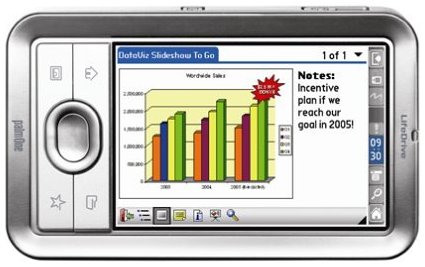
plamOne's new line of PDA's, the LifeDrive, it's basically a HardDrive in a Palm OS device. This is perhaps palmOne's take on the current hype of Portable Media Devices. Those thingamajigs that plays all the media formats one can think of. Honestly, I'm still too skeptical when it comes to these devices. wonder why some people buy them. Yes, you could watch your favorite episode of ALIAS or Smallville, but that's just up to that point, an episode. You see, these devices are worthless, if you can't watch or listen to at least half of the contents on the drive. Although, at least with the LifeDrive, palmOne is disguising it as a PDA that can store enormous amounts of data. But unless these it can give me power to view everything on the device, then I'm still up to the waiting game.

The New Gen Game Consoles?

Now that the Xbox 360 has been officially announced (but specs are still too sketchy), when will SONY announce the PS3 and Nintendo the Revolution?

Migration Completed
I have SUCCESSFULLY migrated all my personal Blogs to my Friendster Blog. The BloogerGAN Blogsite will now focus on tech issues. Thanks and do keep on enjoying reading the blogs!
Subscribe to:
Posts (Atom)